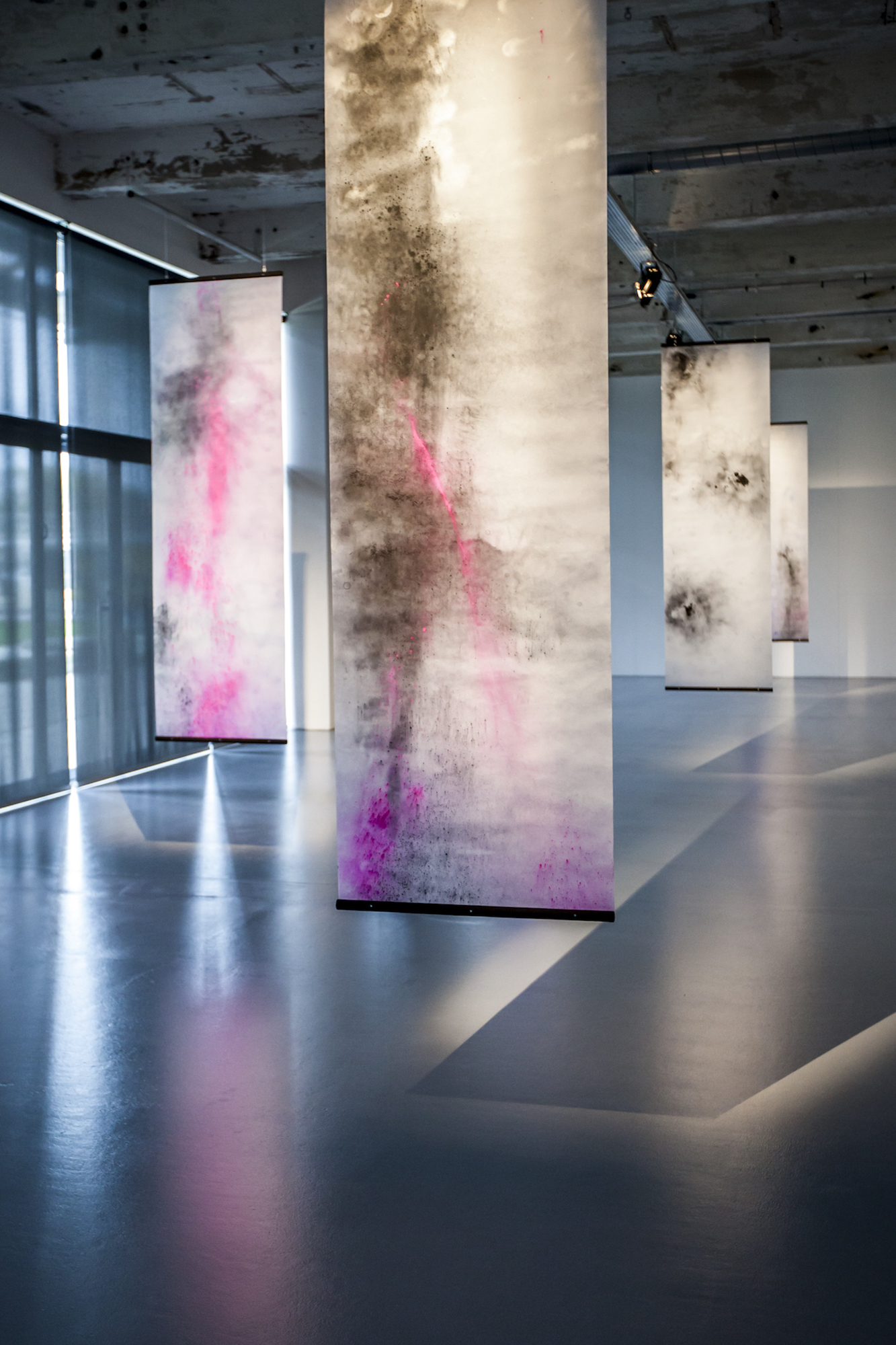
Addie Wagenknecht (American, b. 1981) works across painting, sculpture, and open source hardware, drawing on hacker culture and a background in computer science to examine surveillance, data, and gender inequality in the technology industry.Since 2007 she has used small drones to make abstract action paintings known as Black Hawk Paint, sprayed and marked with their propellers as the aircraft respond to simple flight commands.,
Wagenknecht received a Bachelor of Science in multimedia and computer science from the University of Oregon in 2001 and a Masters from New York University's Interactive Telecommunications Program in 2007.,During a research fellowship at Eyebeam Art and Technology Center in 2006 she co-founded Nortd Labs with Stefan Hechenberger, which released the open source multi-touch table CUBIT and, in 2011, the laser cutter Lasersaur.In 2011 she joined the F.A.T. Lab, founded by Evan Roth and James Powderly, for which she made Webcam Venus with Pablo García, asking webcam performers to re-enact historic paintings.,In 2014 she co-founded Deep Lab, a research collective of women working across computer science, internet governance and the visual arts to examine privacy, surveillance and anonymity.,
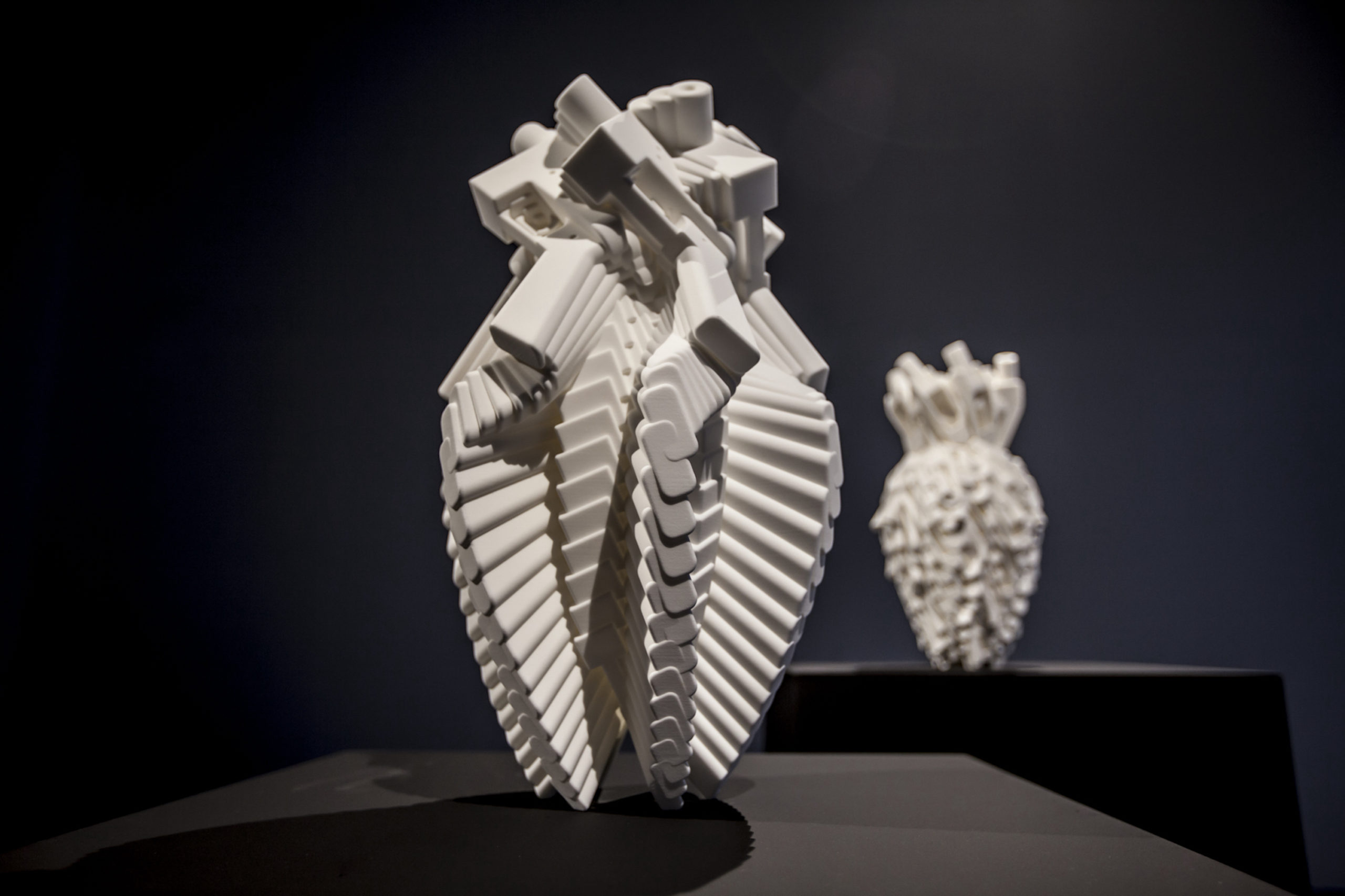
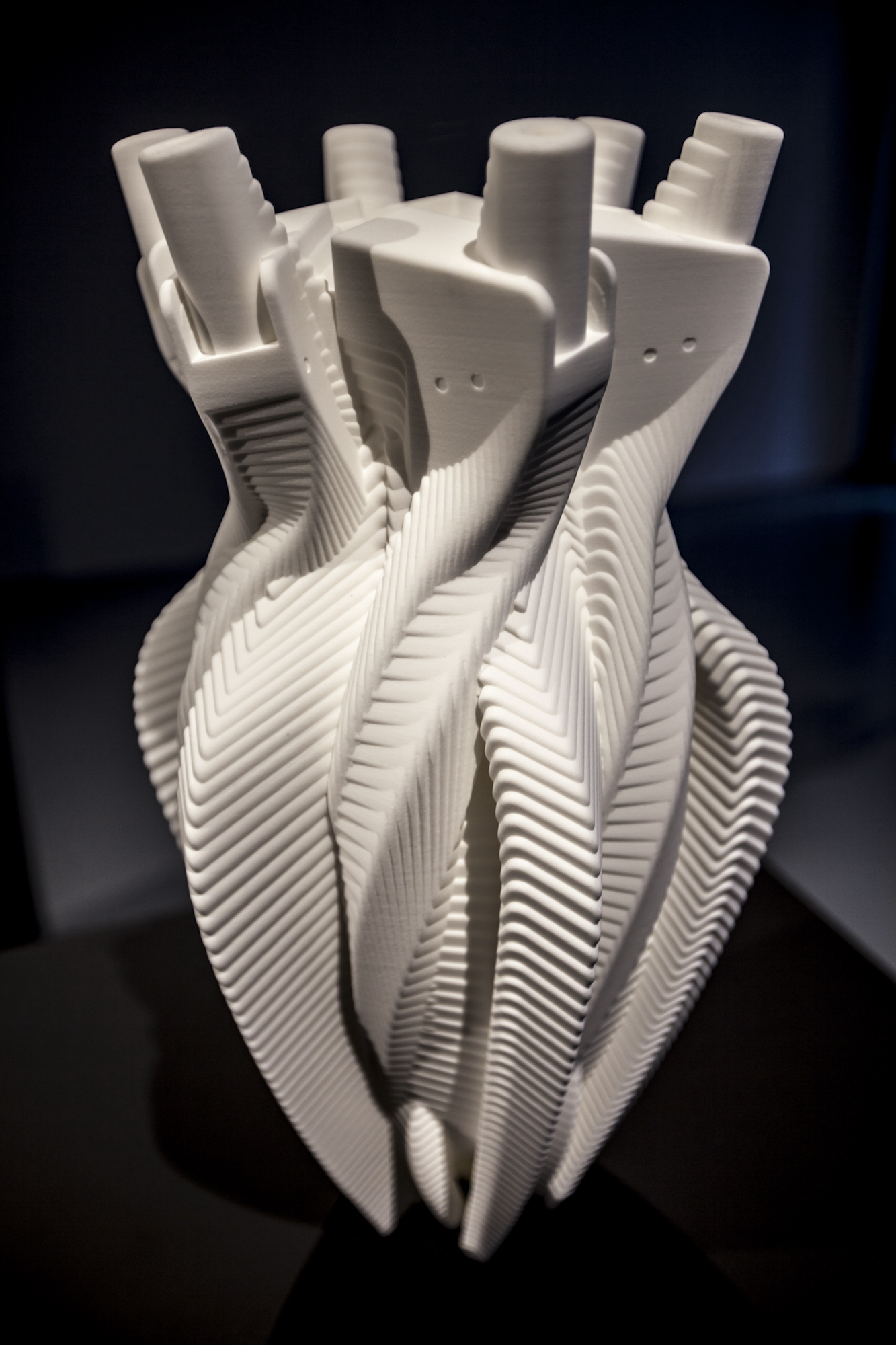
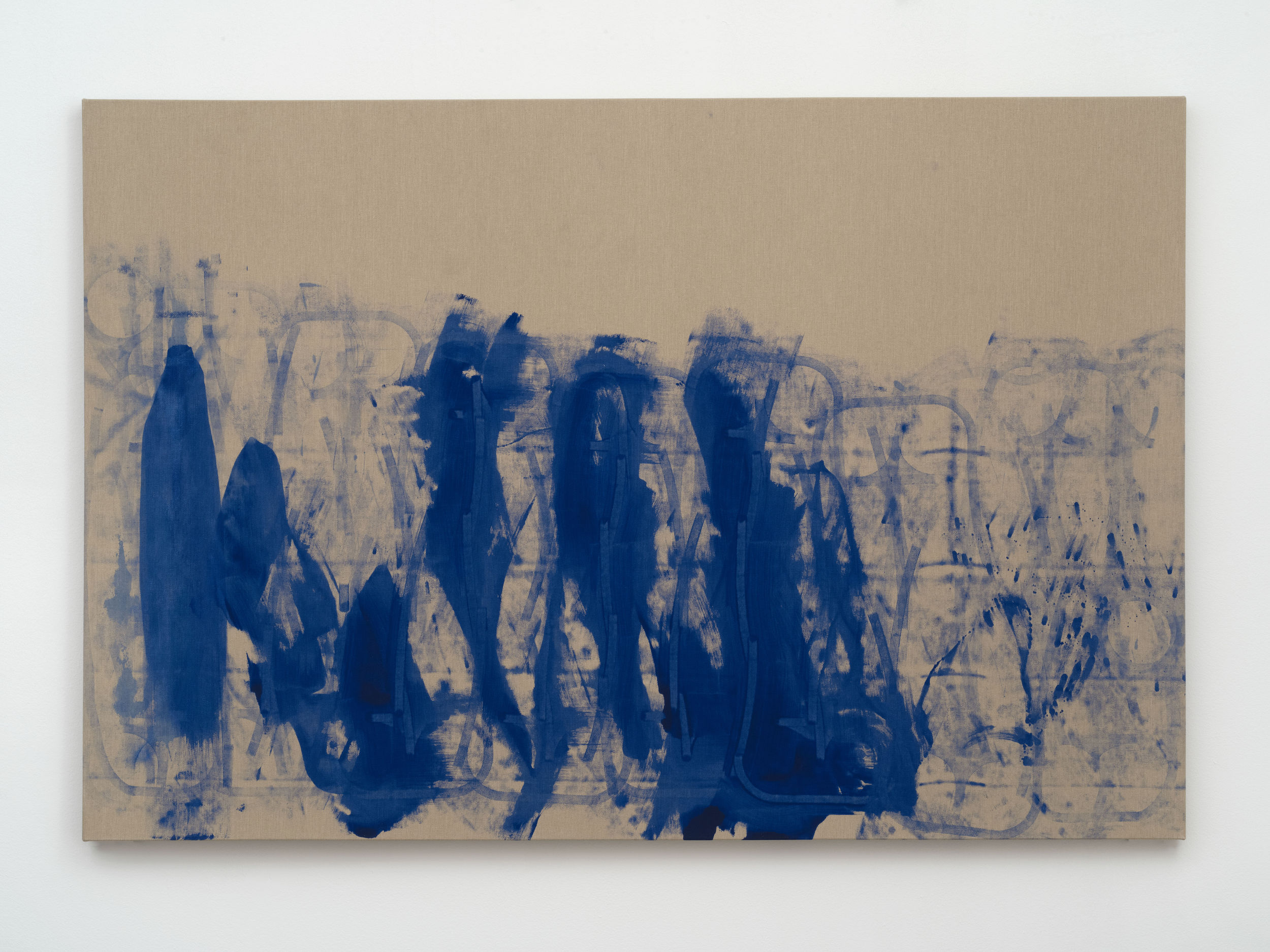
Her work turned increasingly toward feminist critique of the technology industry through the 2010s.In Glass Ceiling (2014) she performed with panes of bulletproof glass, striking and cracking them by hand to comment on the invisible barriers that keep women from reaching positions of power.For Liberator Vases (2016), made with Martin Zangerl and Stefan Hechenberger on commission from MU Eindhoven and HeK Basel, she 3D printed and reshaped the open source Liberator handgun design into a series of vases.In Alone Together (2017) she reprised Yves Klein's Anthropométries by reprogramming a Roomba to spread blue pigment across a canvas around her own reclining, nude body, leaving her presence visible only as a void in the paint.,
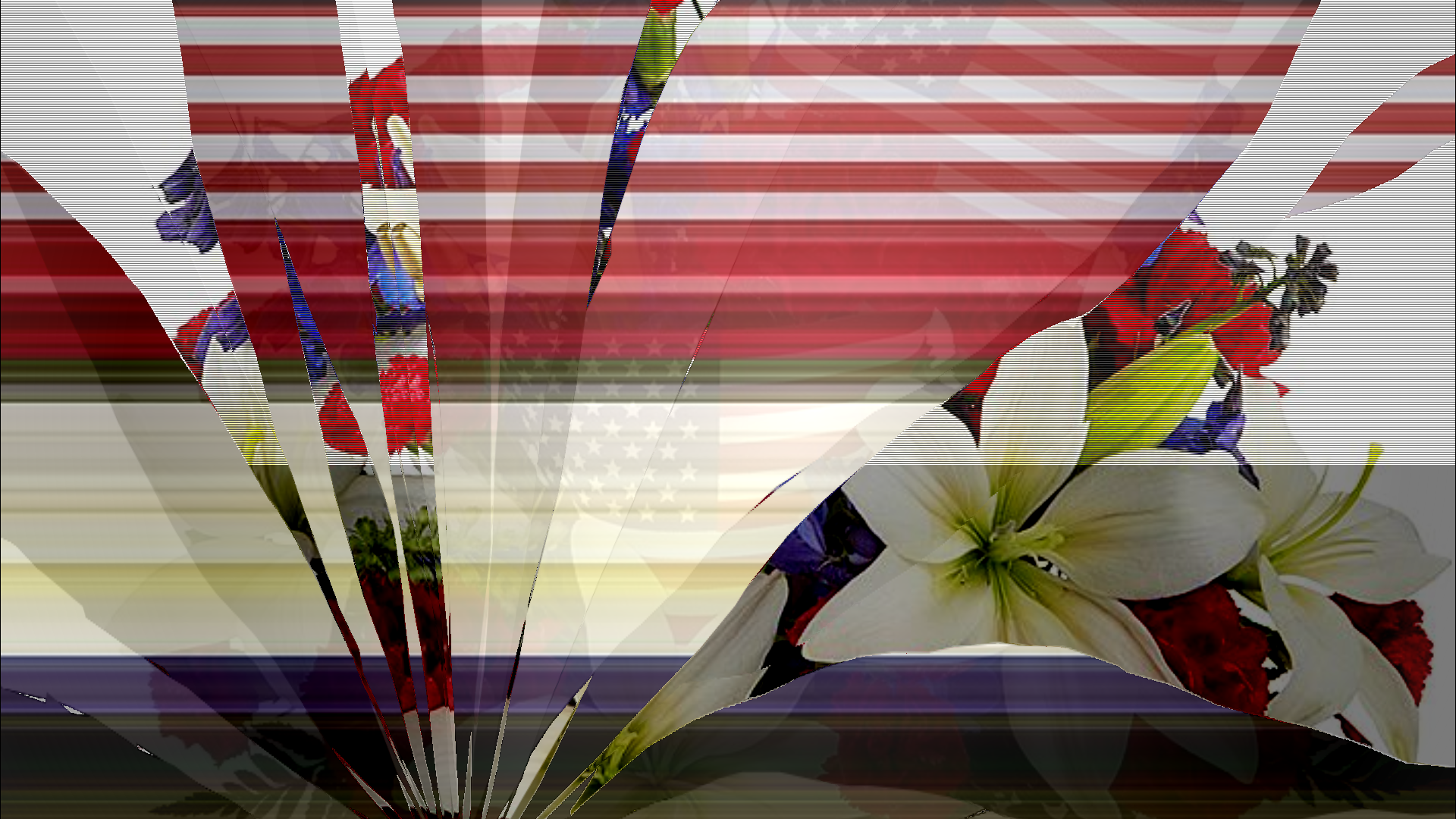
In 2017 the Whitney Museum's artport commissioned Believe Me, which applies a cracked-screen effect to a changing set of images to evoke how digital screens distort reality in a post-truth era.That year her work also entered the Whitney's collection.In 2018 she began developing a2p with Casey Reas, Rick Silva, and exonemo, a performance piece in the form of an artist-to-artist trading platform that paved the way for Feral File.That year she also coined the term “Post-AI Art”.As NFTs reached a wider market she began minting works on Ethereum to accompany her painting projects, adapting to lower resolution files given the higher cost of minting large files on proof-of-work chains.