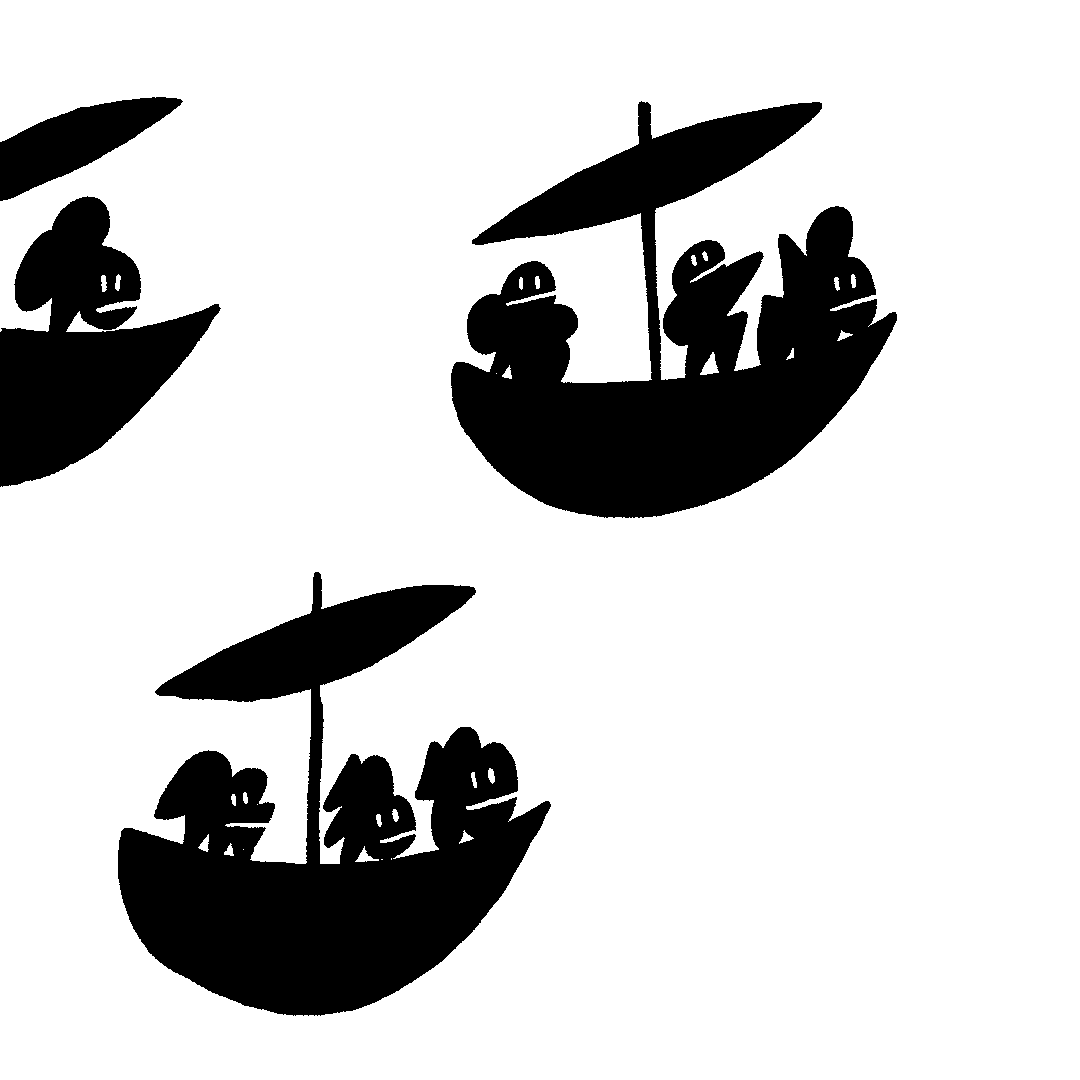
Laestrygonians
We kept going for six whole days and nights. On the seventh we came to Telepylus, great citadel of Lamus, king of Laestrygonians, where the herdsman bringing his flock back home salutes the herdsman moving his beasts out. There any man who had no need of sleep could earn two wages—for tending cattle and for grazing sheep. Day and night-time trails lie close together. We approached and rowed into a lovely harbour, with sheer cliffs around it on both sides. Jutting headlands facing one another extended out past the harbour. The entrance was quite small. All my companions brought their curved ships up and moored them inside the hollow harbour in a tightly clustered group—in that spot there were never any waves, large or small. Everything was calm and bright around them. But I moored my black ship all by itself outside the harbour, right against the land, tying it to the rock. I climbed the cliff and just stood there, on a rugged outcrop, looking round. I could see no evidence of human work or ploughing, only smoke rising from the land. I sent some comrades to learn what the inhabitants were like, the men who ate the food this land produced. I chose two men, with a third as herald. They left the ships and came to a smooth road, which wagons used to haul wood to the town from high mountain slopes. Outside the city they met a young girl collecting water, a noble daughter of Antiphates, a Laestrygonian. She’d come down there to the fine flowing spring Artacia, where the townsfolk went to draw their water. The men walked up and spoke to her. They asked who ruled the people there and who they were. She quickly pointed out her father’s lofty home. They reached the splendid house and found his wife, an immense woman, like a mountain peak. They were horrified. She called her husband, strong Antiphates, from an assembly, and he arranged a dreadful death for them— he seized one of my shipmates and prepared to make a meal of him. The other two jumped up, ran off, and came back to the ships. Antiphates then raised a hue and cry throughout the city. Once they heard his call, the mighty Laestrygonians poured out, thronging in countless numbers from all sides— not like men at all, but Giants. From cliffs they hurled rocks down on us, the largest stones a man can lift. The clamour from the ships was dreadful—my men were being destroyed, ships were smashing into one another, with those huge monsters spearing men like fish, and taking them to eat a gruesome meal. While they were slaughtering the sailors there, trapped in the deep harbour, I grabbed my sword, pulled it from my thigh, and cut the cables on my dark-prowed ship, yelling to my crew, ordering them to put their oars to work, so we could get away from this disaster. They all churned the water with their oar-blades, afraid of being killed. We were relieved, as my ship left the beetling cliffs behind, moving out to sea. But the other ships, those in the harbour, were totally destroyed.