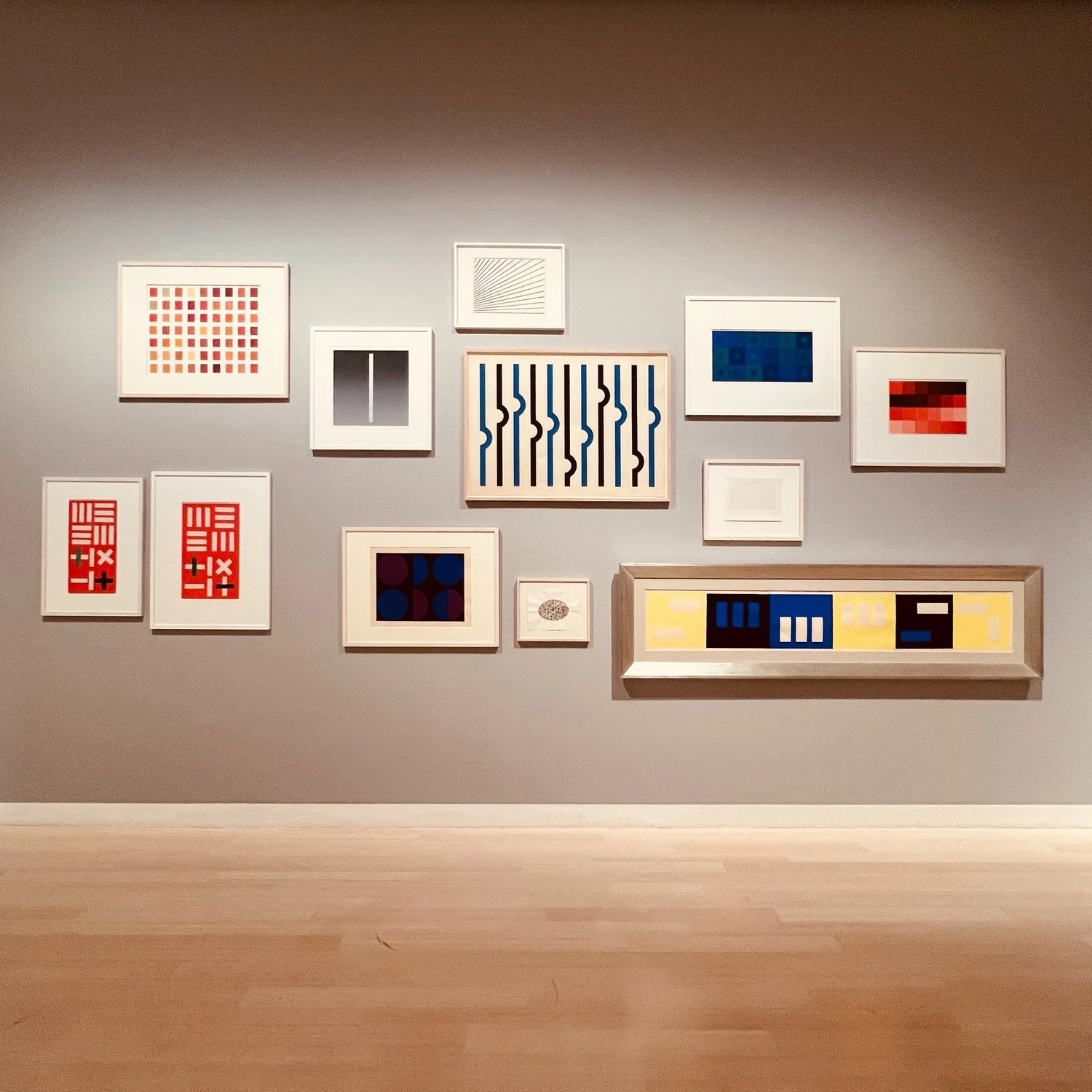
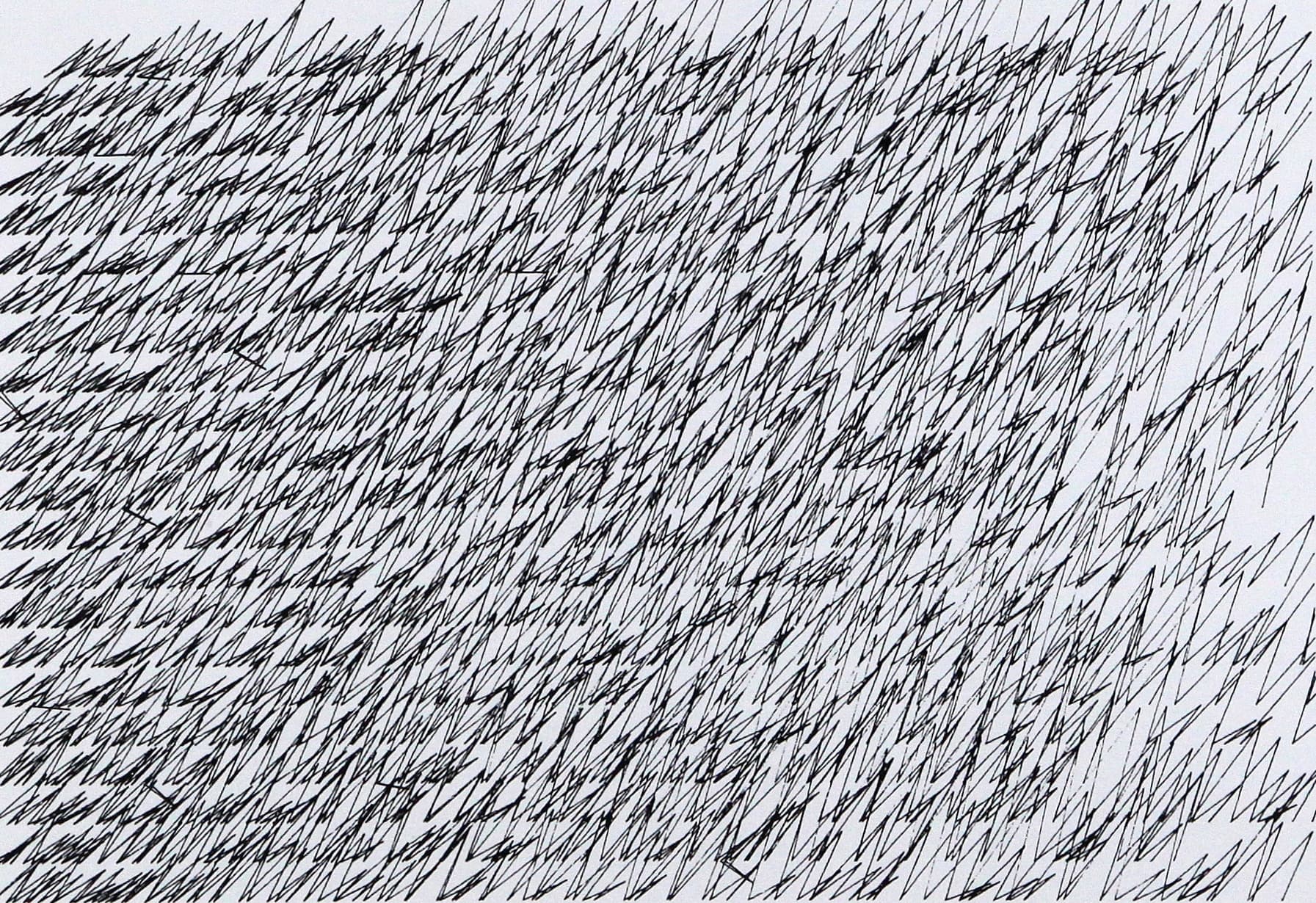
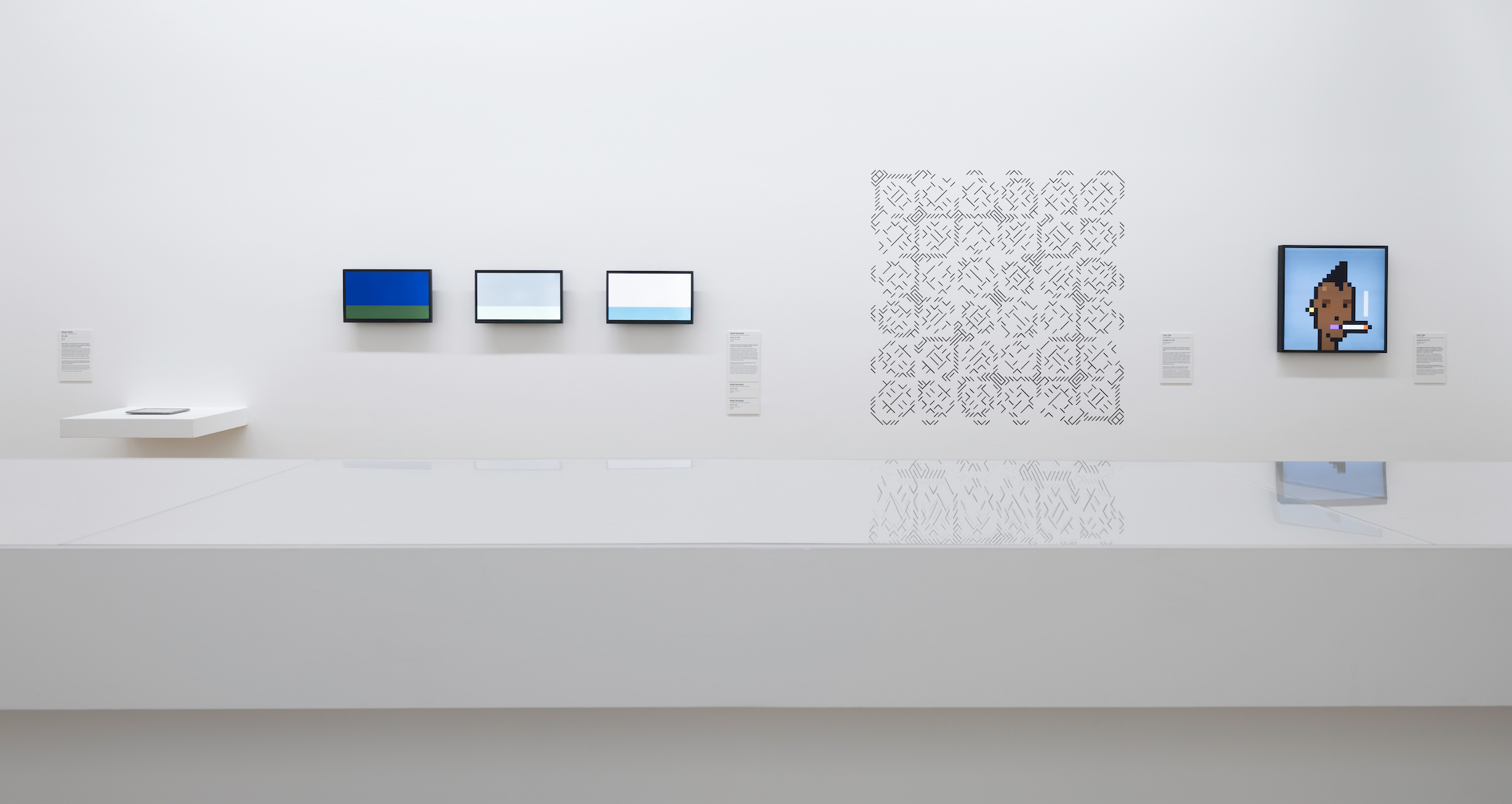
Vera Molnár (Hungarian, 1924–2023) was a painter and pioneer of algorithmic art who used geometric abstraction, chance, and later computers to generate systematic series of drawings.She began developing combinatorial imagery by hand in 1959 through a self-devised process she called the “machine imaginaire”, and started working with a real computer in 1968.,
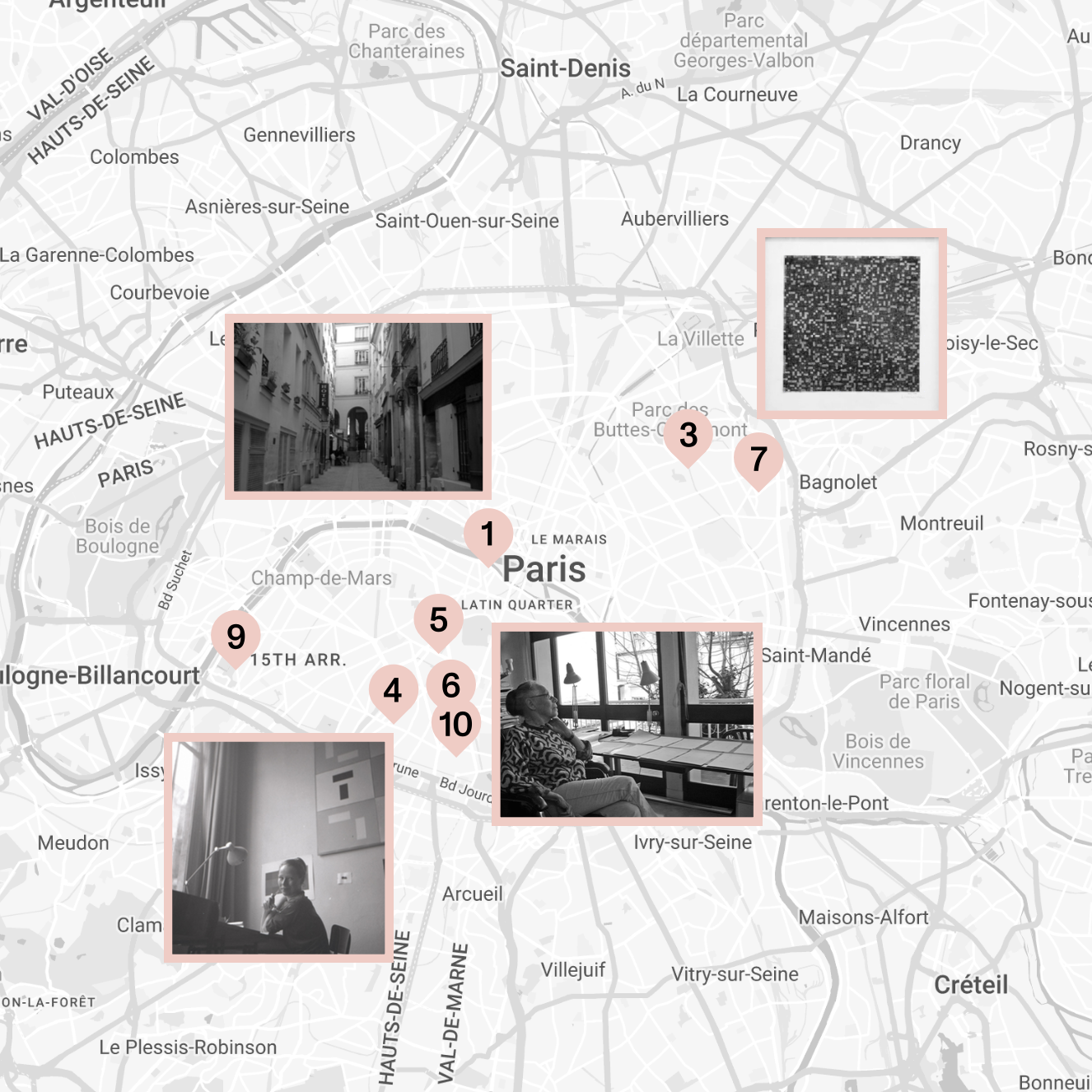
Born in Budapest, Molnár studied art history and aesthetics at the Budapest College of Fine Arts, where she met her husband François Molnár.The couple moved to Paris in December 1947, where Molnár's circle at the café Le Select introduced her to Sonia Delaunay, Constantin Brancusi and Georges Vantongerloo, and where Delaunay's encouragement proved decisive for her practice.In 1960 she co-founded the artistic research group GRAV (Groupe de Recherche d'Art Visuel), which investigated kinetic and op art, and in 1967 the group Art et Informatique.,
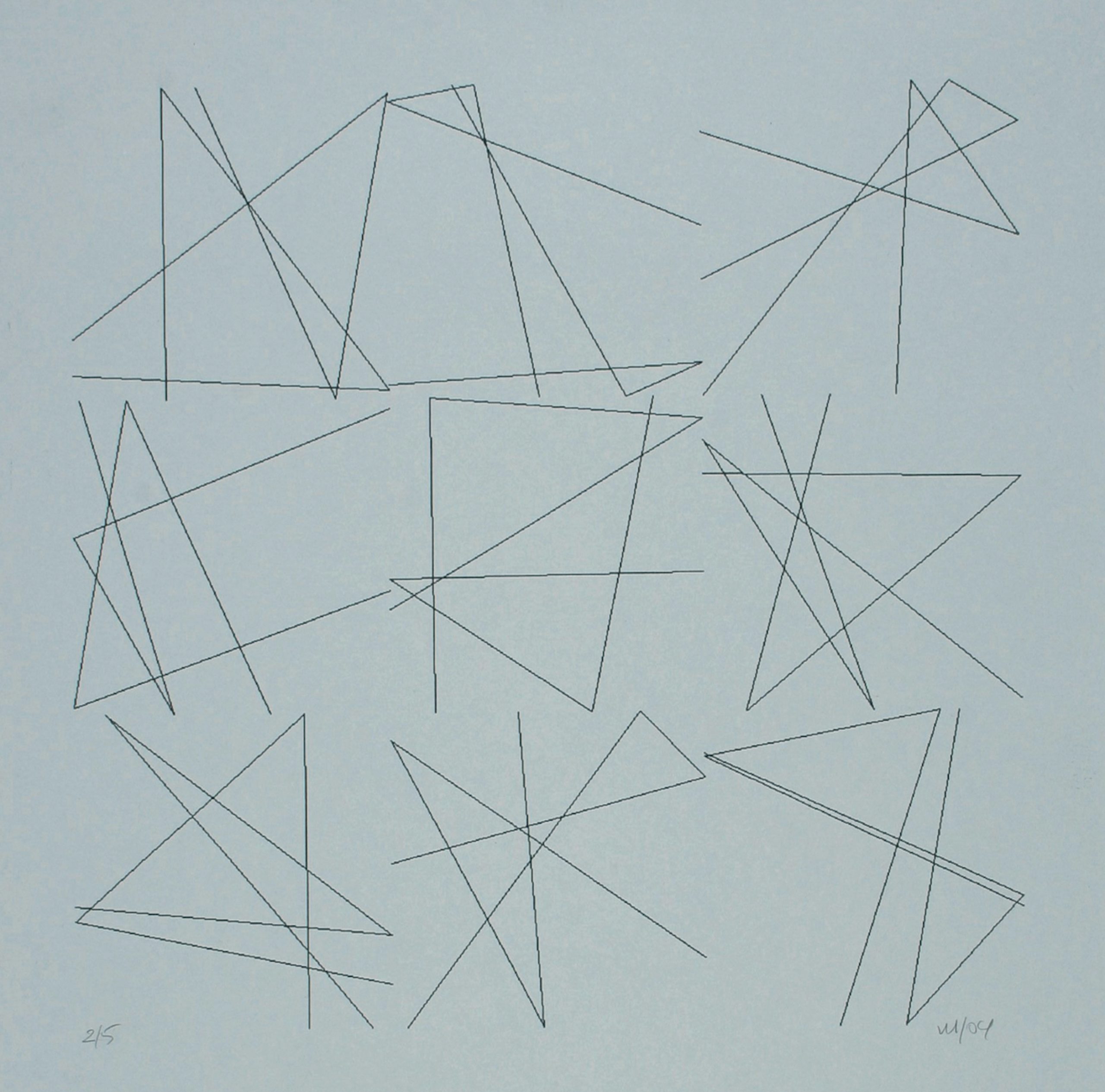
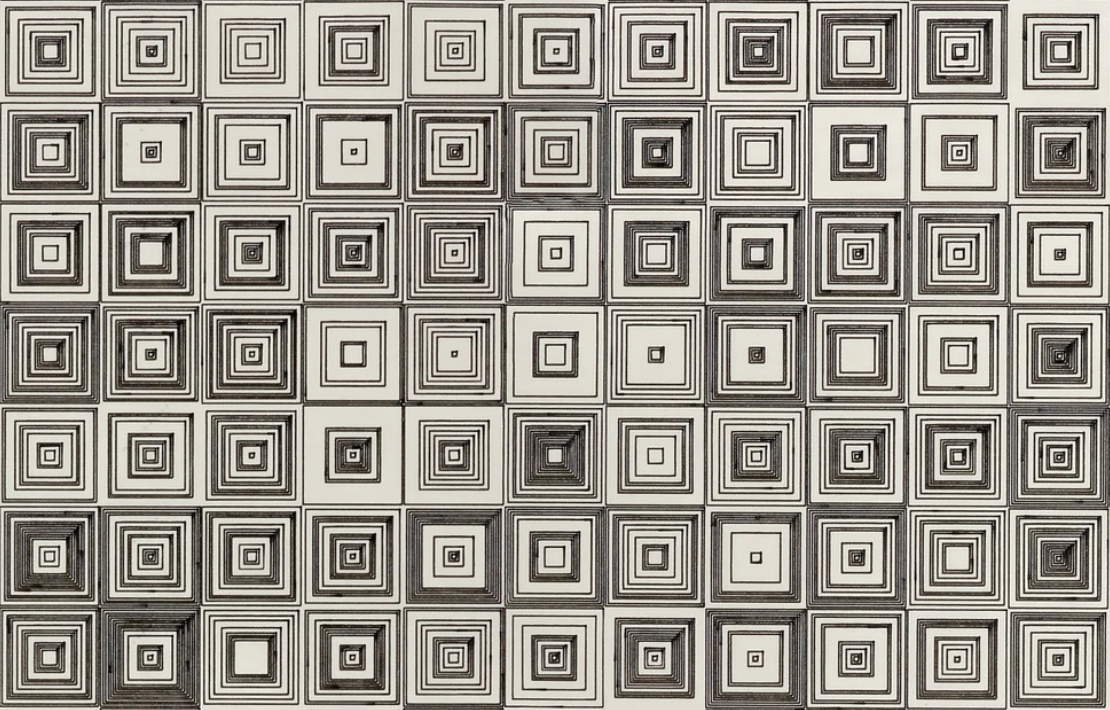
She gained access to her first computer in 1968 through the composer Pierre Barbaud at the Bull-GE headquarters, then continued unofficially at the Sorbonne's computing centre in Orsay, using an IBM System/370 and Benson drum plotter.In 1974–76 she and François developed the software “Molnart”, and in 1980 the two established the Centre de Recherche Expérimentale et Informatique des Arts Visuels, where she also taught fine art and art history from 1985 to 1990.,Her plotter series include Hommage à Dürer, based on Albrecht Dürer's magic square she encountered as a teenager,Hommage à Monet (1981-83, reworking the reflections of Claude Monet's Impression, Sunrise), Sainte Victoire (1989-96, inspired by Paul Cézanne), and Lettres à ma mère (1981-90), in which she turned her mother's handwriting into computer drawings.She stopped using plotters in 1991, after the series Gothique, and switched to laser and inkjet prints.
In 2005 she received the first d.velop digital art award, with a solo show at the Kunsthalle Bremen.Her work entered the collections of the Centre Pompidouand the Victoria and Albert Museum, which acquired its pieces in the late 1970s and early 1980s without any record that they had been made by computer.In 2022, at 98, she released her first NFT, 2% of disorder in co-operation #01, sold through Sotheby's alongside her 1976 work 1% de désordre.In 2023 she and Martin Grasser released Themes and Variations, 500 letterform variations minted on Ethereum through Sotheby's.She died in Parison 7 December 2023, a month before what would have been her hundredth birthday.In 2024 the Ludwig Museum staged the retrospective “À la recherche de Vera Molnar” in Budapest, alongside work by artists she influenced.