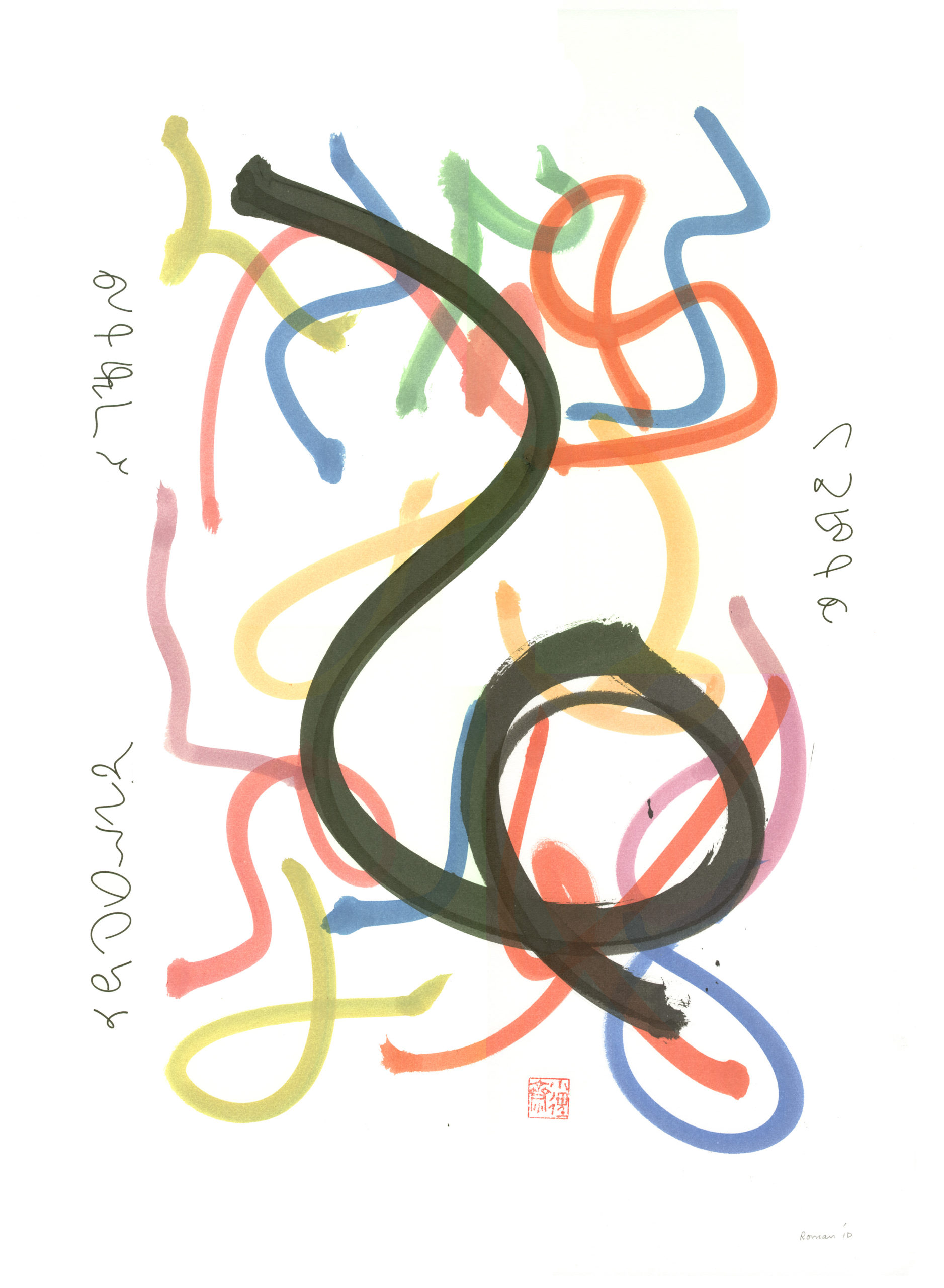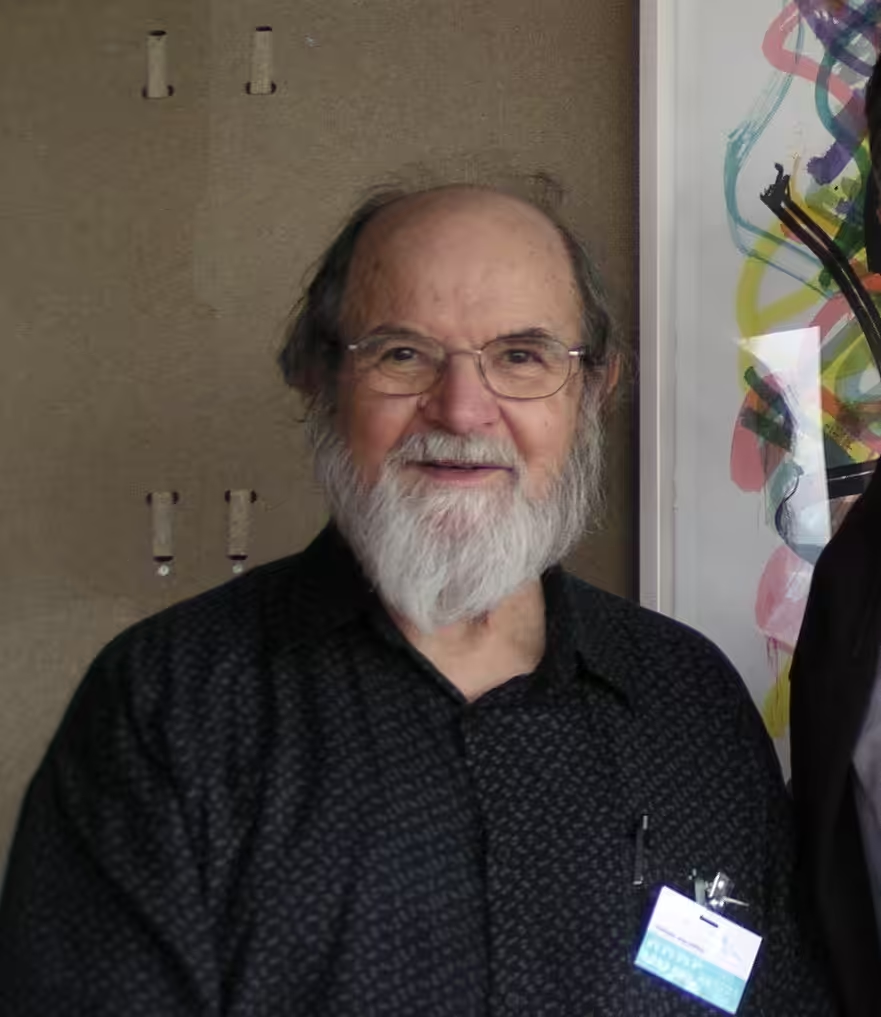
Roman Verostko (1929-2024) wrote his own computer code to drive pen plotters, producing generative ink drawings and, from 1987, works that combined plotted lines with oriental brush strokes. He called his software Hodos, Greek for "pathway," and used it throughout a body of algorithmic art that grew out of decades as a painter. In 1995 he co-founded the artists group The Algorists with Jean-Pierre Hébert.
Verostko trained as a painter at the Art Institute of Pittsburgh and in 1950 entered monastic life at St. Vincent Archabbey, where he was ordained a priest in 1959 in Pennsylvania. He earned a Master of Fine Arts from Pratt Institute in 1961 and later studied printmaking in Paris under Stanley William Hayter, whose semi-automated Surrealist image-making methods shaped his later interest in algorithms. After leaving monastic life in 1968 he joined the humanities faculty at the Minneapolis College of Art and Design, where he became Professor Emeritus in 1994. He wrote his first programs in FORTRAN at the Control Data Institute in Minneapolis in 1970 and that year also worked as a visiting scholar with Gyorgy Kepes at MIT's Center for Advanced Visual Studies. His first computer-generated work, The Magic Hand of Chance, was a light show written in BASIC on an IBM PC in 1982.