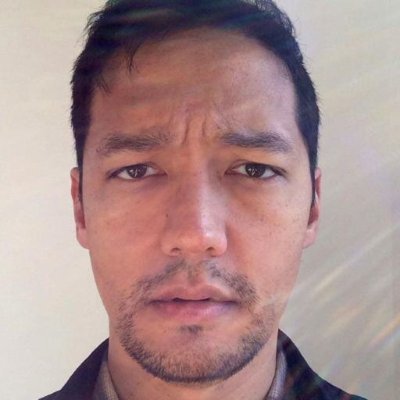
Robert Hodgin, also known as Flight404,,is a Brooklyn-based artist and co-founder of Rare Volume, a design and technology studio,,,who creates generative work in code, simulating natural and engineered systems such as flocking behavior, river erosion, magnetic fields, and planetary motion.,,,,He designs algorithmic frameworks and then observes the gestures and relationships that emerge within them, treating the work as a collaboration between calculation and chance.,
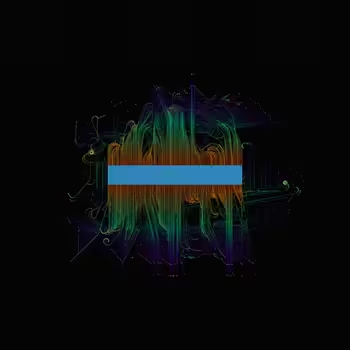
Hodgin studied sculpture at the Rhode Island School of Design, graduating in 1998, and discovered Macromedia Flash in his senior year, which became the digital canvas he had been looking for.,,He taught himself to code through Flash and later Processing, and co-created the Cinder C++ framework for creative coding. As a founding partner of The Barbarian Group, he established and led the studio's west coast office and labs division until 2009.Magnetosphere, an audio-reactive physics system he developed with his Rare Volume co-founder Andrew Bell, was adopted by Apple and became the default iTunes visualizer in 2007.In 2011 he joined Bloom Studio to develop Planetary, an iPad app that became the first code-based work acquired by the Smithsonian's Cooper Hewitt National Design Museum.
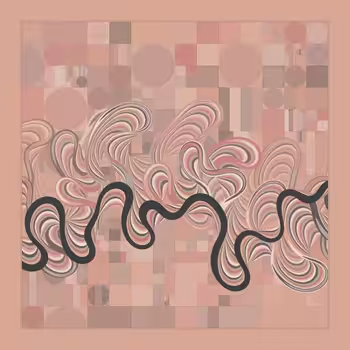
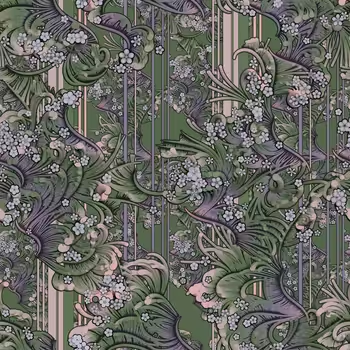
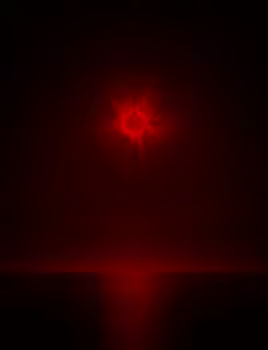
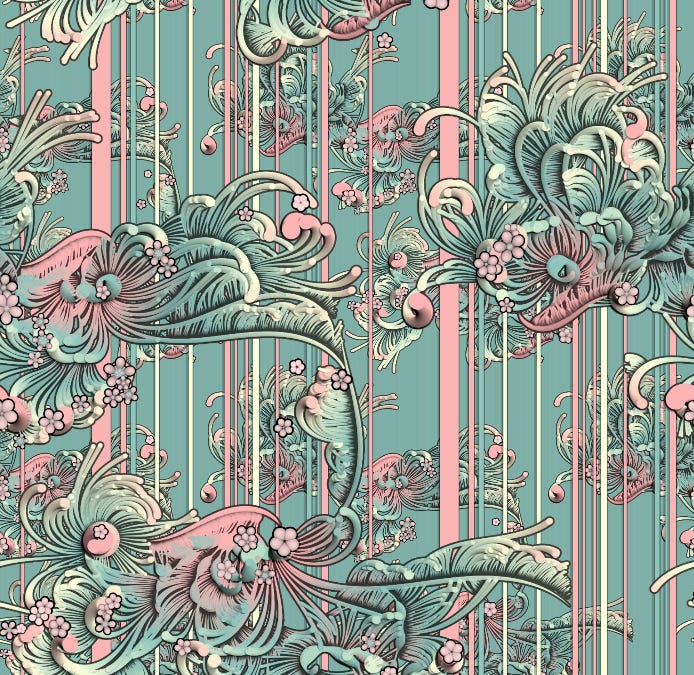
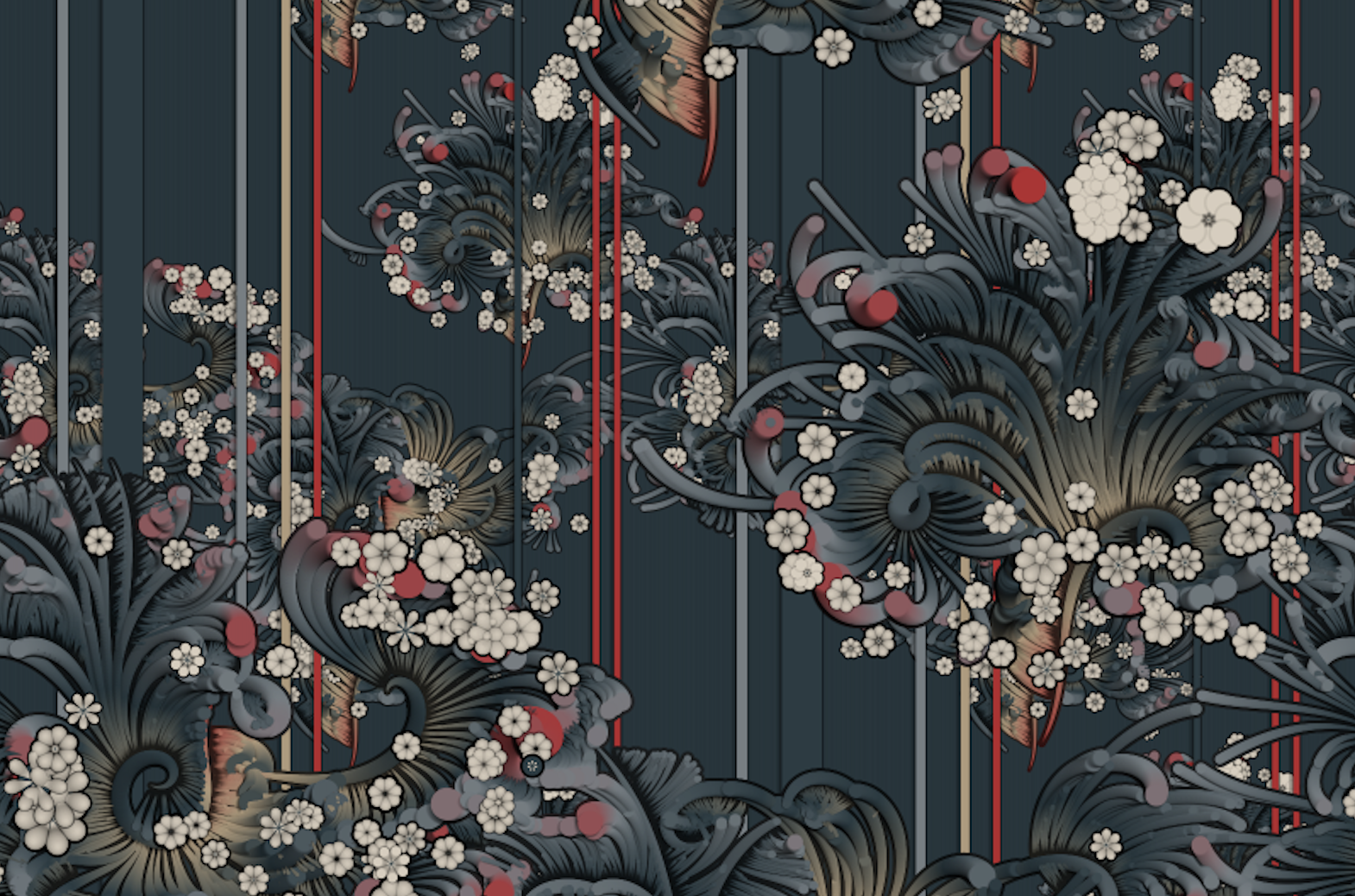
Traffic, 2020, and Star Chart, 2020, visualize citywide traffic patterns and the night sky, each locating the point where order tips into chaos.His river-mapping system, begun in 2020,became the basis for Ancient Courses of Fictional Rivers, a 2022 Art Blocks seriesinspired by Harold Fisk's 1940s US Army Corps of Engineers maps charting the Mississippi River's shifting course.In Growth v01, 2021, he visualized growth as a centrifugal expansion of colored pattern. The following year, Growth v02 tracked multiple points of emergence at once, translating free space into foliate forms that recall the patterns of William Morris. In 2023 he released Solar Transits on Art Blocks.That same year he contributed Recollection to “reGEN”, a charity auction on Art Blocks benefiting the Cure Alzheimer's Fund, saying the cause was deeply personal because “almost everyone has witnessed the effects of Alzheimer's disease, be it within their own families or through friends”.,
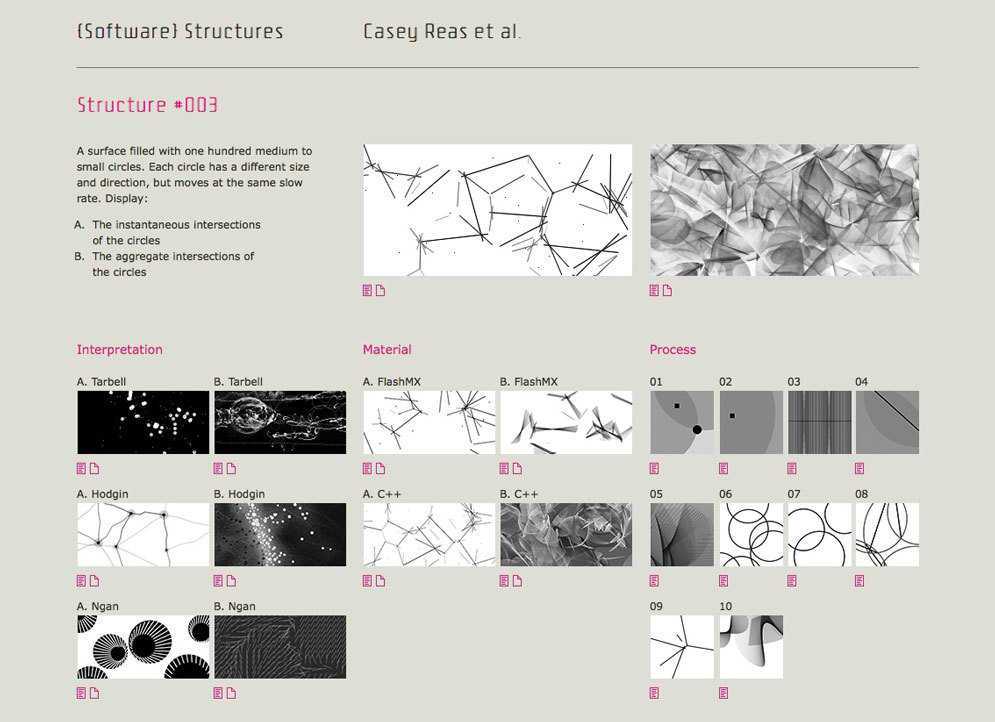
In 2004 he helped implement Casey Reas's Software Structures, created with Jared Tarbell and William Ngan and inspired by Sol LeWitt's wall drawings, later restored in 2016 for the Whitney Museum's artport.In 2025 the Museum of the Moving Image presented his Magnetosphere Redux on its Media Wall as part of “Compositions in Code: The Art of Processing and p5.js”, pairing artists from the Processing era with a newer generation working in p5.js.