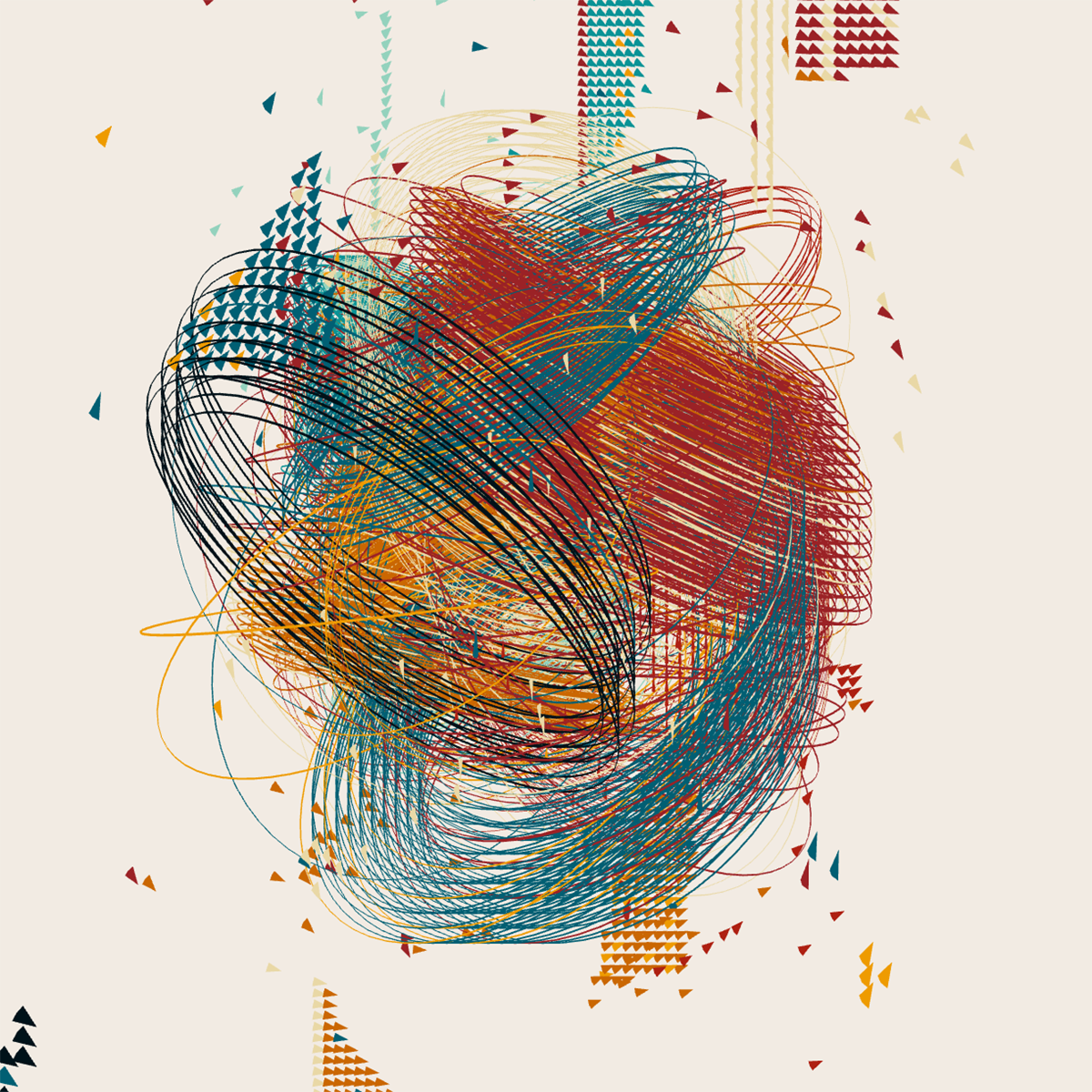
Nathan Cornes creates generative art that bends and roughens math into imperfect, organic forms, rejecting the symmetry and control usually associated with computational systems.He releases much of his work as Bitcoin ordinals, a blockchain he has called “a literal perfect fit for generative art” because it rewards pieces that evolve over time.
Cornes began coding as a child, discovering in a school informatics class that he could draw and distort sine waves on screen, an experience that sparked his interest in blending math and art.Before working digitally he built physical installations from wood, resin, and metal, and since the late 1990s he has also worked with experimental websites, Flash games, teaching, and VJing.
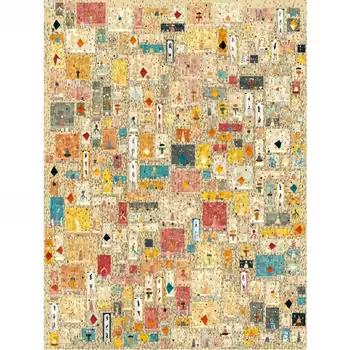
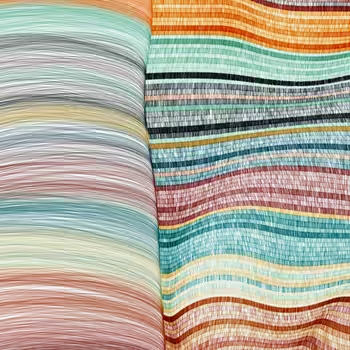
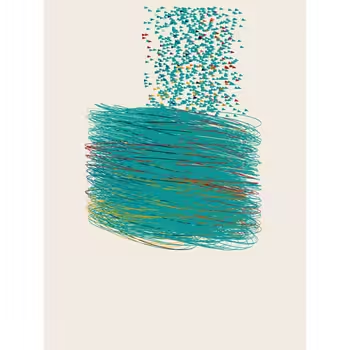
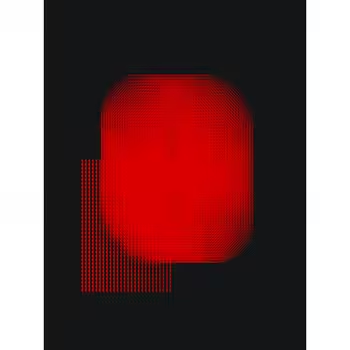
His earlier project aRo offered every possible output his algorithm could produce to every god he could imagine, placed across as many shrines as would fit. He returned to that theme with Jujus, built around the idea of disobeying logic, in which glass-like Mat substrates carry Token ideograms whose placement encodes a goal of luck, love, protection, or wish.In March 2023 he released 2fold through fxhash, an edition of 200 priced at 10 Tezos.His Bitcoin ordinals series Ós consists of kinetic sculptures that shift in position and color as new blocks are inscribed on the blockchain, and the related rojÓs was offered as a free mint to Ós collectors in a minimalist palette of red, black, and white.In late 2024 he released Leviathan Hues, a vertical composition of a hundred Bitcoin inscriptions that unite into a single generative structure whose form evolves as new blocks are confirmed onchain.His work has been exhibited at NFT Brasil's Bienal, among venues in Brazil, Portugal, and the United States.