Mateus Morbeck (Brazilian, b. 1980) is a visual artist, architect and urbanist whose work begins with specific real-world events and their physical traces to examine the environmental and economic systems that produced them. Based in Salvador, Bahia, he works across photography, digital art, objects and installations, often collecting or appropriating material evidence and transforming it into new works.
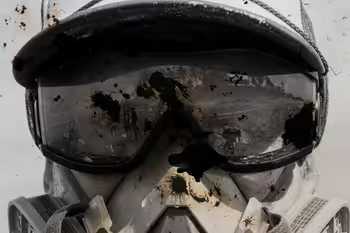
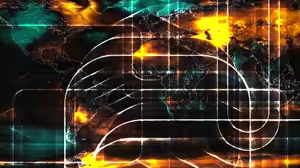
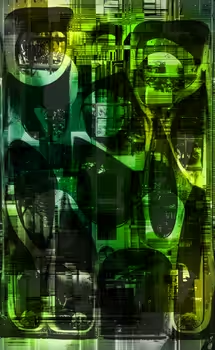
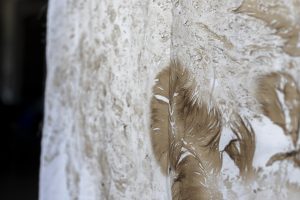
In 2019, an oil spill along Brazil's northeastern coast contaminated marine life and left fishing communities without income. Morbeck traveled to more than 50 locations across Bahia state to document the spill's effects, photographing volunteers who cleaned oil from the beaches for Guardiões. The portraits are overlaid with traces of the crude oil itself, obtained by pressing paper directly into the contaminated water. Guardiões entered the collections of the Museu da Fotografia de Fortaleza in Brazil and the Mediterraneum Collection in Catania, Italy. In Nemo Non Videt, made during the COVID-19 pandemic, he layered live camera feeds, satellite imagery and Google Street View captures of empty cities. Onto these he added a map charting the spread of the virus from the date of the first recorded death in each location shown.