Mike Tyka is an artist, biochemist and research engineer at Google who has used artificial neural networks as an artistic medium since 2015.In 2015 he co-authored, with Alexander Mordvintsev and Christopher Olah, the Google blog post that introduced DeepDream,then went on to make some of the first large-scale artworks with it.
Tyka studied biochemistry and biotechnology at the University of Bristol and earned a PhD in biophysics in 2007, then worked as a research fellow at the University of Washington studying protein folding and writing simulation software to model it. In 2009 he helped design and build Groovik's Cube, a 35-foot, functional, multiplayer Rubik's Cube first shown at Burning Man, and co-founded ALTSpace, a shared art studio in Seattle. He also co-founded Google's Artists and Machine Intelligence program, which paired artists with engineers on machine-learning projects.
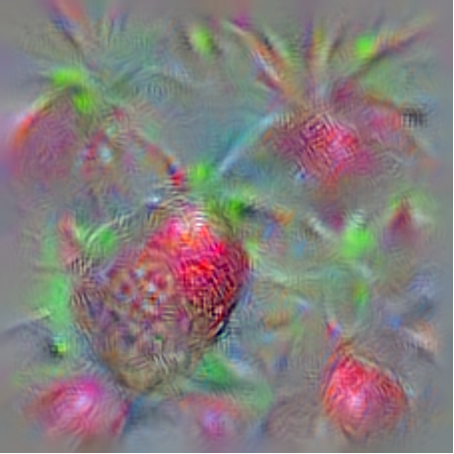
DeepDream, released as open-source software in July 2015, became known for its dense, hallucinatory textures and, through a bias in its training data, recurring dog and cat motifs. Tyka went on to show DeepDream-based work in “DeepDream: The Art of Neural Networks”, organized by the Gray Area Foundation for the Arts in San Francisco in 2016 alongside Alexander Mordvintsev, Memo Akten and others.That year he also made The Portal, later minted as an NFT in 2024 and held in the Le Random Collection.He also collaborated with Refik Anadol on the immersive projection installation Archive Dreaming, shown at the SALT Research Institute in Istanbul in 2017.
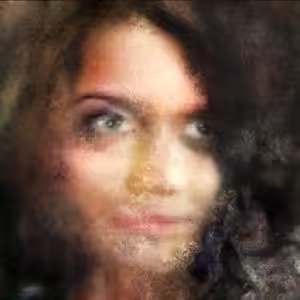
His series Portraits of Imaginary People trains a generative adversarial network on thousands of Flickr face photographs to depict people who do not exist,and was published as a hardcover book by Anteism Booksand shown at ARS Electronica in Linz, the New Museum in Karuizawa, Japan, and the Seoul Museum of Art.He extended the series into Us and Them, a 2018 installation for the Seoul Museum of Art's Mediacity Biennale that paired the portraits with neural-network text generation and twenty thermal printers endlessly printing AI-generated tweets modeled on accounts suspended after the 2016 US election.