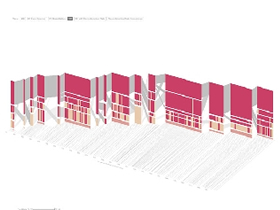
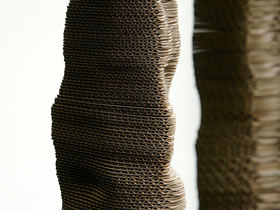
The Norwegian artist Marius Watz has been making generative art with code since 1994, working with hard-edged geometric forms and vivid color across software, public projections and physical objects produced through digital fabrication.,Trained originally as a graphic designer,Watz was based in Berlin during the mid-2000s Processing-era generative art scene before later basing himself in Oslo.
In 2004, Watz founded Generator.x, a platform and blog for discourse around generative art and computational aesthetics that grew into a series of exhibitions, concerts and workshops held across Europe through 2012.The inaugural “Generative X” conference and exhibition, held in Oslo in 2005, featured Casey Reas, Ben Fry, Golan Levin and Martin Wattenberg,and toured for a year with the National Museum of Norway.Watz later curated “Further Processing” in Graz (2006) and “Generator X 2.0” in Berlin (2008), both surveying artists working with the Processing programming language.,
Watz has described his generative systems as chaotic and only partly controlled: “they are created and choreographed by the artist, but once set in motion unforeseen properties emerge.”Through workshops built around his Generator.x project, Watz introduced Processing-based generative art to a younger generation of coders, including Leander Herzog, who made his first generative piece at a 2008 workshop Watz ran.
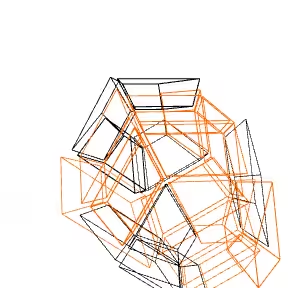
Exploder (2009), a geometric wall installation built from projected wireframes traced in artist tape, was shown in solo exhibitions in Oslo and San Francisco between 2010 and 2011.In 2025, the “Compositions in Code” show at the Museum of the Moving Image paired a new iteration, MoMI Exploder, with a work by Aleksandra Jovanić in a diptych.That September, Watz reworked Exploder in p5.js and released it on objkt.one as his first mintable long-form generative project.
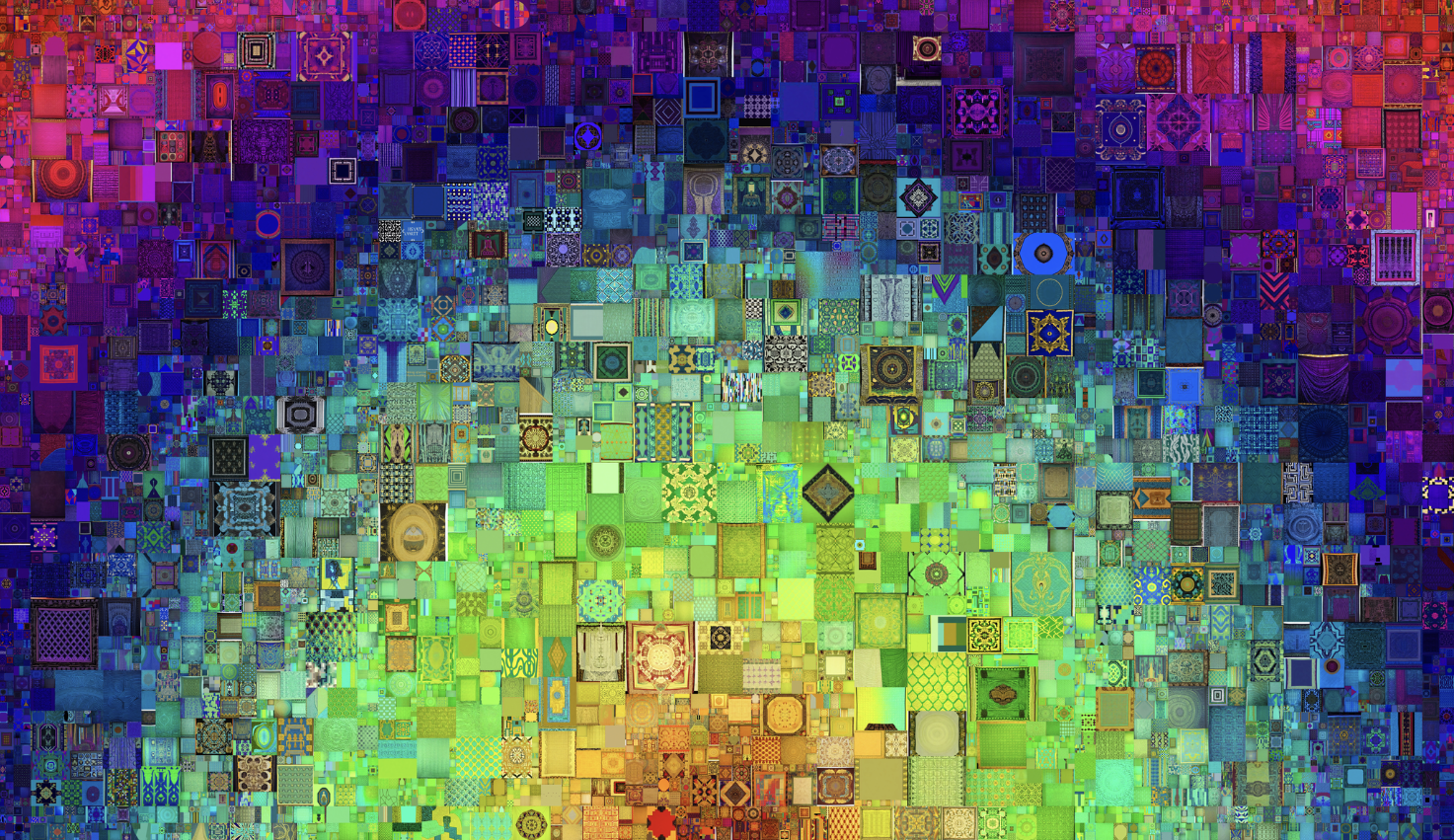
Watz's work has been exhibited at institutions including the Victoria and Albert Museum in London and ITAU Cultural in São Paulo.Beyond his own practice, Watz has also written for Right Click Save, interviewing fellow generative artist Jason Salavon about TODEM, a large-scale blockchain-based generative work.