Lee Mullican (American, 1919-1998) was a painter who built dense, textured abstractions through a rhythmic, repetitive pressing of a palette knife against the canvas, a method he called striation. [[17497,d1062061]],Working in San Francisco and Los Angeles from the 1950s, he combined this mark-by-mark method with an interest in mysticism, non-Western art, and the aerial perspective he had studied as a wartime topographer.
During the Second World War, Mullican served as a topographical draughtsman in the U.S. Army, extracting information from aerial photographs, and he later recalled that he “loved working with aerial photographs”. That habit carried into his painting, which built up dense fields of repeated marks that read as abstracted terrain rather than pictures.In 1951 Mullican joined Wolfgang Paalen and Gordon Onslow Ford in forming the Dynaton group, which exhibited together at the San Francisco Museum of Art that year.Through Paalen, Mullican encountered pre-Columbian and other non-Western pattern systems, an influence that reinforced the spiritual dimension of his abstraction.His 1951 painting Agawam Eclipse, inky black streaks radiating from the center of a canvas mottled with thin yellow marks, was shown alongside Paalen's work in “Dynaton: Convocation of Radiant Beings” at Château Shatto in Los Angeles in 2026.
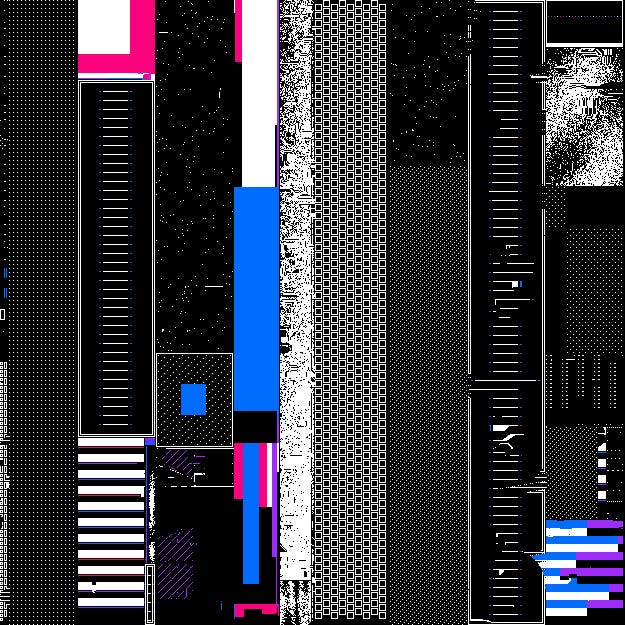
Mullican joined the UCLA art faculty in 1961 and taught there for nearly three decades.In 2006 the Los Angeles County Museum of Art organized a retrospective spanning fifty years of his work, and his paintings entered the permanent collections of the Museum of Modern Art, the Metropolitan Museum of Art, the Whitney Museum of American Art, the San Francisco Museum of Art and the Los Angeles County Museum of Art.,In 1986 Mullican began working with UCLA's Program for Technology in the Arts,,using PC Paintbrush on an IBM personal computerto make dense digital compositions related to his painted striations.He later said, “I've had a built-in computer ever since I've been doing art”.In November 2021 Verisart, in partnership with his estate and Marc Selwyn Fine Art, released fifteen of these digital works as NFTs alongside the exhibition “Computer Joy”.Feral File later released a further collection of his 1980s digital paintings, LeeMullican.PCX.