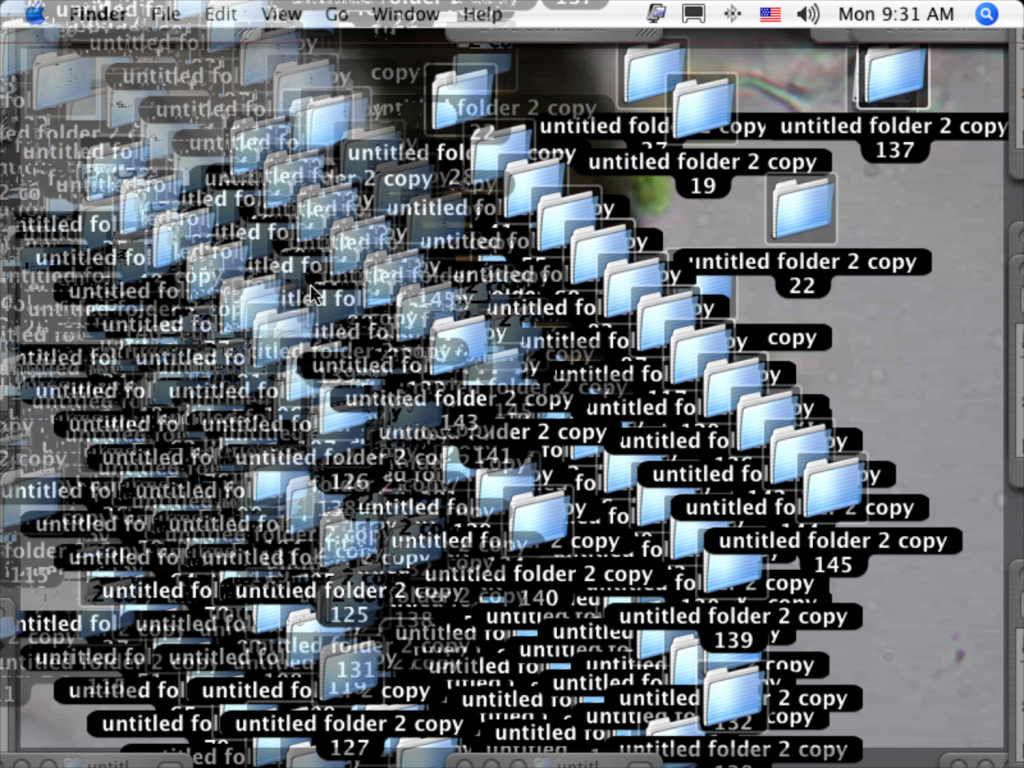
jonCates is an artist, teacher and curatorworking in glitch art,videoand performance,treating the failures and imperfections of digital technology as material rather than as defects to be fixed.For decades based in Chicago, where he taught at the School of the Art Institute of Chicago,he founded the international Gli.tc/h festivals and shaped an aesthetic he calls “dirty new media”.
He earned a BFA in Studio Art with Honors from Illinois State University in 1997 and an MA in Media Art Histories from the Donau-Universität Krems in Austria in 2009.jonCates began teaching at the School of the Art Institute of Chicago in 1999, becoming its first full-time tenured New Media faculty memberand developing its New Media Art curriculum, later ranked “Best New Media Program” in “Best Fine Arts Schools” by U.S. News and World Report.He later chaired the school's Film, Video, New Media and Animation department and its Faculty Senate.
jonCates has described his approach as a “poetic embrace of noise && error”,citing the artist Netochka Nezvanova, who combined functional code with highly politicized, poetic language, as a direct influence.In September 2012, he performed Post-Static with Jon Satrom at Intuit, the Center for Intuitive and Outsider Art in Chicago, layering video projection, mixers and feedback loops into a live lecture-performance alongside the exhibition “Ex-Static: George Kagan's Radios”.He curated the event “REMIX-IT-RIGHT: Rediscoveries in the Phil Morton Archive”, for which Nick Briz made the 2013 video Apple Computers, later described by Vice as “a manifesto for the prosumer of our age”.
In 2014, he showed 817C01N, a monochrome dithered animation of a broken iPhone, in the exhibition “Computers and Capital” at Coinfest in Vancouver, offering the work for sale in exchange for Bitcoin.He is based in Taipei, Taiwan, where his practice has extended into the Glitch Western genre and onto blockchains.,His film Ghosttown, Glitch Western appeared in 2018.He curated the exhibition “Chicago New Media: 1973–1992” as an invited Ars Electronica program and founded the Glitch Art Gallery to exhibit his archive of digital art spanning several decades.