Joanie Lemercier is a French artist working with light, projection and code, whose installations extend beyond flat surfaces onto materials such as wood, glass, paper, ceramics, textiles and water. He co-founded the projection collective Anti-VJ around 2005 and has since exhibited installations at institutions including the China Museum of Digital Art in Beijing, Art Basel Miami, Sundance Film Festival and Espacio Fundación Telefónica in Madrid.,
He began VJing and projection work around 2007, and by 2010 developed a technique he calls reverse mapping — creating a still image first, then adding light to animate it — testing it on a piece about the Eyjafjallajökull volcano's eruption. In 2013 he founded Studio Joanie Lemercier with his partner, Juliette Bibasse, to bridge festival installations with the gallery art market. In 2016 he presented Blueprint, a collaboration with the musician James Ginzburg at the Saint-Merri church in Paris, built around a vertical monolith referencing Stanley Kubrick's 2001: A Space Odyssey and exploring the emergence of order from chaos.
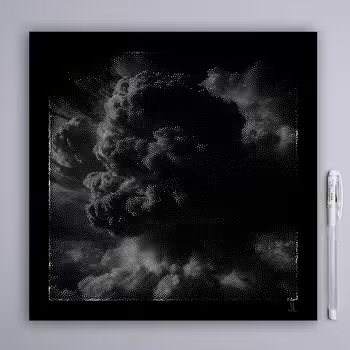
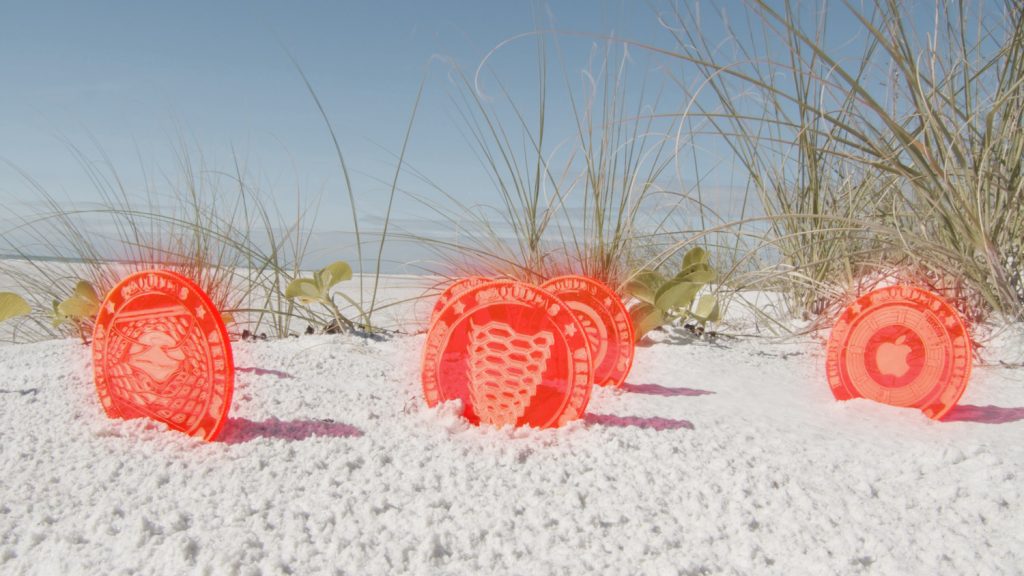
In September 2020 researcher Memo Akten's early findings on the carbon footprint of NFTs prompted Lemercier to question the platform he worked with, and he discovered that one release had consumed more energy in ten seconds than his entire studio over the previous year and a half.He has become a vocal advocate for what the NFT community calls Clean NFTs, choosing the energy-efficient Tezos blockchain and curating The FEN, a gallery on HicEtNunc showcasing emerging blockchain artists including Kelly Richardson, Shantell Martin and Zai Divecha.,In 2023 his generative collection Nuages possibles — computer-imagined stippled clouds released via fxhash — sold over 30,000 Tezos in primary sales and was the first collection to use fxhash's redeemable module, letting collectors exchange tokens for a physical plotter print.
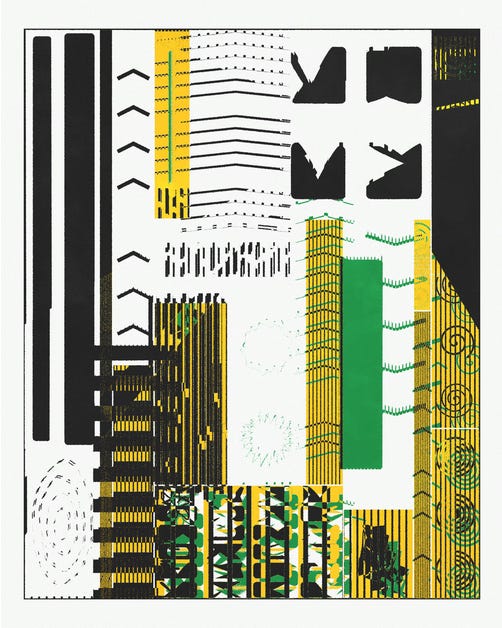
In December 2025 he released Incomplete Landscapes on objkt.one, presented at Art on Tezos: Berlin 2025, an algorithmically generated landscape animation, built in HTML, JavaScript and WebGPU with his assistant Martin Pirson, that never repeats the same image twice. Collectors can export a still frame, which he turns into a physical plotter drawing. The work continues a decade-long plotter drawing practice inspired by the sublime landscapes of 18th-century Romantic painting, and follows a 2019 visit to Europe's largest coal mine near his studio in Brussels that turned him toward climate-focused work. With Bibasse he has also started the Solar Lab, a low-tech project using solar power and tools such as 3D printers, laser cutters and CNC machines to work with locally sourced wood rather than plastic.