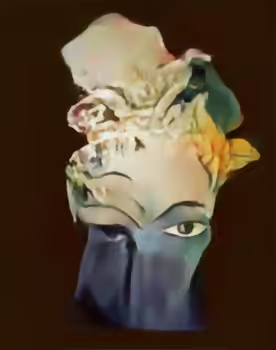
Harshit Agrawal is an Indian artist who works with artificial intelligence, virtual reality and interactive installation to examine how technology reshapes contemporary life.,His 2019 interactive work Masked Reality used facial-recognition AI to transform a viewer's expression into that of a Kathakali or Theyyam performer, drawing on the caste histories behind those two performance traditions.,
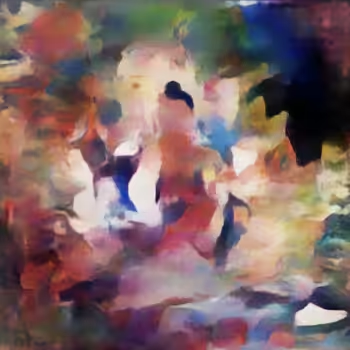
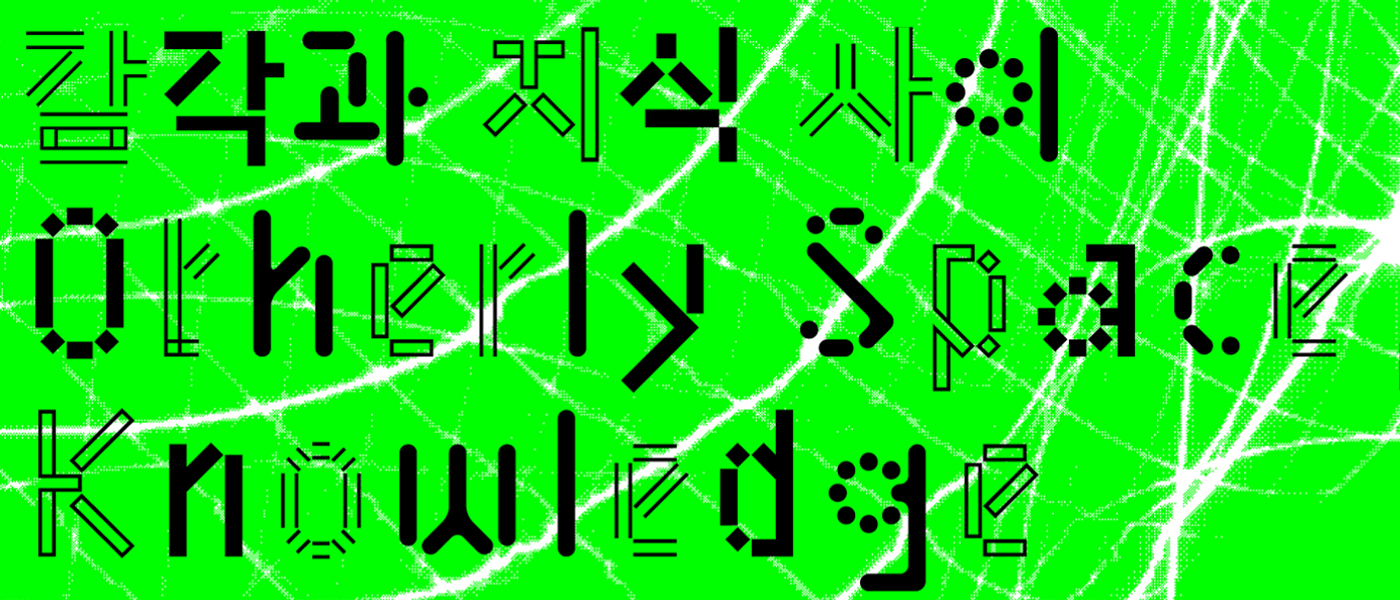
Agrawal studied at the MIT Media Lab and IIT Guwahati before developing an AI art practice centred on what he calls “the poetics of technology”.In 2018 he showed alongside Sang-won Leigh at “Otherly Space / Knowledge”, a group exhibition on data and public space at the Asia Culture Center in Gwangju, South Korea.This exploration continued in the series Machinic Situatedness, which used generative adversarial networks trained on Buddhist painting styles to probe the cultural assumptions built into AI, referencing Nam June Paik's video work TV Buddha.Presented by ARTXCODE as the exhibition “Machinic Situatedness”, the show included Masked Reality, which Agrawal tokenized on the platform SuperRare.
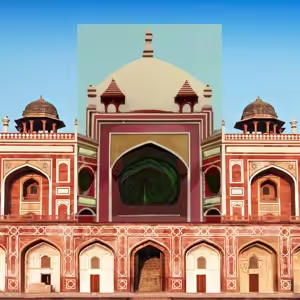
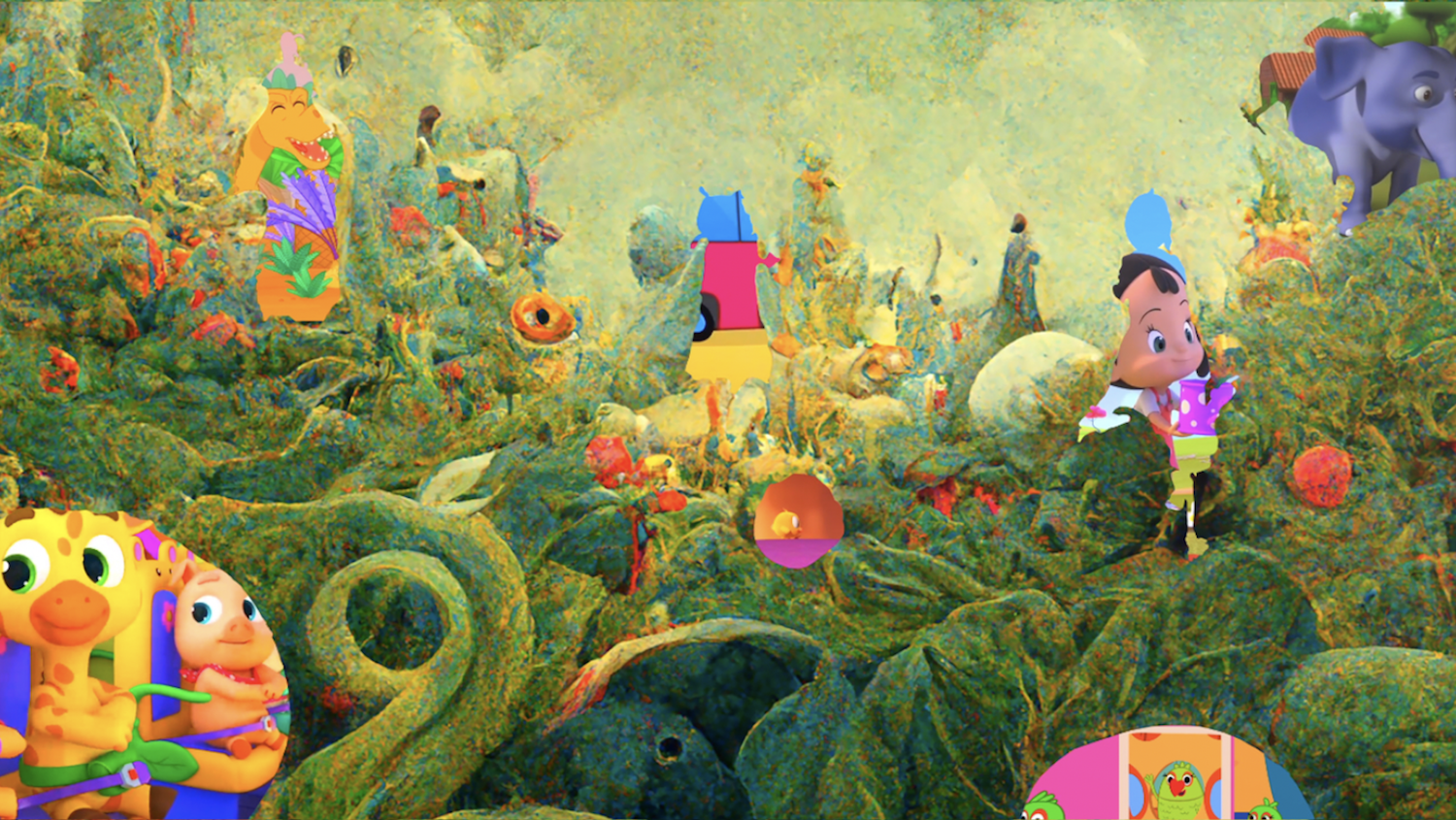
In 2022 Agrawal presented five works at “Techné Disruptors (II)”, a show curated by Myna Mukherjee that paired emerging technology with non-Western artistic traditions. Among them was The Past (Is) Tense, which used AI to layer architectural symbols of India's past with AI-imagined erasures of the country's cultural diversity. The related work Land(ing) Page built a virtual reality poppy field out of the most-viewed Facebook advertising videos in India, addressing what Agrawal called data colonization. Agrawal has said he finds it exciting to work at a moment when “the geographical boundaries of art-making and art-sharing are increasingly dissolving”.
In 2025 Agrawal contributed a VR installation to “Serpenti Infinito”, an exhibition on serpent imagery staged by Bvlgari at the Nita Mukesh Ambani Cultural Centre in Mumbai and curated by Nature Morte, alongside artists including Refik Anadol. The piece placed viewers inside a digital terrain as a serpent, described as mirroring both desire and decay.