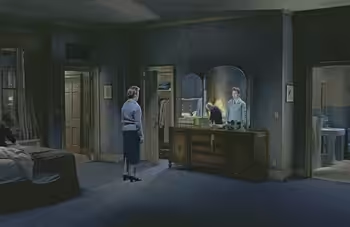
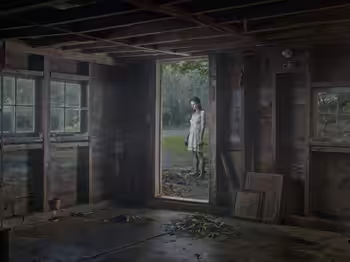
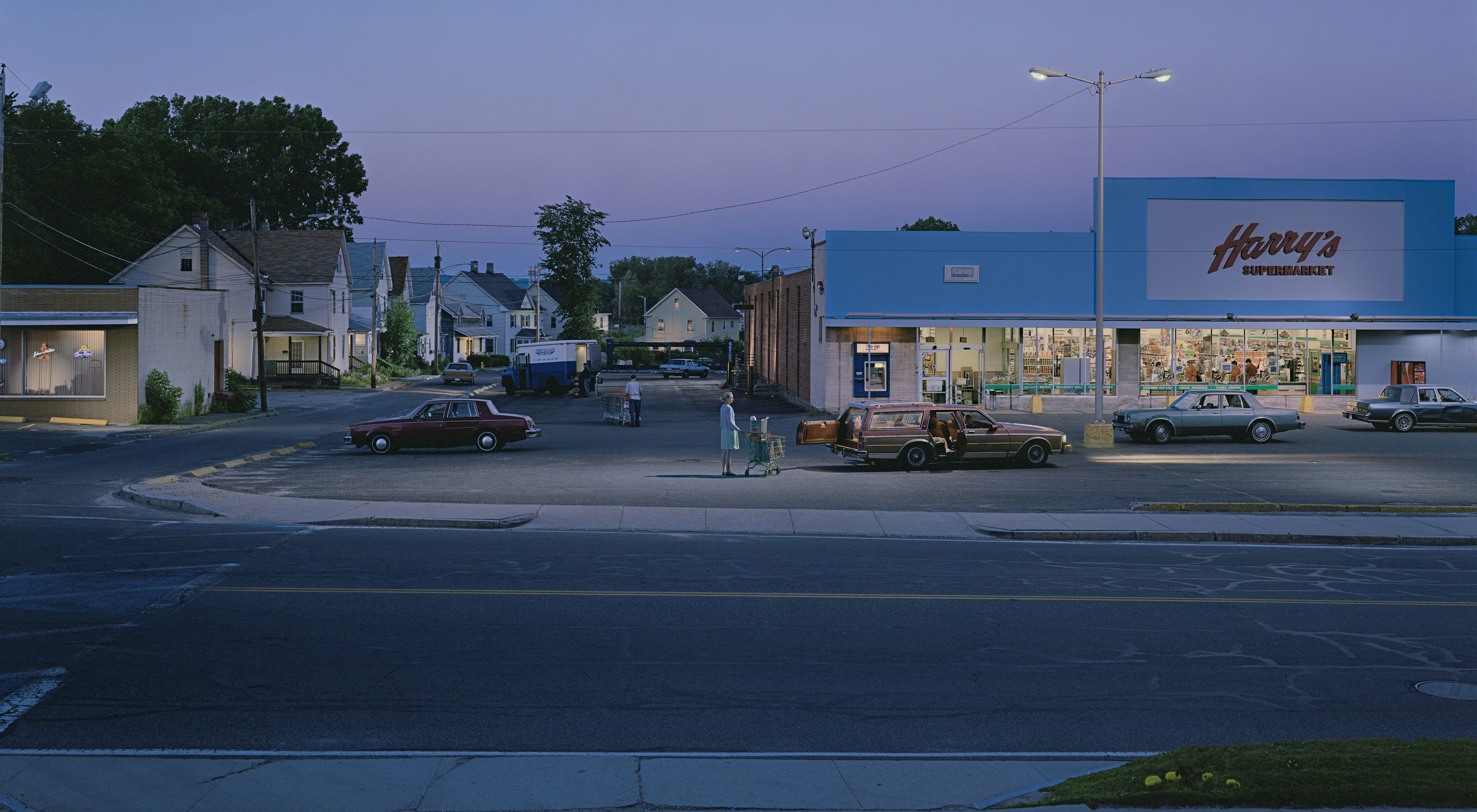
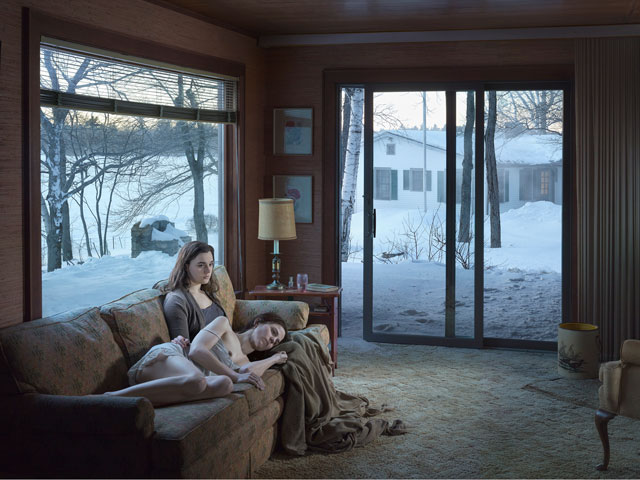
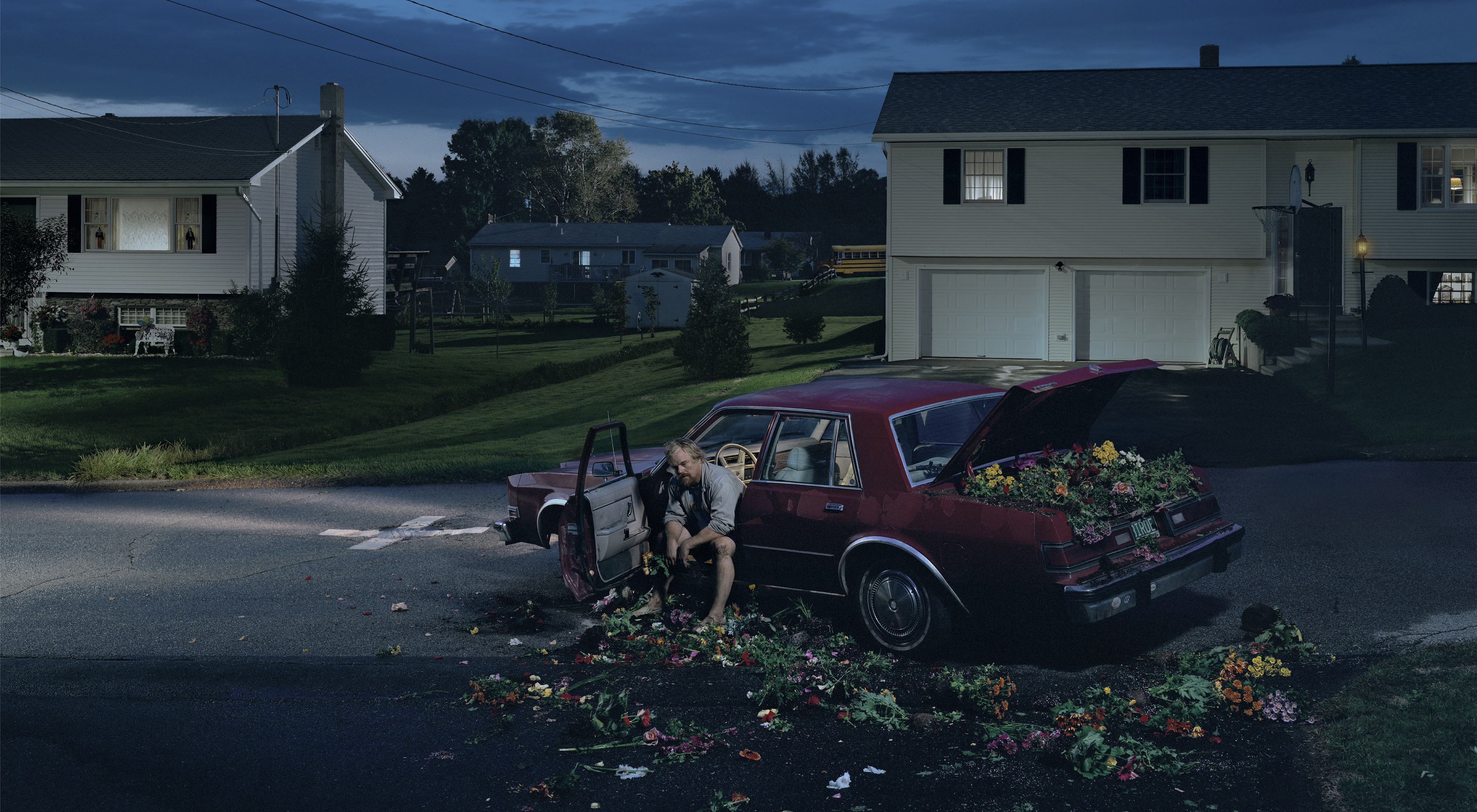
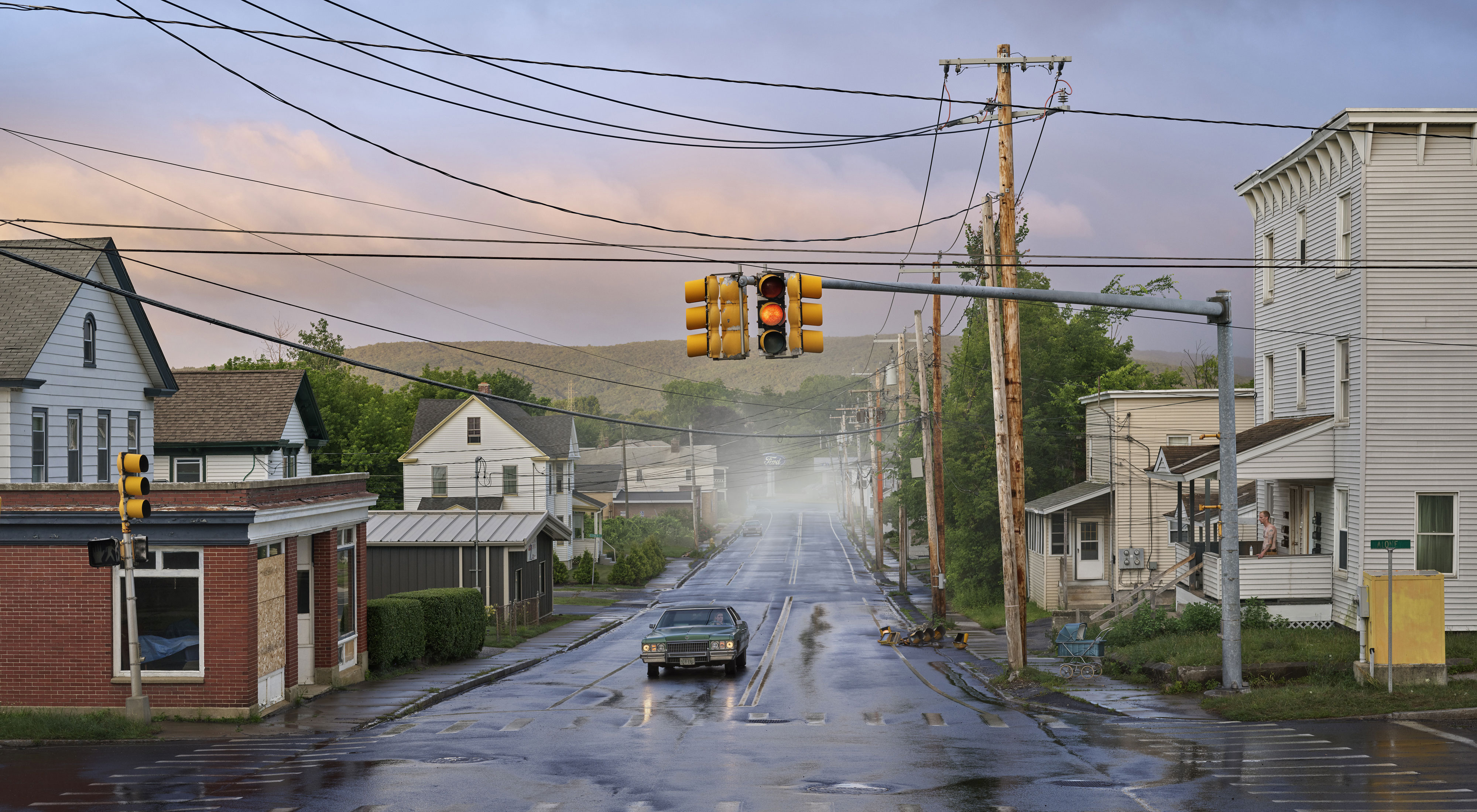
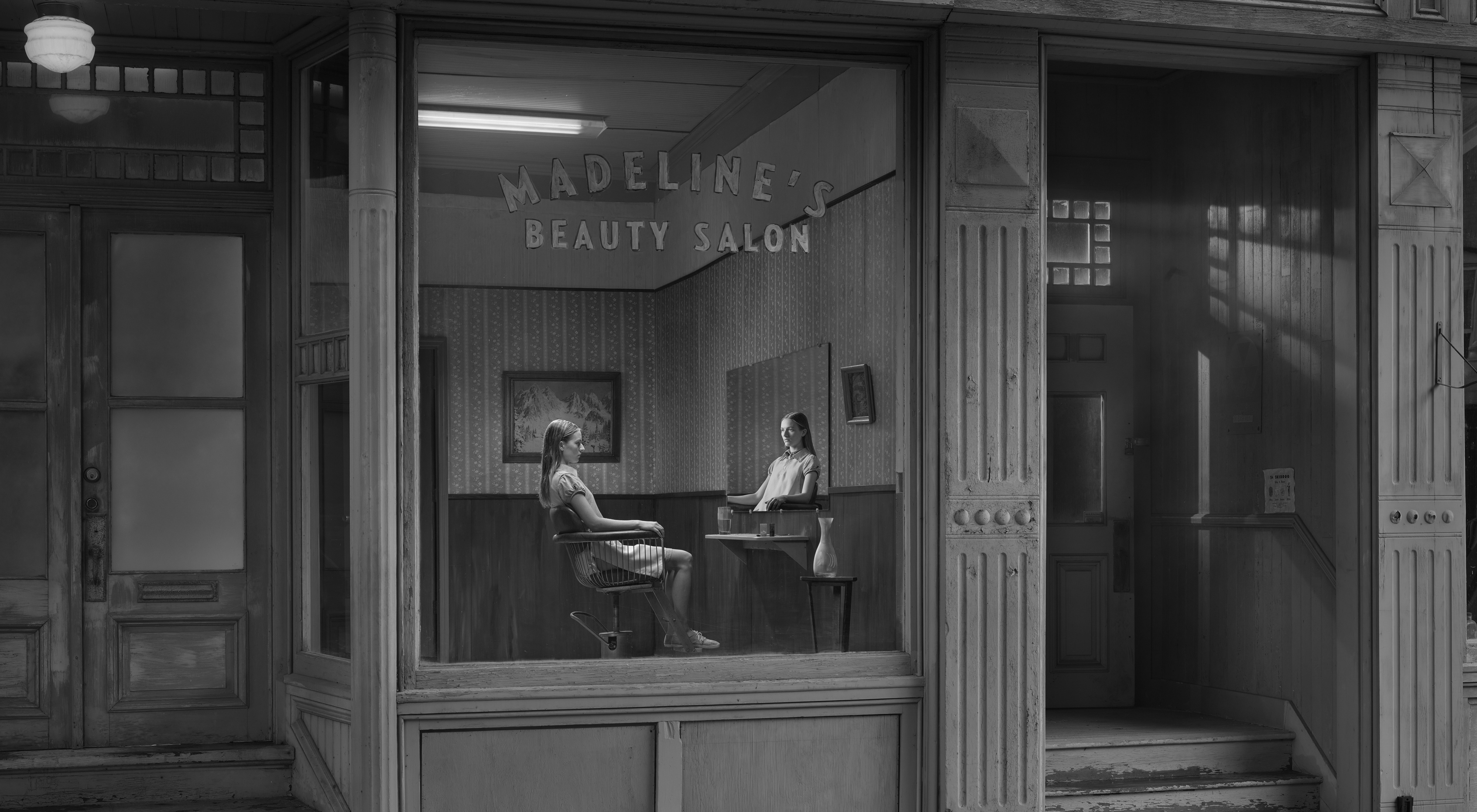
Gregory Crewdson (American, b. 1962) is a photographer known for elaborately staged, cinematic images of small-town and suburban America, built with the scale of a film production.,Each photograph distills months or years of location scouting and staging into a single, open-ended moment, shot with full lighting and production crews, actors, and special effects such as fog, rain and pyrotechnics.,,
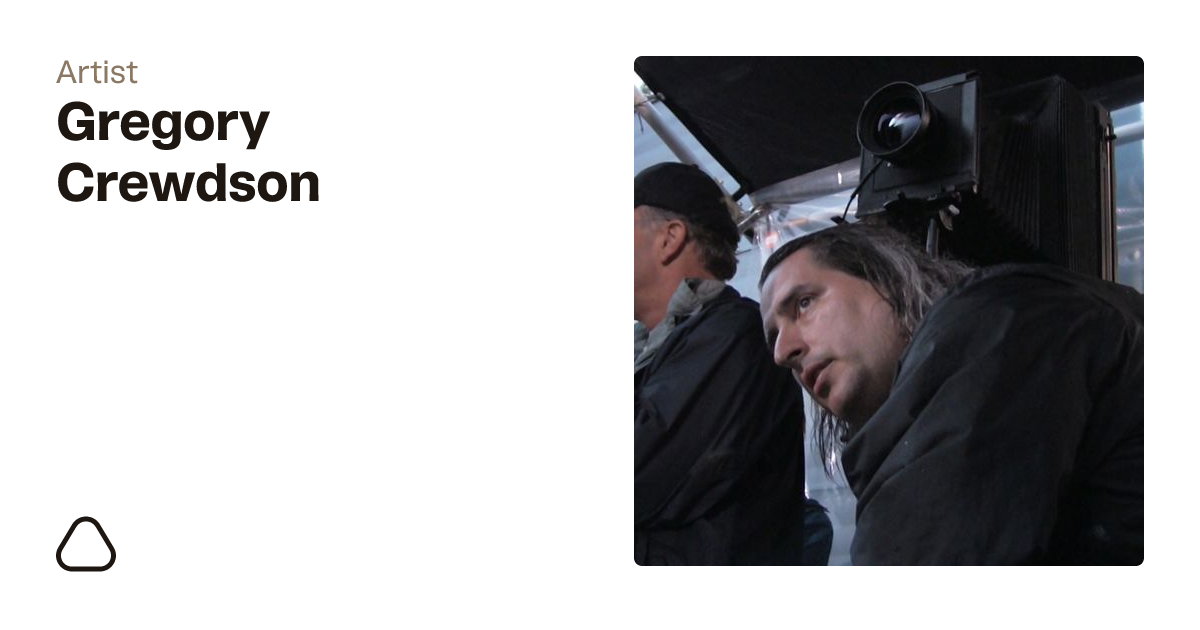
Crewdson was born in Brooklyn, New York, where his father worked as a psychoanalyst with an office in the basement of the family home. As a child he tried to listen to his father's therapy sessions through the floorboards, an experience he later described as a metaphor for his own work of projecting hidden fantasies through photography.He earned an MFA from Yale in 1988 and later became Director of Graduate Studies in Photography there, having taught for more than twenty-five years.
Twilight, shot between 1998 and 2002 in the same Massachusetts town where Crewdson had spent childhood holidays in a log cabin, set a thematic and technical precedent for much of his later work. The series' forty images were shot on a large-format Sinar F1 8x10 camera, with a crew that included aerial engineers, pyrotechnicians and a taxidermist. Suburbia in Twilight sits at the boundary between the natural and the artificial, with windows, thresholds and the twilight hour itself recurring as motifs of transition.In Beneath the Roses, made between 2003 and 2007, he moved to larger, panoramic prints of anonymous townscapes and interiors, including a pregnant woman on a wet street corner before dawn and a man in a business suit reaching toward rain beside his car.,For Dream House in 2002 he staged twelve domestic interior scenes with actors including Philip Seymour Hoffman, Tilda Swinton and Gwyneth Paltrow.
Cathedral of the Pines, made in 2013 and 2014 in the rural woodlands around Becket, Massachusetts, followed his marriage ending and his move into a church near where the pictures were shot. He has said the photographs, which draw on nineteenth-century American landscape painting, are not directly autobiographical but derive from his own psychological anxieties, fears and desires.In An Eclipse of Moths (2018-19) he turned to the rusted, post-industrial landscapes of small-town America, and in Eveningside (2021-22) he made his first monochrome series, photographing workers in quiet, gothic scenes reminiscent of film noir.,His work is held in the collection of the Museum of Modern Art in New York and has been exhibited internationally, including at Gagosian Gallery.