Eric De Giuli is an algorithmic artist and theoretical physicist who makes generative artworks as executable code, rendered live and interactively in the browser.His work channels his research into the physics of self-organization and the origin of life, asking what distinguishes a living system from an inanimate one. He began releasing this work as NFTs in 2021, after a decade developing generative structures within physics research.
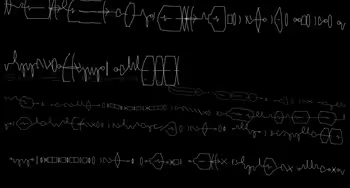
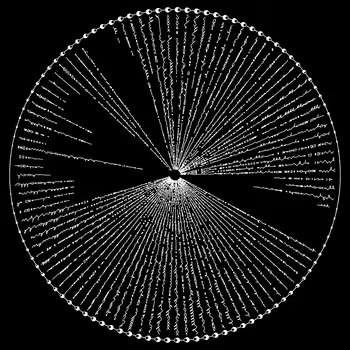
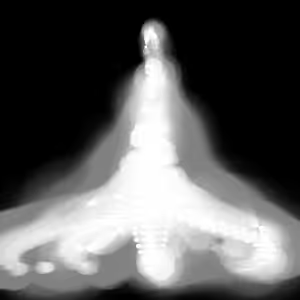
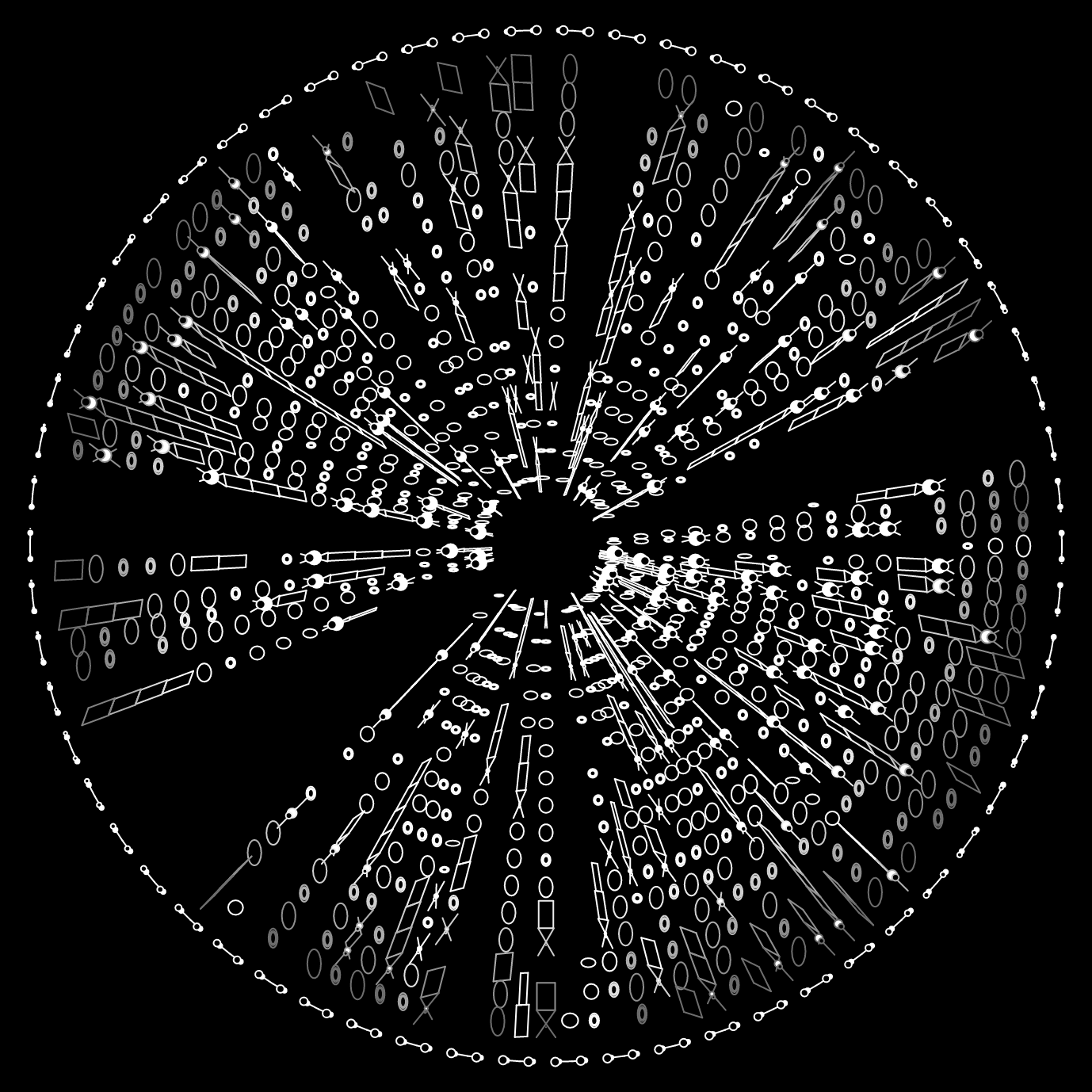
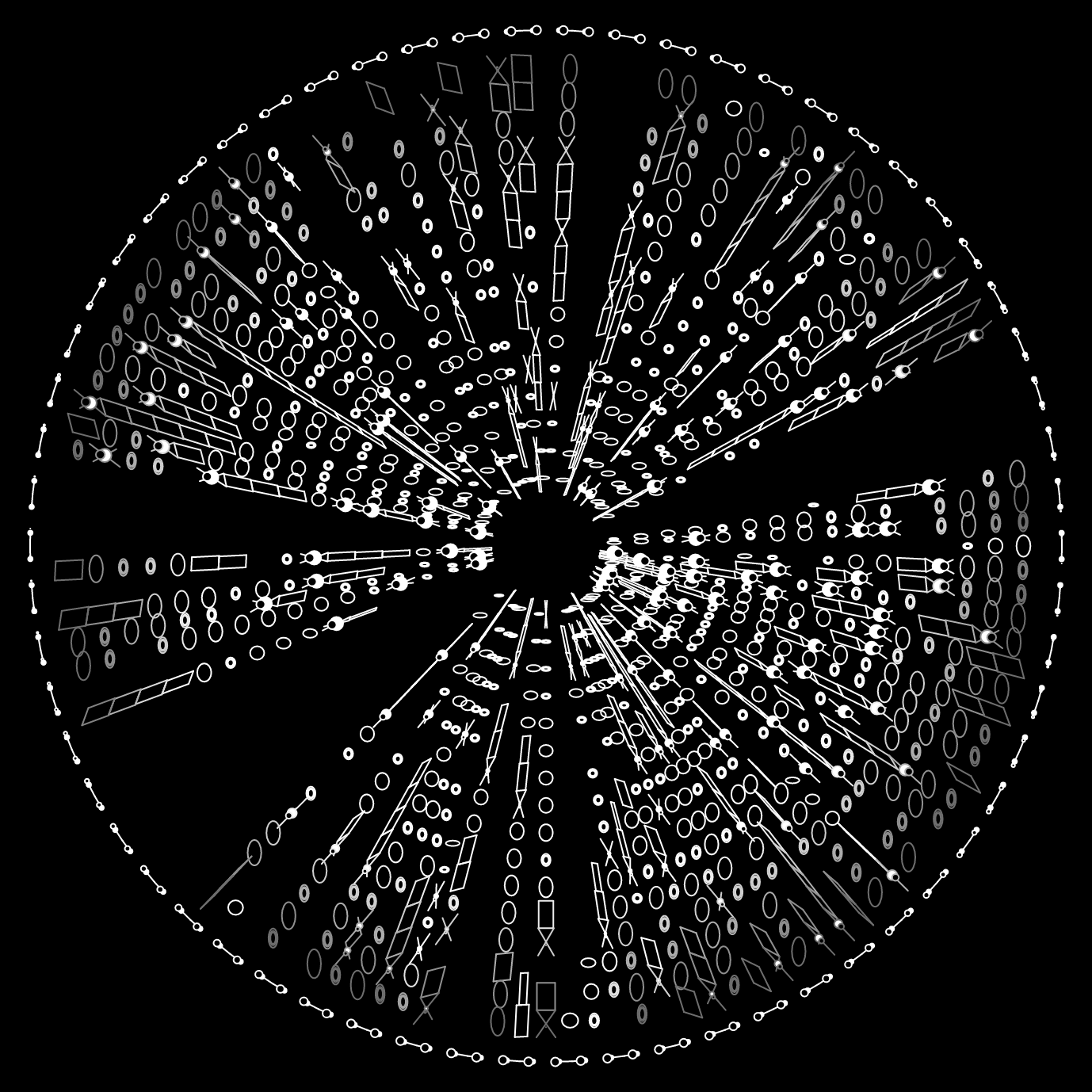
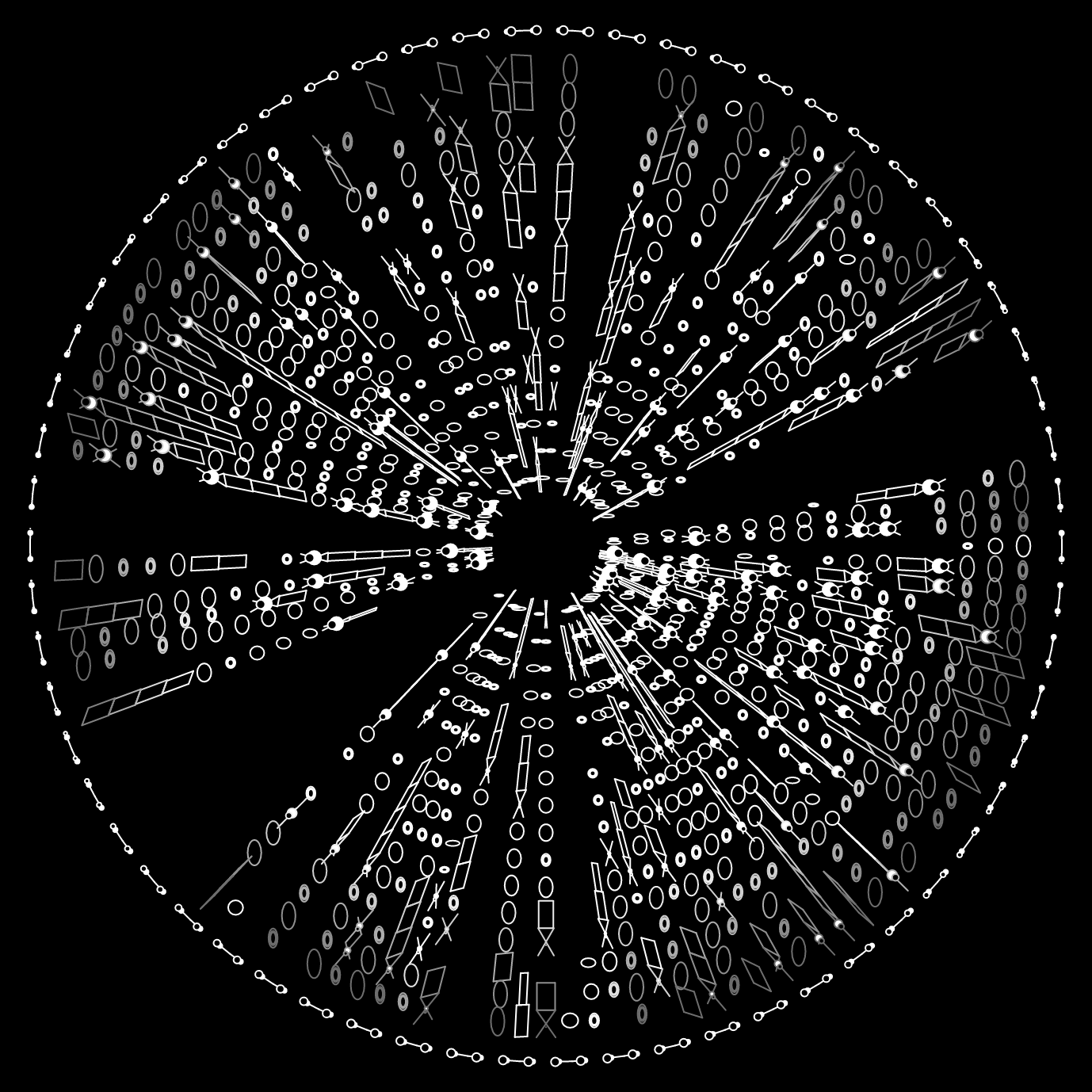
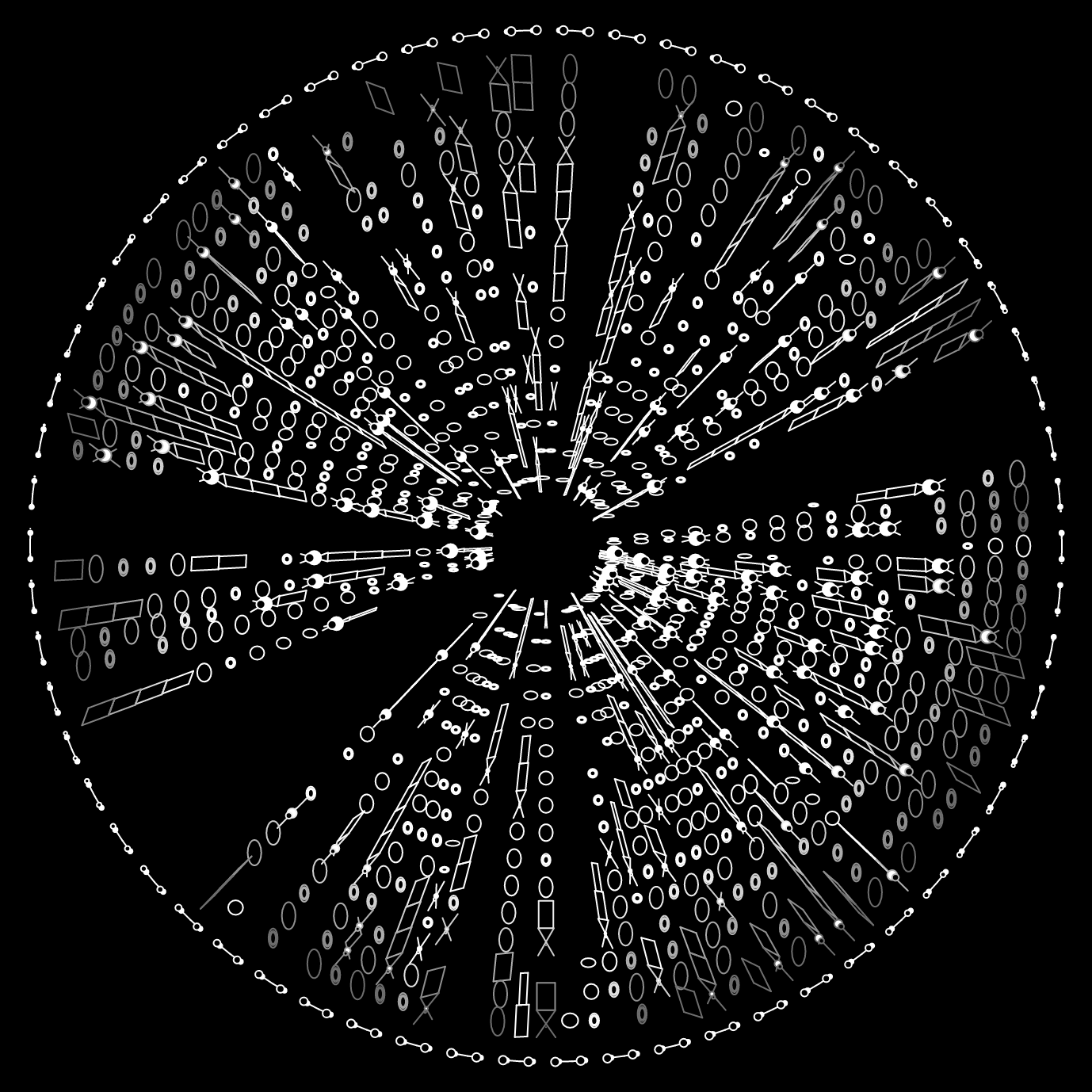
His first series, alien tongues, 2021, imagines languages spoken by extraterrestrial civilizations, drawn from a shared alphabet of 30 symbols and organized by geometric grammar.,alien codex, 2021, followed with imagined artifacts inscribed with these invented languages, akin to the Pioneer plaque NASA sent into space to represent humanity to any civilization that might find it.Spectral Beings, 2021, a set of 888 generative works with code stored on the Ethereum blockchain, imagines alien creatures composed entirely of self-organizing electromagnetic fields.De Giuli later learned that the series echoed Herbert W. Franke's 1950s analogue generative work Dance of the Electrons, made by the physicist-artist using an oscillograph.
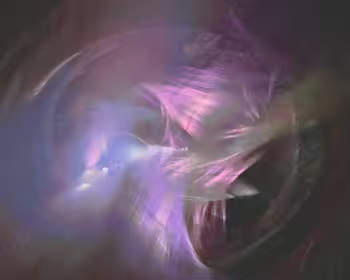
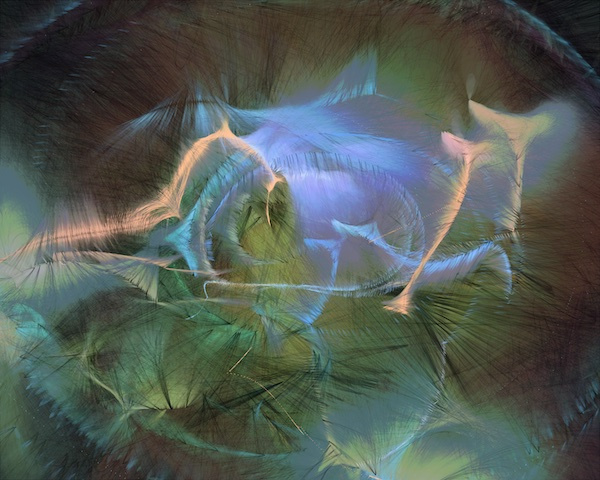
In Mazinaw, 2022, released on Art Blocks, De Giuli designed code capable of generating an unbounded variety of emergent structures, of which only 256 outputs were ever minted.Glass, 2022, visualizes the boundary between quantum and classical reality through overlapping panes whose orientation appears to contradict itself, based on the Consistent Histories interpretation of quantum mechanics.Calian, 2023, launched through an Art Blocks Curated Dutch auction, simulates evolving ecosystems that extend the Gray-Scott reaction-diffusion model, questioning what distinguishes a living system.,The collection was exhibited in “Collēctīvus: Computation, Consciousness, and Collective Memory” at Art Blocks Gallery in Marfa, Texas, in 2023.
De Giuli has continued this line of work in Atlas, 2023, and Pax, 2024, released on Art Blocks Studio, and in Zero (Broken Symmetry), 2025, released through SOLOS at Verse. In 2024 he spoke on the connections between art and science at the Generative Art Summit at the Akademie der Kunst in Berlin, in a panel alongside William Latham.