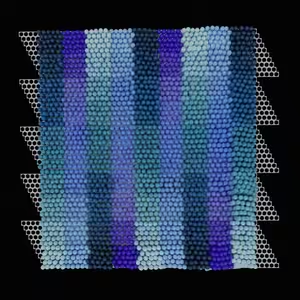
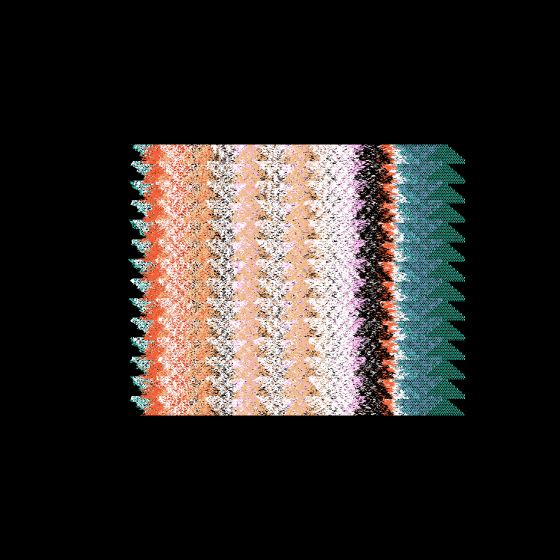
Chris Follows is an artist and researcherwho makes mesh paintings, pushing acrylic paint through perforated aluminum mesh to produce a pixelated image that resembles a cross between a tapestry and a lithography print.,He developed the technique from playful attempts to hand-replicate offset lithography billboard posters, later carrying the same process into virtual reality and generative code.,,
Follows left school at 16 and spent years working as a chef before enrolling in evening life drawing classes in Wimbledon, which led him to a foundation course and a degree at Wimbledon School of Art, where he developed the mesh painting technique in his final year.The process is largely mechanical: he pushes paint through the mesh from behind, using paper templates to guide the image, and only sees the result once he turns the mesh over.
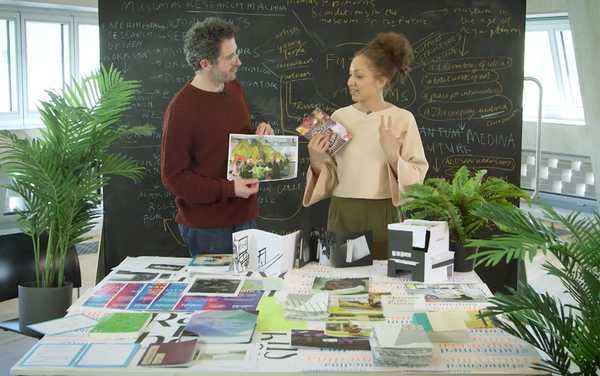
After art school he became a multimedia technician at Wimbledon School of Art and later Digital Learning Manager at the University of the Arts London, founding the Digital Maker Collective in 2016 and becoming a Tate Exchange associate in 2017.,,As an associate he curated week-long events at Tate Modern and a single evening at Tate Britain, “Extended Realities”, an immersive walk-through reimagining the former Millbank Prison that once stood on the site of Tate Britain.The Boat (2006), shown at the National Maritime Museum alongside L.S. Lowry's Man in a Bowler Hat, took its raised, isolated viewpoint from Lowry's paintings of Glasgow Docks.Defunct football ground (2002), which shows Wimbledon FC's abandoned Plough Lane stadium before its demolition, entered the collection of the Professional Football Association.,
After losing his physical studio and his mesh and paint supplier, Follows began recreating the process digitally in 2020, rebuilding the mesh in Blender 3D and pushing virtual paint through it hole by hole in virtual reality.,He minted his first mesh painting NFT on Hic et Nunc in March 2021, and has since released digital mesh painting collections including 90 Blocks and NFTaverse on Tezos and Circular Mesh Paintings on Exchange Art.,He trained AI and LoRA models on hundreds of his own mesh paintings, made generative code works in p5.js and Processing, and produced a further mesh painting series in HTML and Three.js, Meshscapes.His digital work has been shown at NFT Paris and at Beeple's studio in Charleston, South Carolina.