Chris Coleman is a digital artist working in sculpture, video, creative coding, and interactive installation.Born in West Virginia, he received an MFA from SUNY Buffalo.,He is a Professor of Emergent Digital Practices and Director of the Clinic for Open Source Arts at the University of Denver, where he is based in Denver, Colorado.,
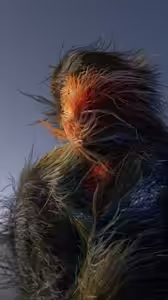
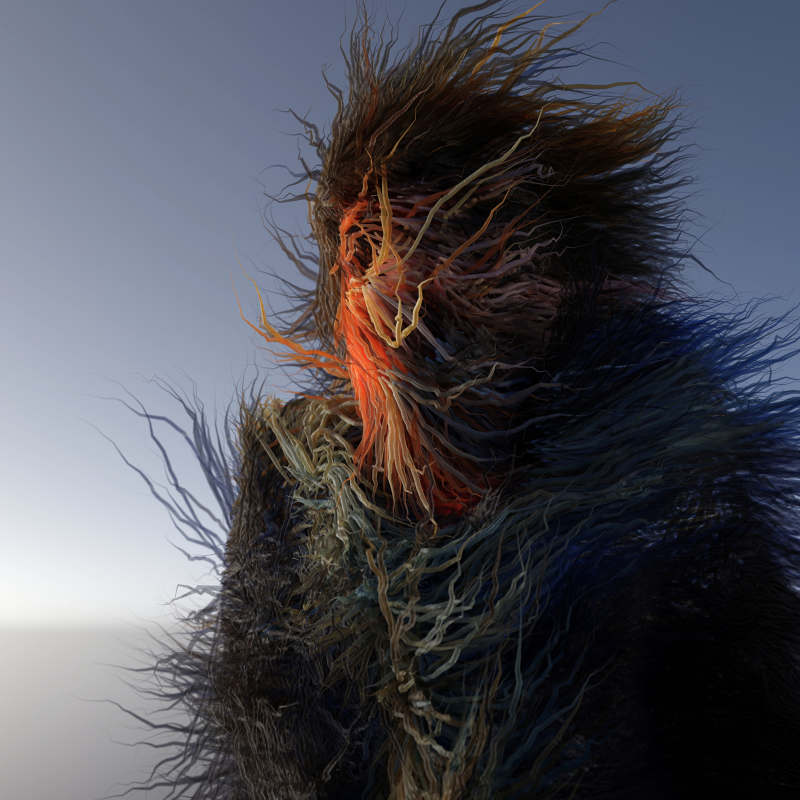
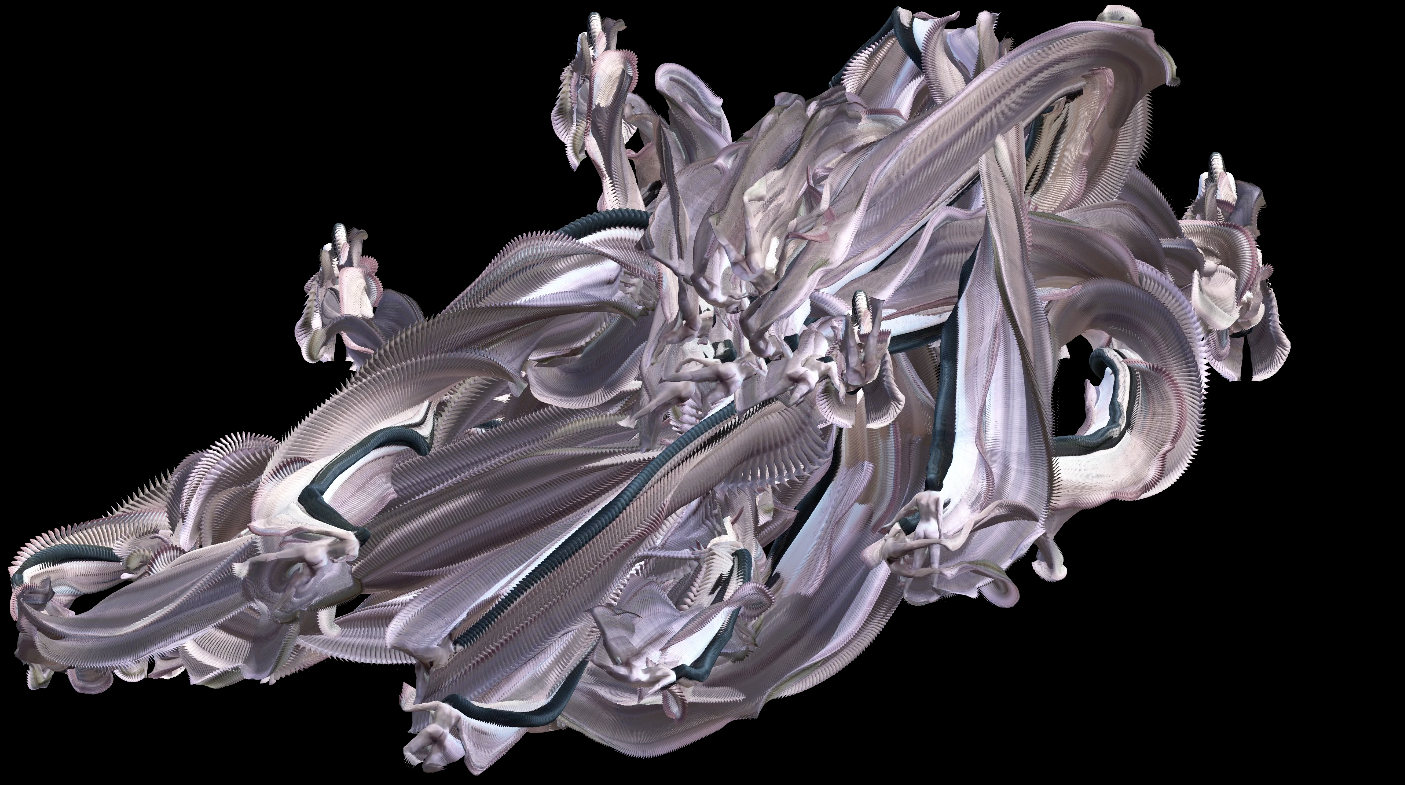
Between January and February 2022 he produced GeoPortraits, a daily series of works built from 3D scans of people he had gathered across South America and Asia in 2015 and 2016. Each piece followed a fixed set of self-imposed rules.Every color had to come from the original scan, the lighting was limited to a single virtual sky, and the render had to keep the subject unrecognizable.GeoPortrait 051 (Living), reconstructed from a 2016 scan of a person in Rosario, Argentina, was minted as a one-of-one in September 2022.
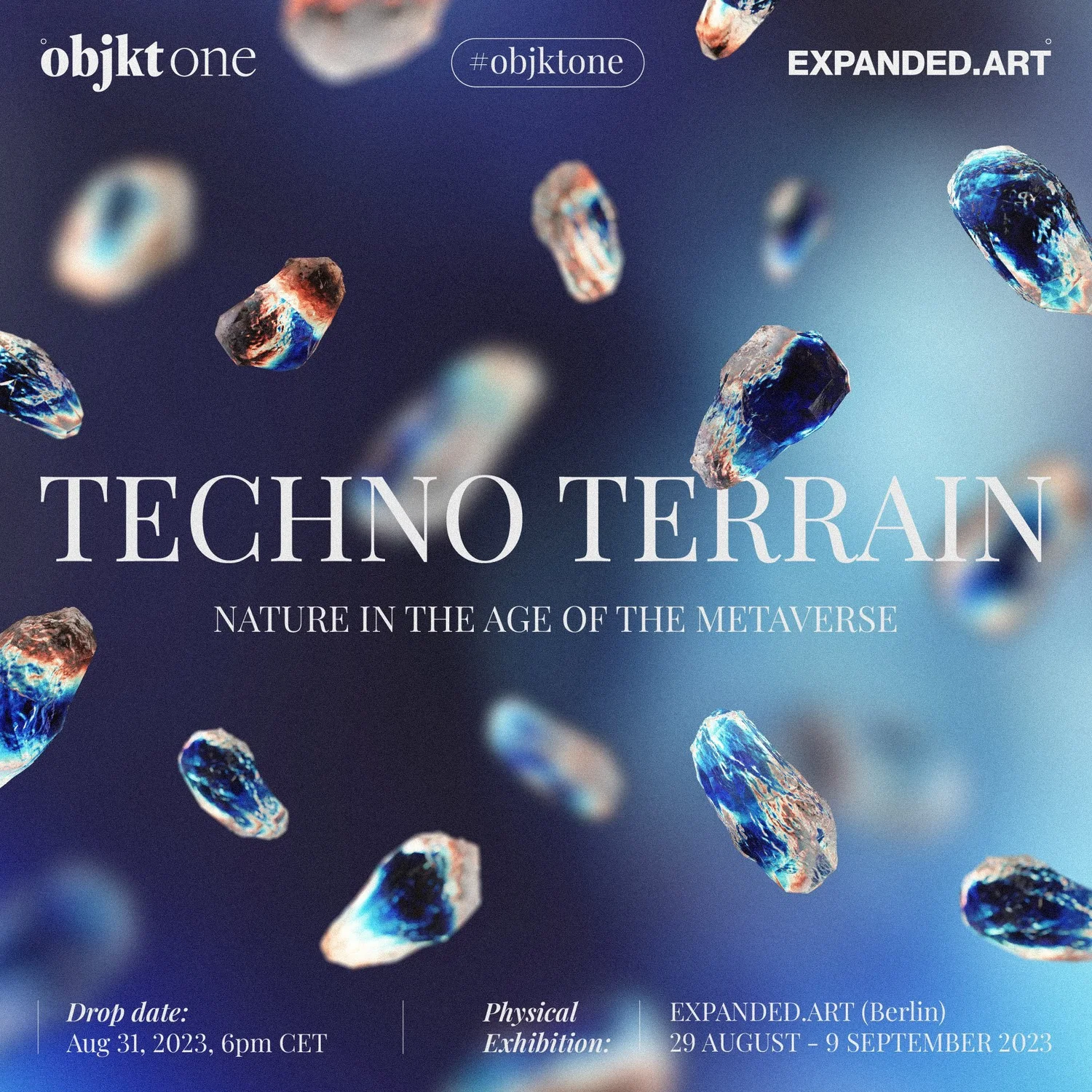
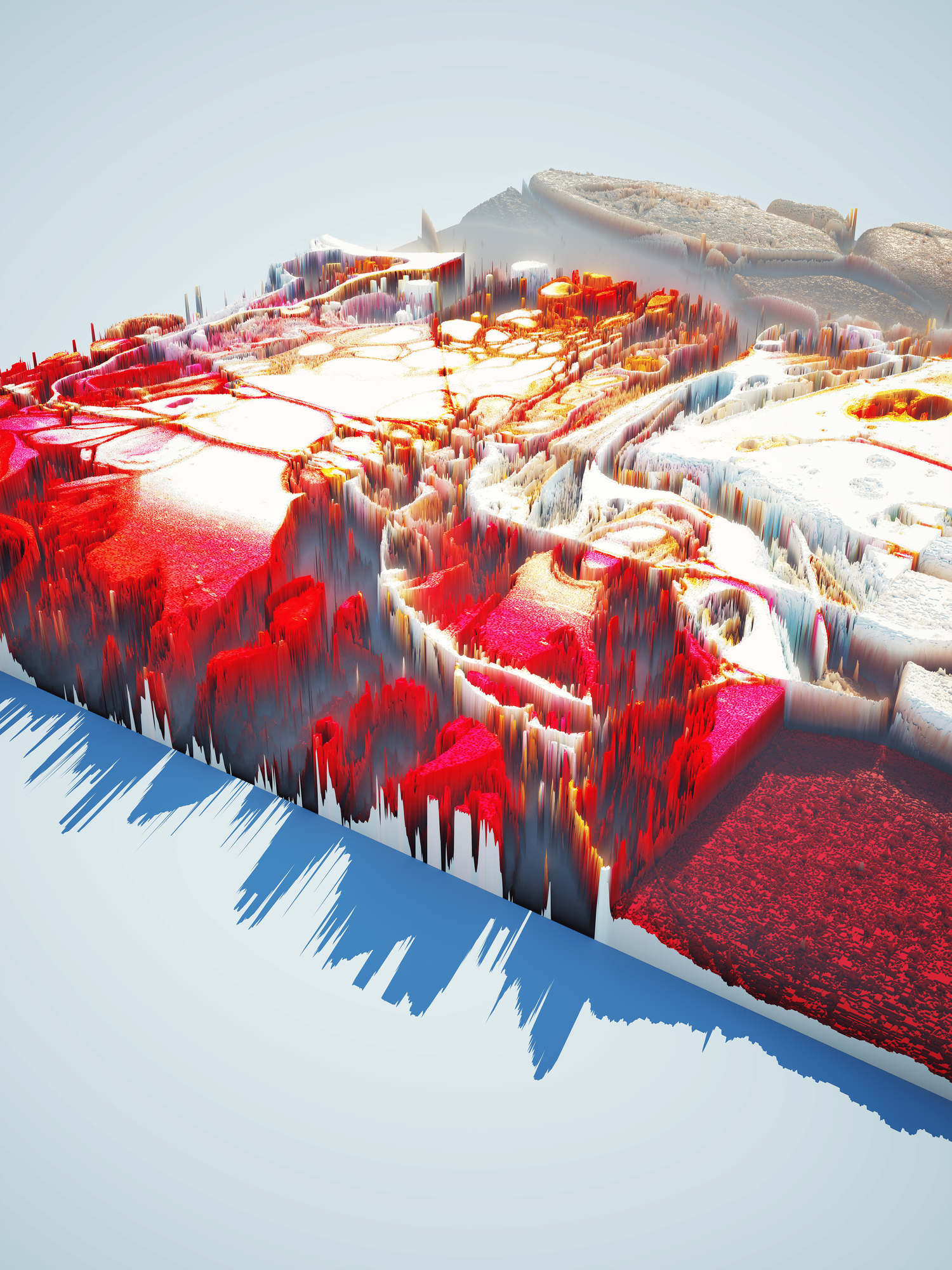
In 2023 he contributed a piece to “Techno Terrain: Nature in the Age of the Metaverse”, a Berlin group show curated by Anika Meier for Expanded Art with objkt.one. The work grew out of a residency at a marble quarry in northern Italy, where he photographed the site and turned the images into 3D models with technical help from Theo Horsmeier. He has described the piece as a response to “kicking these giant cubes of marble out of the earth, bit by bit, over hundreds of years”, calling the process a violation of the land.Coleman also curates — he selected Paul Prudence's Fossae of Siren for the “Cyberforms” exhibition.In 2024 he nominated Rodell Warner for the Museum of the Moving Image's Community Curation initiative.
Since 2006 he and his wife, the artist Laleh Mehran, have built the Mehran/Coleman collection, which includes roughly 9,100 digital works, about 8,000 of them on Tezos, alongside several hundred physical pieces. Coleman buys most of the NFTs in the collection himself, while the couple discusses larger purchases together.He treats pinning his NFTs to decentralized storage as a form of preservation, comparing it to a collector protecting a comic book, after a service he used raised its price for pinning about 5,000 works from $8 to $100 a month.