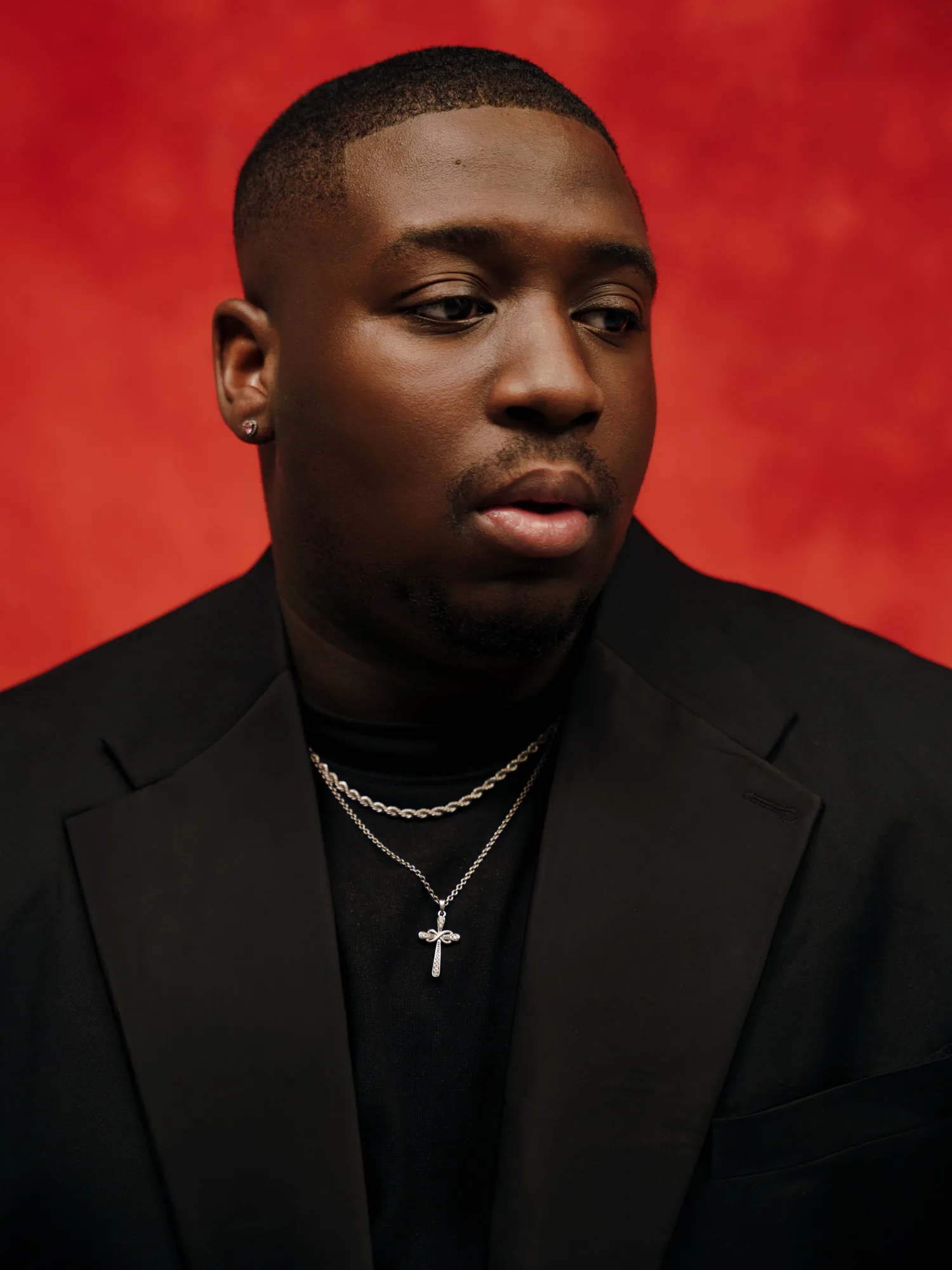
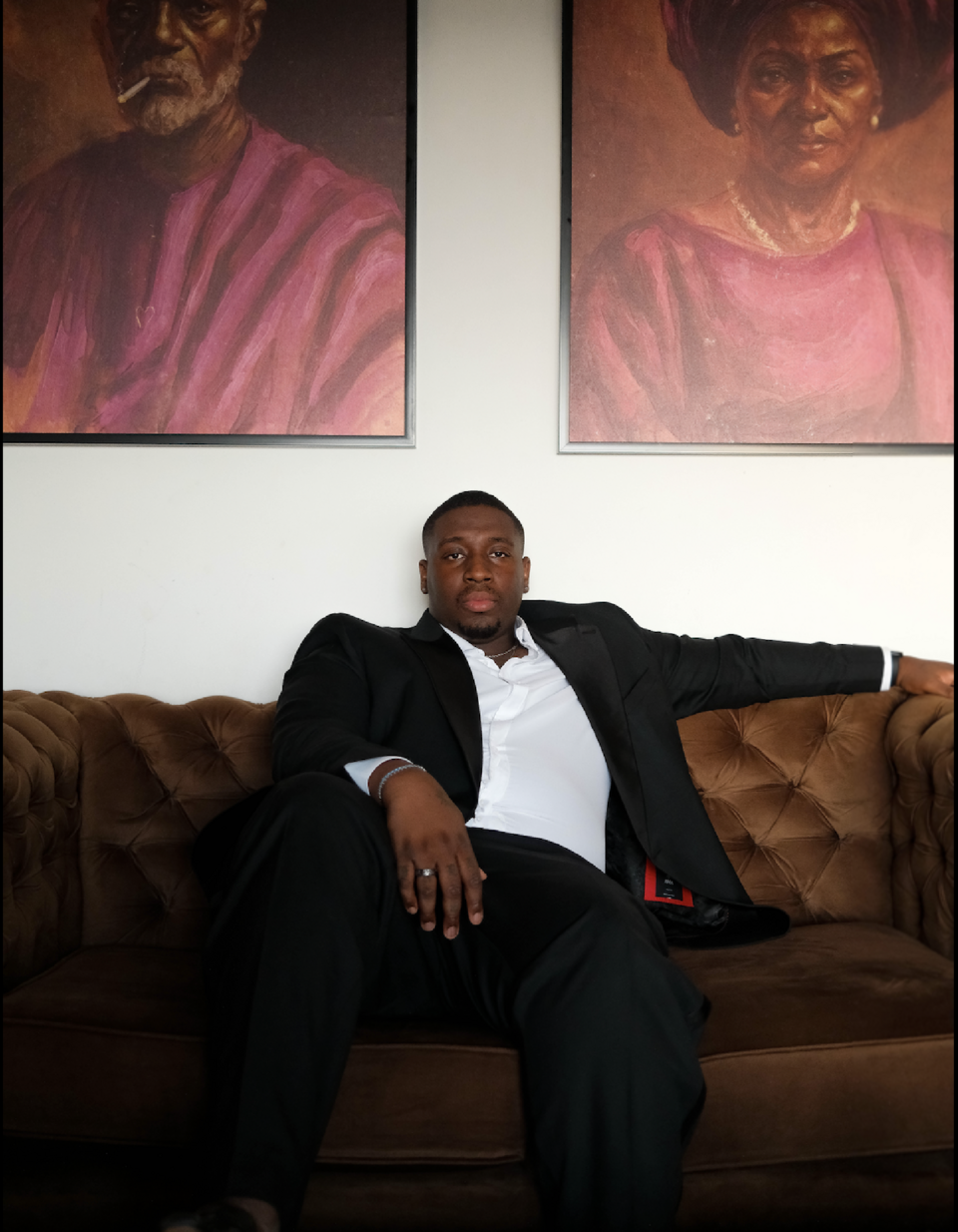
Anthony Azekwoh (Nigerian, b. 2000) is a self-taught digital artist and writer based in Lagos who paints portraits drawing on Yoruba cosmology and African folklore, rendered with the cracked, layered texture of traditional oil painting.,He taught himself to paint digitally in Photoshop after his laptop broke, studying neoclassical painters such as Jacques-Louis David and Norman Rockwell and fusing their technique with the mythology he grew up hearing.
Azekwoh began writing as a child, encouraged by his secondary-school English teacher, the writer Kola Tubosun.,When his laptop broke and he could no longer write, he picked up leftover pens and paper from his parents' house and began drawing instead, later teaching himself digital painting in Photoshop.He left Covenant University, where he was studying chemical engineering, in 2021 to commit to art full-time, a decision that caused friction with his father.,His early influences included the neoclassical painters Jacques-Louis David and Norman Rockwell, and later his friend and mentor Duro Arts (Durotimi Bolaji-Idowu), whom he met at a podcast show.,
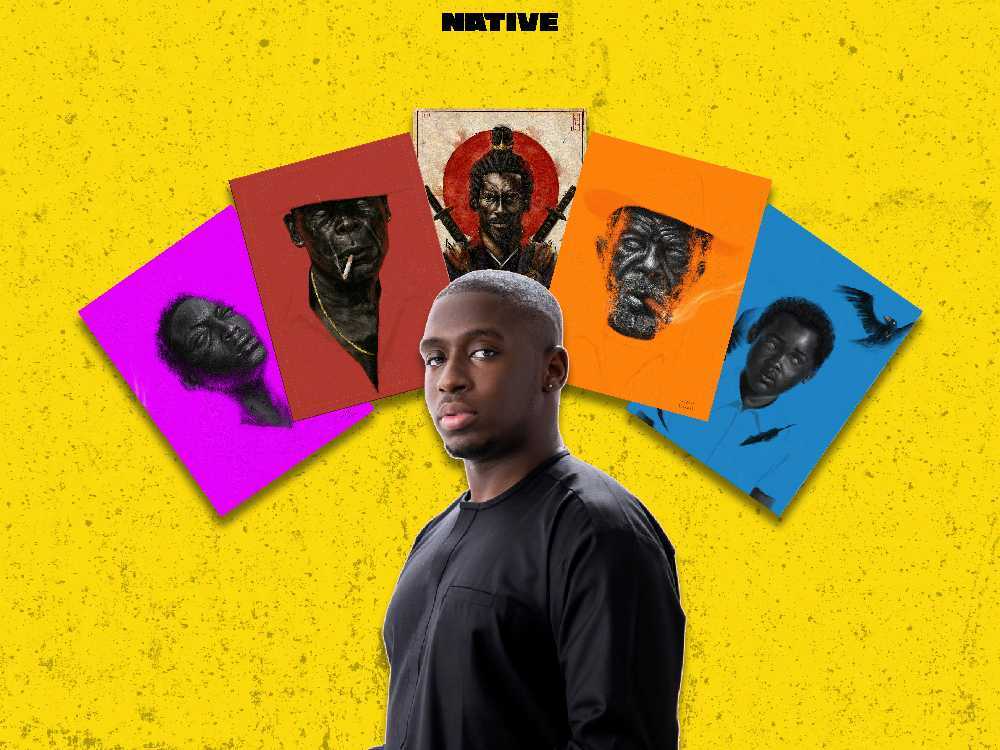
In 2020 Azekwoh's painting The Red Man, a portrait of a Black man with a cigarette against a red background, went viral online.,Made as a practice piece, it sold on SuperRare in 2021 for 5.5 ETH, then about $25,000. That year he also painted Yasuke, depicting the historical Black samurai who served in feudal Japan, which became the top Google image result for the subject and drew attention from writers including Neil Gaiman and the filmmaker Matthew A. Cherry.He designed album and single covers for musicians including Adekunle Gold, Blaqbonez, Show Dem Camp and Masego.
His painting No Victor, No Vanquished entered the permanent collection of the Yemisi Shyllon Museum of Art at Pan-Atlantic University, the first digital painting the museum has acquired. In 2025 he also staged “THE WEDDING”, twenty-four portraits and three marble sculptures, and was a finalist that year for the Chizi Wigwe Prize for African Futurism. He has published five books, including Ṣàngó and Oya on a US imprint, and three volumes of Afrodigital on SuperRare. Ten percent of each sale funds the Rosemary Fund, a grant programme for emerging Nigerian artists that he named after his mother.