Andres Serrano (American, b. 1950) is a photographer whose work uses religious iconography, bodily fluids and confrontational subject matterto examine the relationship between the sacred and the profane.Raised Catholic in New York, he trained as a painter before turning to photography in the 1970s, developing a visual style rooted in Baroque and Old Master traditions.
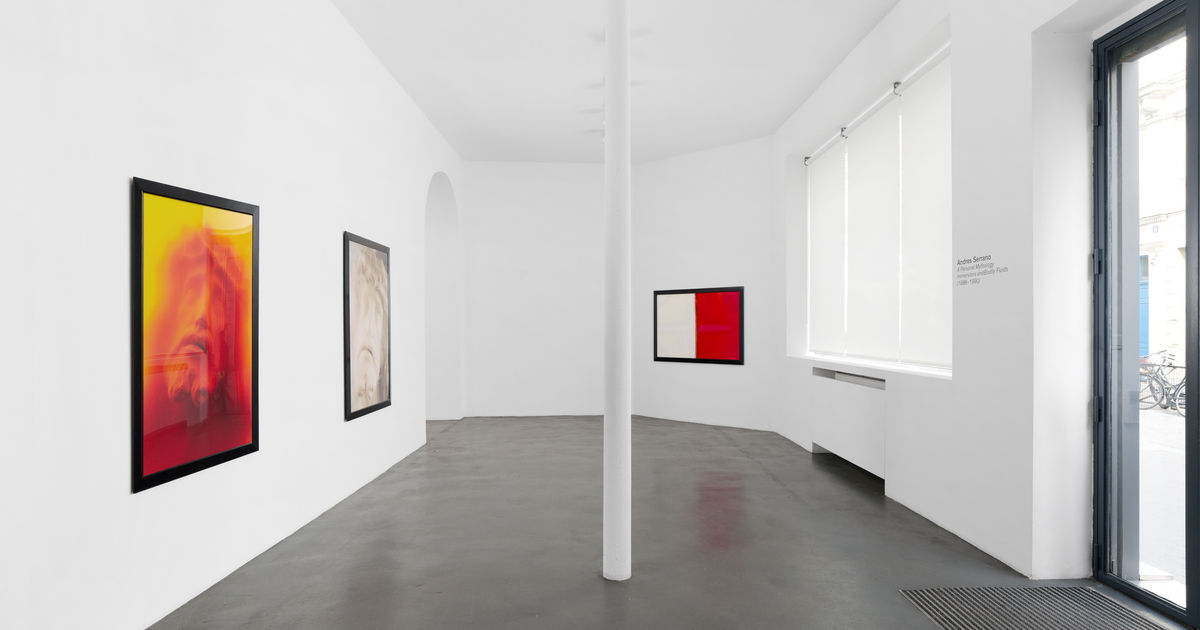
His first series, Early Works (1983-1987), replaced the traditional vanitas still life with a glass jar containing a freshly butchered calf's brain, an early instance of his shift between the sacred and the profane. In 1986 curator William Olander invited him to participate in the New Museum's exhibition “FAKE”, which led him to make Milk, Blood, a photograph contrasting milk and blood in sections modeled on Piet Mondrian's grid compositions. He extended this into the series Bodily Fluids (1986-1990), rigorously framed monochromes made using milk, urine, blood and semen, and then into Immersions (1987-1990), in which crucifixes and religious statuettes are submerged in the murky opacity of bodily fluids.
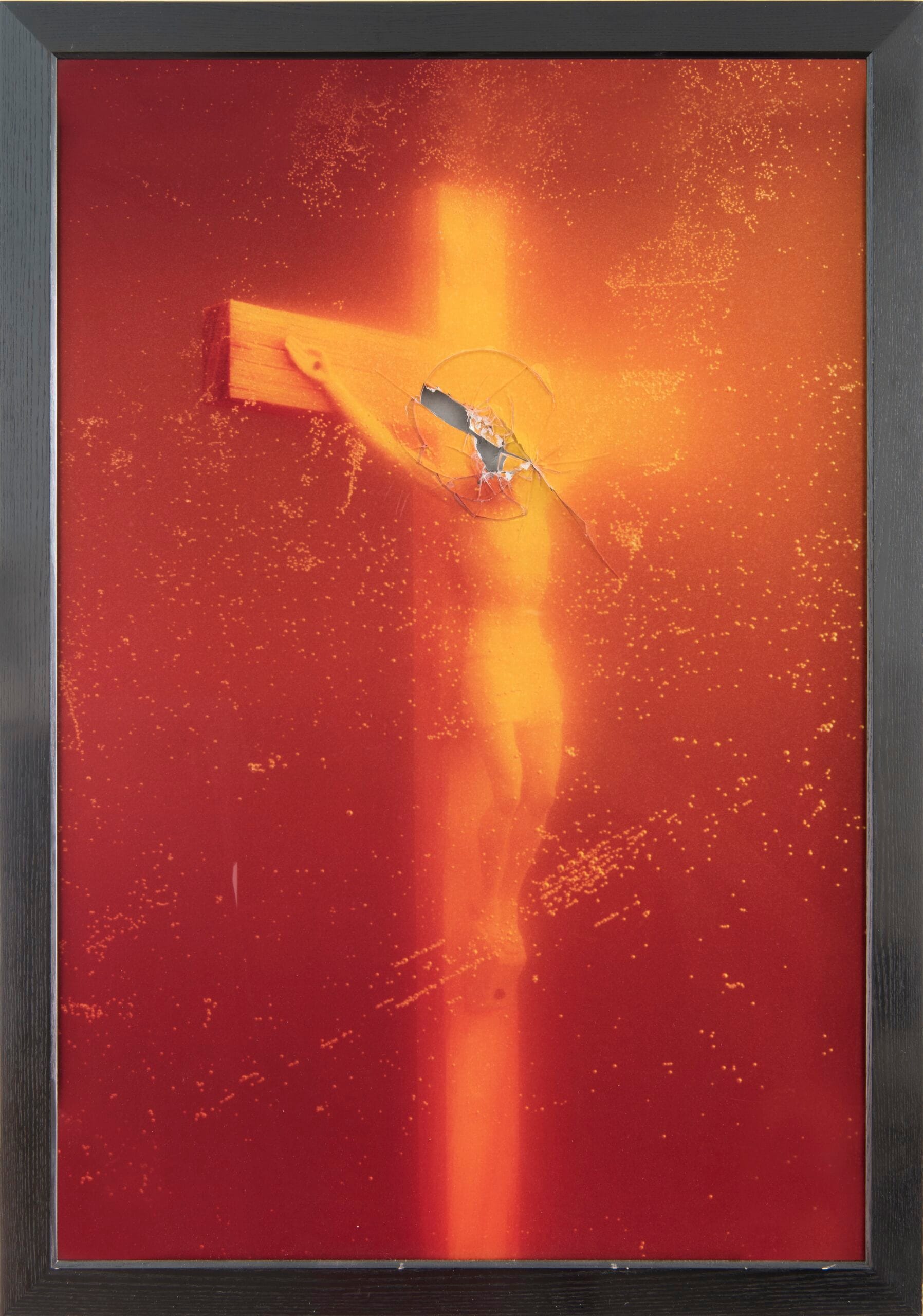
Among these, Piss Christ (1987) shows a crucifix submerged in a glass container of what was purported to be the artist's own urine.Serrano has said he did not consider whether the work was blasphemous, calling it simply “the first Immersion”, the first time he immersed an object in a bodily fluid.In 1988 Piss Christ was included in a group exhibition partly funded by the National Endowment for the Arts, and Senator Jesse Helms denounced it as “immoral trash”.Serrano recalled being denounced by Helms and other senators in May 1989. Three weeks later, Robert Mapplethorpe's exhibition “The Perfect Moment” was canceled at the Corcoran Gallery, and the wider art world rallied around both artists.
Serrano went on to photograph other charged subjects, including members of the Ku Klux Klan for his series The Klan (1990).A 2011 attack on a copy of Piss Christ by Christian protesters in France left visible damage that Serrano and the work's owner chose not to repair.Reviewing a 2025 New York survey of 1980s art, a critic described the work as no longer perceived to be so perverse, its light rendering the submerged crucifix simply beautiful.His work is held in more than seventy public collections, including the Museum of Modern Art and the Vatican Contemporary Art Collection, and he was made a Chevalier de l'Ordre des Arts et des Lettres in 2017.