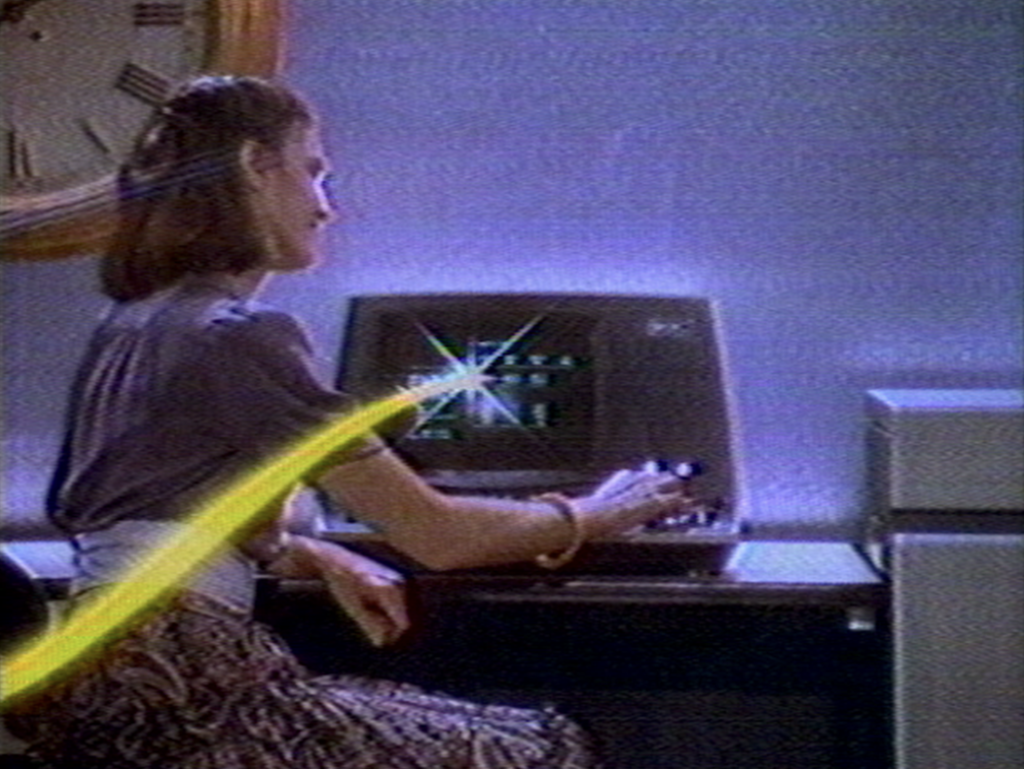
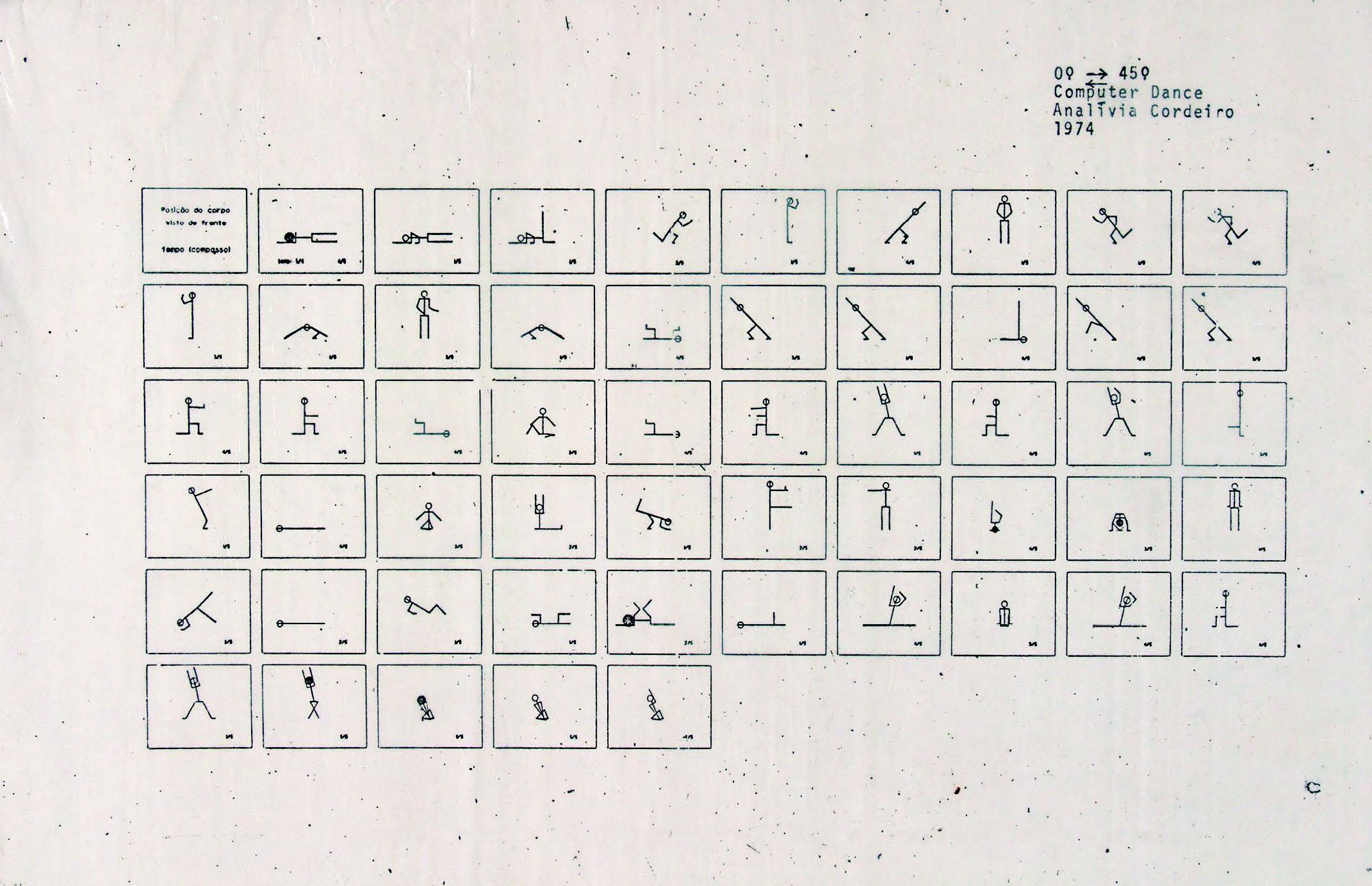
Analívia Cordeiro (Brazilian, b. 1954) pioneered computer-choreographed dance, using code to translate human movement since the early 1970s. Her 1973 work M 3x3, created on a PDP-11 computer at the State University of Campinas, is generally regarded as the first work of video art made in Brazil.
Her father, Waldemar Cordeiro, a leader of Brazil's concretist movement, showed her art and paintings from an early age. In 1971 the mathematician Vladimir Bonačić came to Brazil for the Arteônica exhibition organized by her father and taught Cordeiro, then 17, about using random choice in her work. In the 1980s and early 1990s, Cordeiro worked with the engineer Nilton Lobo to develop Nota-Anna, a notation system that registers the trajectory of body movement in space and time and displays it on screen. Her early trio of computer-choreographed works, M 3x3 (1973), 0=45 (1974), and Cambiantes (1976), were made against the backdrop of Brazil's military dictatorship.