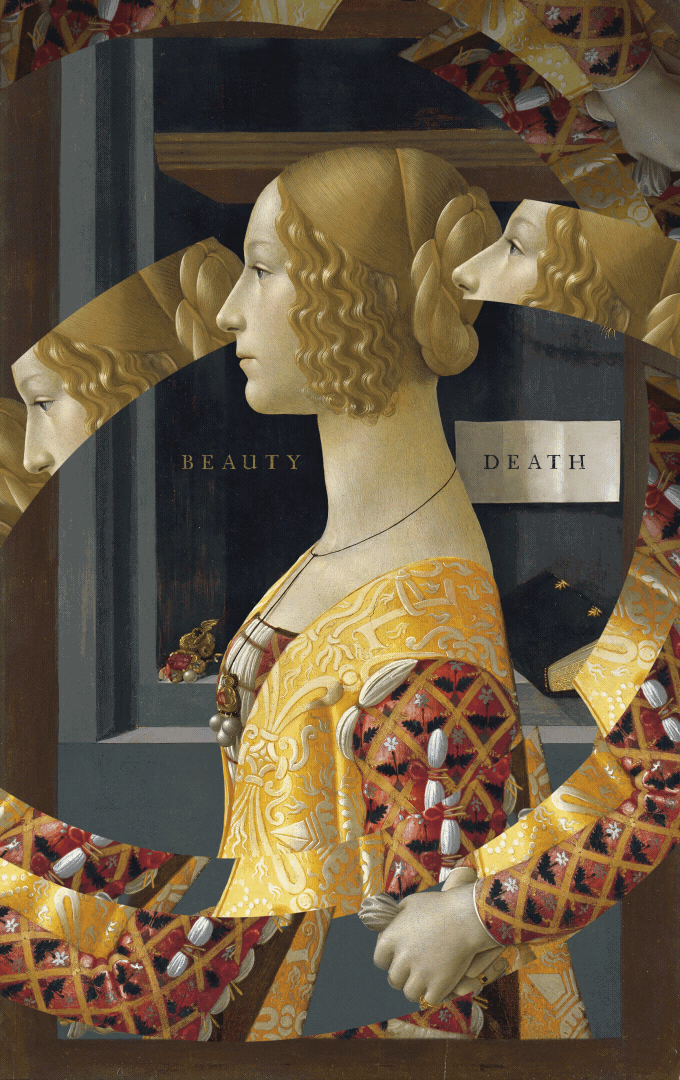
Vandalized N45
Portrait of Giovanna degli Albizzi Tornabuoni
Domenico Ghirlandaio
Portrait of Giovanna degli Albizzi Tornabuoni (1489–1490) by Domenico Ghirlandaio is a Renaissance masterpiece that captures the noblewoman Giovanna degli Albizzi, a member of one of Florence’s most prominent families. Painted in strict profile, the portrait evokes the classical beauty and dignity of Roman coins, emphasizing her social status and idealized elegance.
Though celebrated for its visual harmony and rich detail, the painting holds a deeper meaning. Giovanna died young, and this portrait was commissioned posthumously as a tribute. Surrounding her are symbolic objects—such as a book of hours and a string of coral beads—that speak to her virtue and piety.
A Latin inscription beside her reads: "Art, if only it could depict character and virtue, there would be no image more beautiful on earth." This suggests that while the painting captures her physical appearance, her true essence lies beyond the surface.
Ghirlandaio’s work becomes not just a portrait, but a philosophical meditation on beauty, mortality, and the limits of representation.