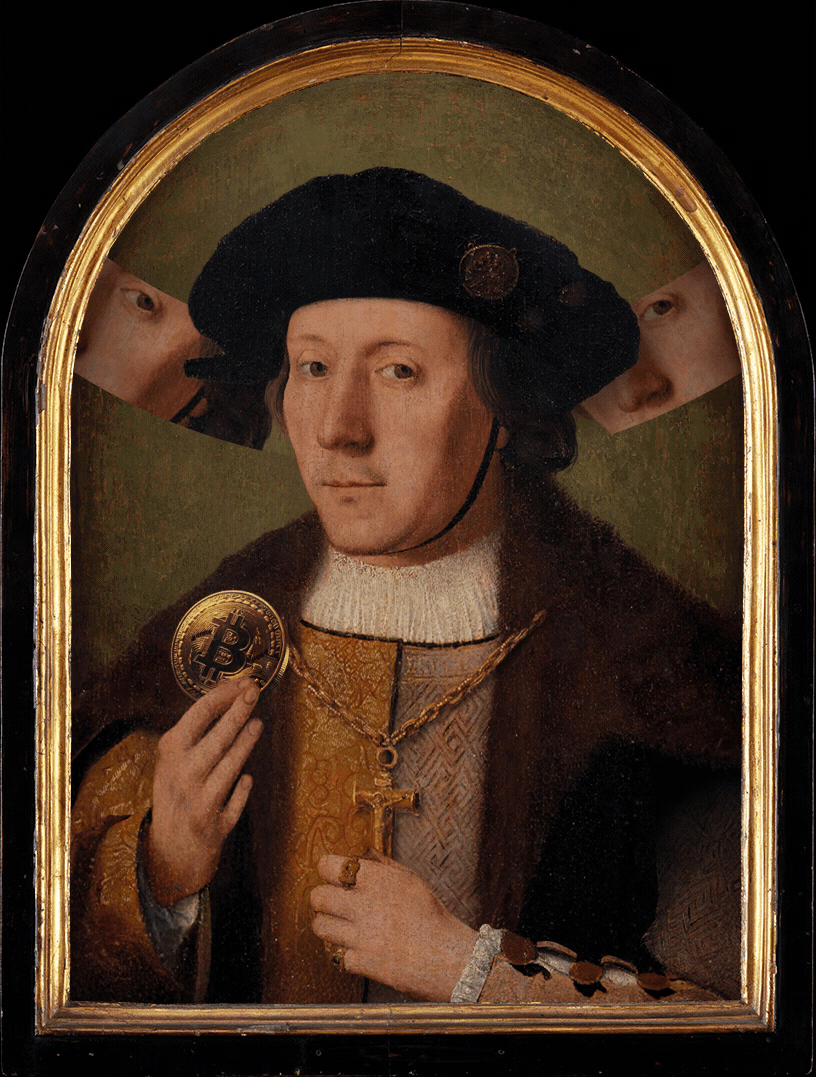
Vandalized N34
Portrait of a Man
Workshop of Quinten Massys
Portrait of a Man is a notable artwork attributed to the Workshop of Quinten Massys, created between 1504 and 1514. This portrait exemplifies the stylistic conventions popular in Antwerp during the early 16th century, reflecting both the artistic trends of the time and the innovations that Massys would later become known for. The subject of the portrait is depicted in a half-length format, a common practice for portraits of this era. The sitter's pose appears somewhat rigid, which was characteristic of the period's approach to portraiture. Notably, his left hand rests on the lower edge of the painting, showcasing an illusionistic spatial depth reminiscent of earlier Netherlandish artists.
Saint Justina of Padua
Bartolomeo Montagna
A fragment from an altarpiece, this picture shows the early Christian martyr Justina in the guise of an elegantly dressed contemporary of the artist, thereby overlapping conventions of devotional images and portraiture. By the 1490s it was not uncommon for a wealthy person to be depicted as their patron saint. While the palm branch and the sword piercing this figure’s breast are Saint Justina’s traditional attributes, she is also a carefully crafted ideal of aristocratic beauty, including her high forehead, a standard of attractiveness so popular that it was common for women to alter their hairlines. Guided by the influence of Giovanni Bellini, Montagna became the principal painter in Vicenza.