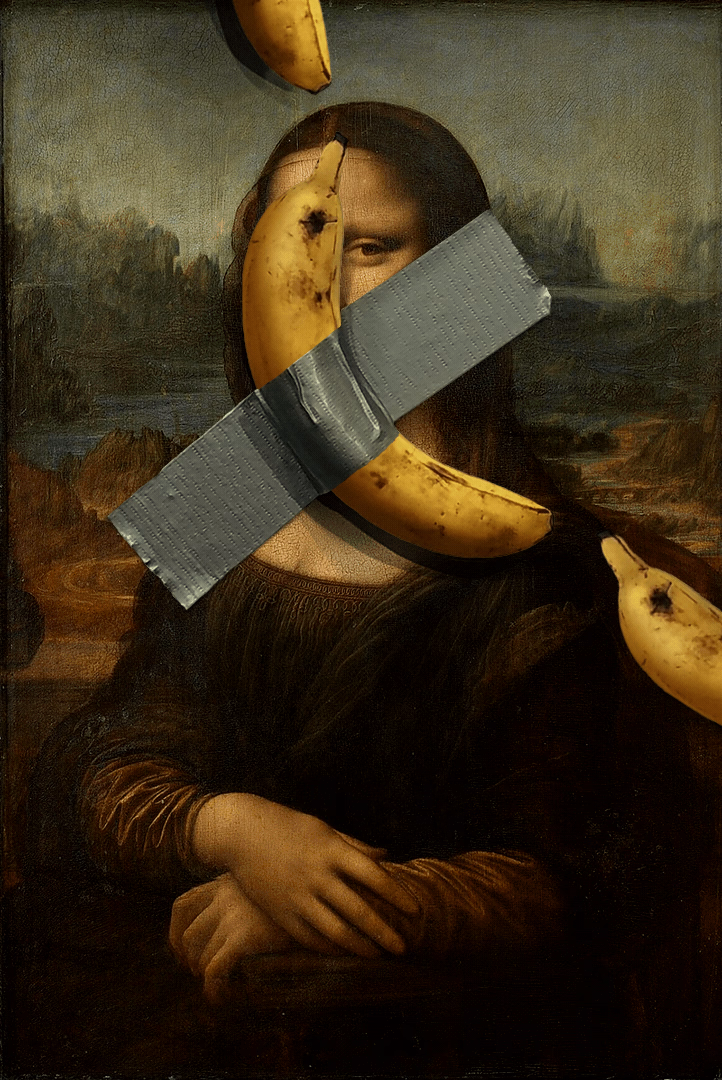
Vandalized N26
Portrait of Lisa Gherardini, Mona Lisa 1503–1506
Leonardo da Vinci (Italian, 1452–1519)
The Mona Lisa, also known as La Gioconda, is a masterful portrait by Leonardo da Vinci, commissioned by Francesco del Giocondo and believed to depict his wife, Lisa Gherardini. Painted during the height of the High Renaissance, the work is renowned for its innovative composition and groundbreaking techniques.
The sitter is portrayed with a subtle, enigmatic expression, her delicate smile capturing a moment of introspection. She is seated in a three-quarter pose, her hands resting gently in her lap, a position that conveys grace and poise. The background, a dreamlike landscape of winding rivers and rugged mountains, adds depth and mystery, blending seamlessly with her figure through the atmospheric technique of sfumato, pioneered by Leonardo.
Her subdued attire focuses attention on her face, which is illuminated with soft, natural light. The Mona Lisa exemplifies Leonardo’s mastery of anatomy, perspective, and light, elevating portraiture to an unprecedented level of realism and emotional complexity. The sitter’s gaze, directed toward the viewer, establishes an intimate connection, inviting endless fascination and interpretation. Through its balance of form, mood, and technical brilliance, the Mona Lisa remains a pinnacle of artistic achievement and a cultural icon.