Eirenic Collections: HIEROPHANY
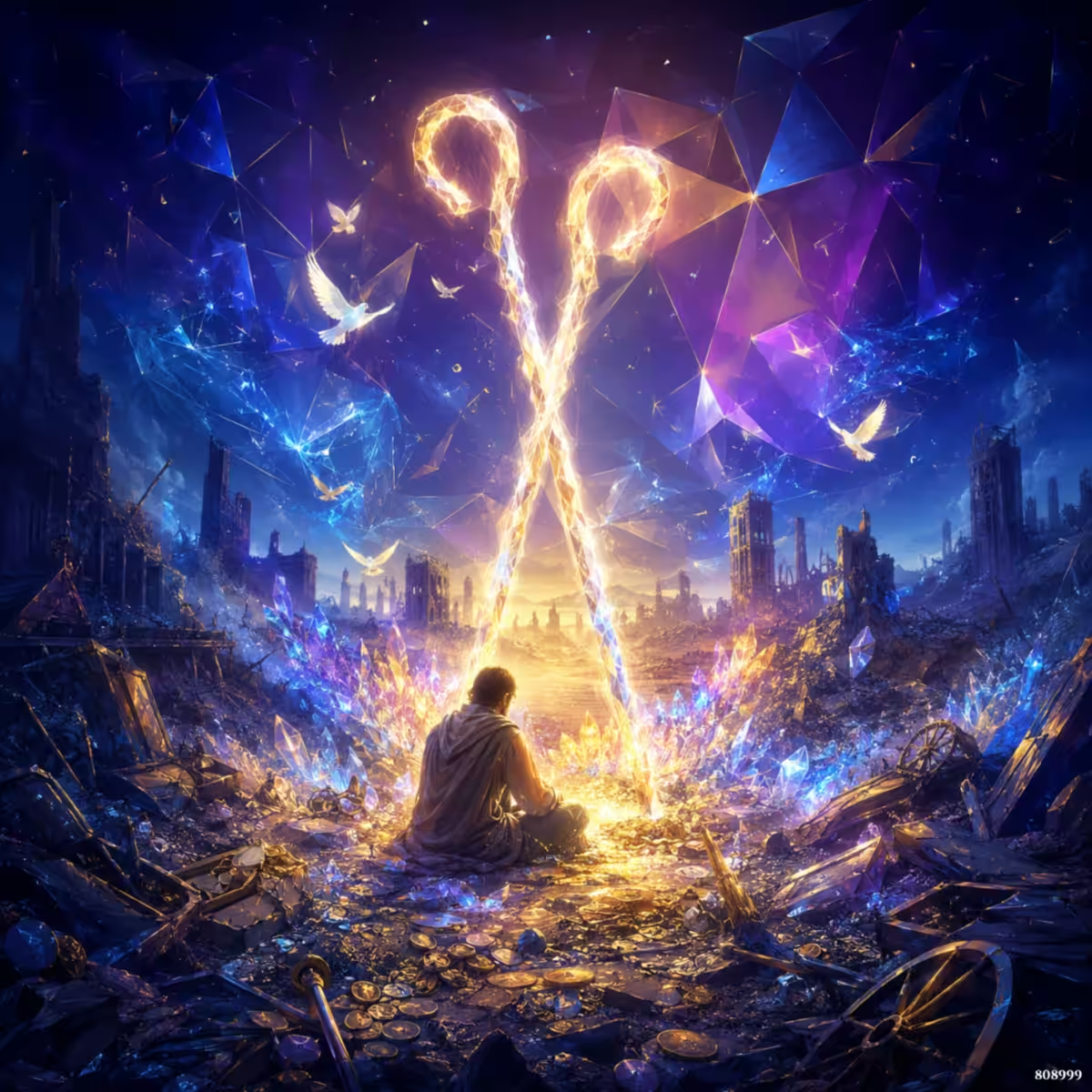
Hierophany is a luminous vision of the sacred appearing in the midst of ruin. The title refers to the manifestation of holiness within the ordinary, the broken, and the desolate — a moment where devastation is pierced by transcendent presence. In this artwork, a lone figure sits amid a shattered world, surrounded by broken structures, scattered coins, fractured remnants, and the visible evidence of collapse. Yet from the center of the ruins, two radiant staffs rise like pillars of comfort, protection, and divine reassurance.
Rooted in the spirit of Psalm 23:4, Hierophany transforms the valley of shadow into a place of revelation. The world around the figure bears the wounds of conflict, poverty, economic ruin, and civilizational fracture. The surrounding city appears broken, yet not abandoned. Crystalline forms glow from the rubble, doves ascend through the darkened air, and the staffs of light stand upright as symbols of guidance, comfort, and sacred order. What appears ruined becomes a sanctuary; what appears lost becomes the ground of encounter.
The emotional power of the work rests in its sacred contrast: desolation below, radiance above; brokenness around, comfort at the center. The seated figure does not dominate the image, but receives it. His posture suggests exhaustion, contemplation, and surrender, yet the golden light before him reveals that surrender is not defeat. The luminous staffs become the visual heart of the composition — a direct symbolic echo of “Thy rod and Thy staff, they comfort me.” They rise not as weapons, but as instruments of reassurance, crossing the ruins with peace.
I conceived and orchestrated Hierophany through a layered, AI-assisted digital art methodology — bringing together my original vision, symbolic construction, prompt engineering, compositional calibration, aesthetic refinement, and final curatorial judgment. The creative process began with the idea of sacred comfort emerging in a ruined world: a soul surrounded by economic loss, fractured security, warlike shadows, and visible desolation, yet still encountering light in the very place where hope seemed buried. This vision was shaped through luminous surrealism, crystalline geometry, cinematic depth, sapphire-blue atmospherics, violet shadows, rose-gold accents, and radiant golden contrast.
Every visual element was intentionally guided. The ruins symbolize external collapse. The scattered coins and broken remnants speak of material loss and human vulnerability. The seated figure represents the soul brought into stillness after struggle. The doves embody release, peace, and the return of hope. The crystalline shards suggest beauty emerging from fragmentation. The two glowing staffs become the central sign of divine comfort — an image of support, guardianship, and direction amid devastation.
Hierophany speaks beyond one nation, crisis, or personal wound. It is for anyone who has sat among the ruins of expectation, livelihood, relationship, identity, or peace, and still discovered that light can appear there. It affirms that the sacred is not limited to temples, triumphs, or untouched places; sometimes it appears most powerfully where the soul is surrounded by wreckage.
As part of the Eirenic vision, Hierophany continues the meditation on peace amid ruin, resilience amid collapse, and luminous hope amid shadow. It is not merely an image of destruction; it is a revelation of presence. It stands as a testimony that even in the ruins, comfort can rise, peace can descend, and the valley itself can become holy ground.
Technical Details: 4096 × 4096 px, 300 DPI, RGB, 8-bit sRGB PNG.
By 808999