Mended Souls: The Master and the Disciple - Giveaway
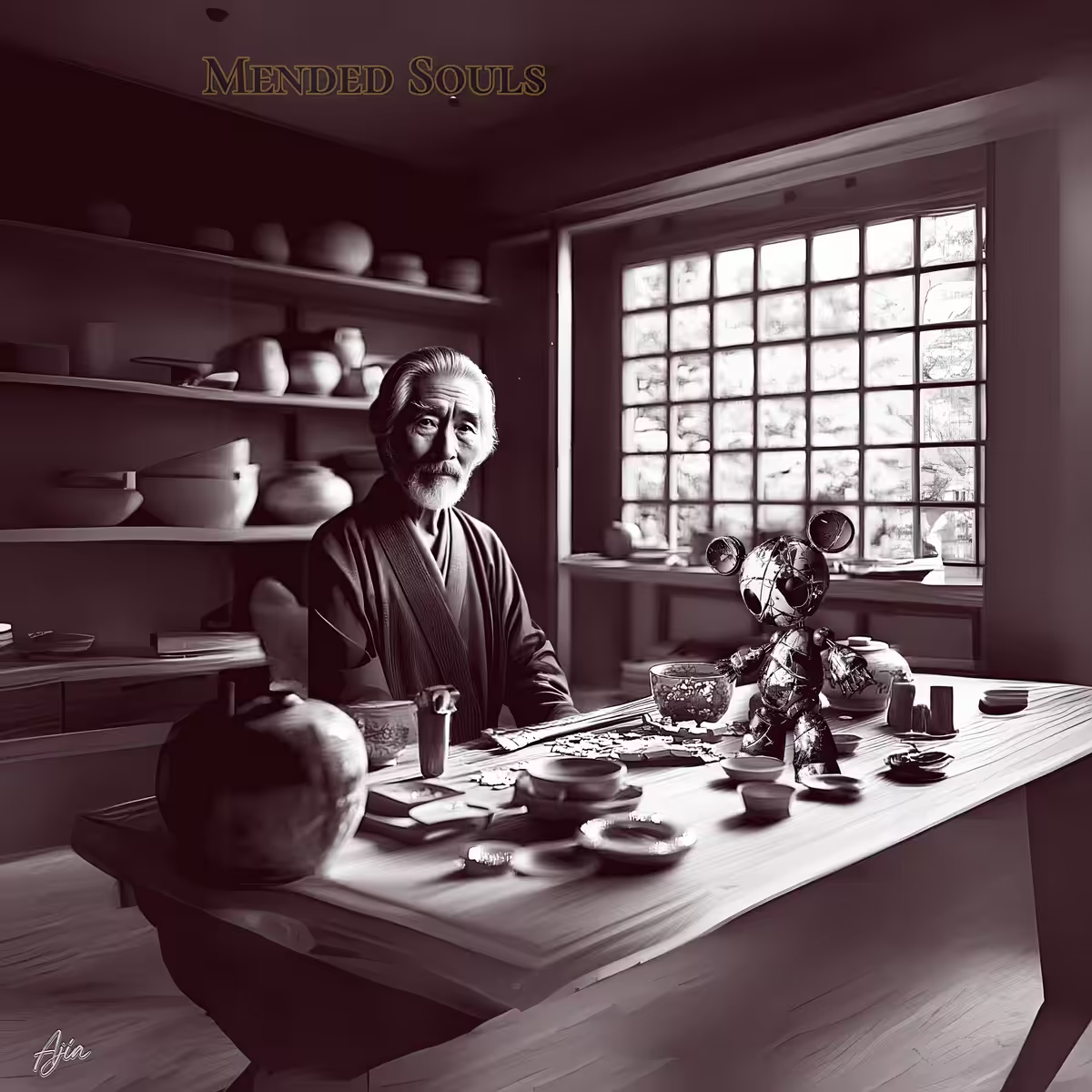
Kenshin was not just a restorer; he was a poet of fractures, a storyteller of the hidden narratives in the fragility of forgotten objects. When he first found Eiko broken and discarded by the riverbank, he felt an unexplainable connection. With its chipped wood and rusted joints, the little puppet seemed to whisper stories of struggle and survival. Kenshin, too, carried invisible scars—moments of loss and regret that had shaped him. As he cradled Eiko’s broken pieces, he resolved to repair the puppet and honor its journey, transforming it into something extraordinary.
The restoration process became a meditation for Kenshin, a dialogue between the artist and the object. Under the glow of his workshop lantern, he carefully smoothed Eiko’s splintered wood, sealed its cracks with lacquer, and traced golden veins along its fractured surface. Each brush stroke was deliberate, almost reverent, as though he were inscribing a poem in shimmering gold. For Kenshin, every crack held a story, every scar a moment of resilience. As Eiko’s transformation unfolded, Kenshin felt a deep sense of healing, as if repairing the puppet also mended parts of his spirit.
When the restoration was complete, Eiko stood before Kenshin as something new. His golden scars gleamed in the sunlight, not hiding his fractures but celebrating them. The once-bright colors of Eiko’s body are now harmonized with gold, creating a beauty that could only exist because of his imperfections. Yet Kenshin realized that Eiko’s journey was far from over. The puppet’s place was not in the solitude of the workshop but in the world, where his story could inspire others.
Kenshin decided to accompany Eiko for a time, eager to see how people would respond to the little puppet’s transformation. Wherever they went, Eiko drew attention. People paused to admire his golden seams, their expressions shifting from curiosity to wonder and finally to recognition. Kenshin saw in their eyes a reflection of Eiko’s story—a story of brokenness, resilience, and renewal that resonated deeply. Eiko was no longer just a repaired toy but a bridge between souls, connecting fragility and strength in a way that words could not.
Kenshin felt a profound sense of fulfillment as he observed Eiko’s interactions with the world. The puppet was not merely a work of art; he was a message of hope for anyone who had ever felt broken. Each scar told a story, and each golden line was a testament to the strength of embracing imperfections. Kenshin understood that his craft was about repairing objects and revealing the hidden beauty within the broken.
Through Eiko’s journey, Kenshin rediscovered the essence of his philosophy: that every fracture is an opportunity for transformation, every scar a marker of survival. Eiko had become a living embodiment of this truth, carrying his golden scars like badges of honor. He was no longer just Kenshin’s creation but a partner in spreading a message of resilience and renewal.
Watching Eiko inspire those who saw him, Kenshin found a deeper purpose in his work. The puppet’s story reminded him that beauty lies not in avoiding breaks but in learning to shine through them. Eiko’s golden seams were not just lines of repair; they were paths to understanding, a testament to the power of transformation. Kenshin felt a quiet pride in knowing that, through Eiko, he had shared a piece of his journey and left a legacy of hope for the world to see.
Message and Meaning "The Master and the Disciple" captures the profound relationship between Kenshin and Eiko, a tale of transformation and mutual healing. This NFT celebrates the philosophy of kintsugi, where beauty is found in imperfection and strength in embracing one’s scars. It reminds us that every fracture tells a story, and every restoration is a path to newfound purpose and connection.
Emotions Kenshin’s meditative restoration process radiates serenity, reflecting his quiet pride in Eiko’s transformation. Eiko's golden seams stand as a symbol of hope, embodying resilience and renewal. Inspiration flows from Eiko’s story, touching the hearts of those he encounters and leaving a lasting impression.
Inspiration This narrative draws inspiration from the Japanese art of kintsugi, blending it with themes of interconnection and emotional resilience. Kenshin and Eiko’s story reflects how embracing imperfections can create a unique and enduring beauty that resonates across generations and cultures.
Artwork Description This duotone giveaway edition celebrates the essence of the Mended Souls collection, offering a monochromatic perspective of its profound themes.Traits