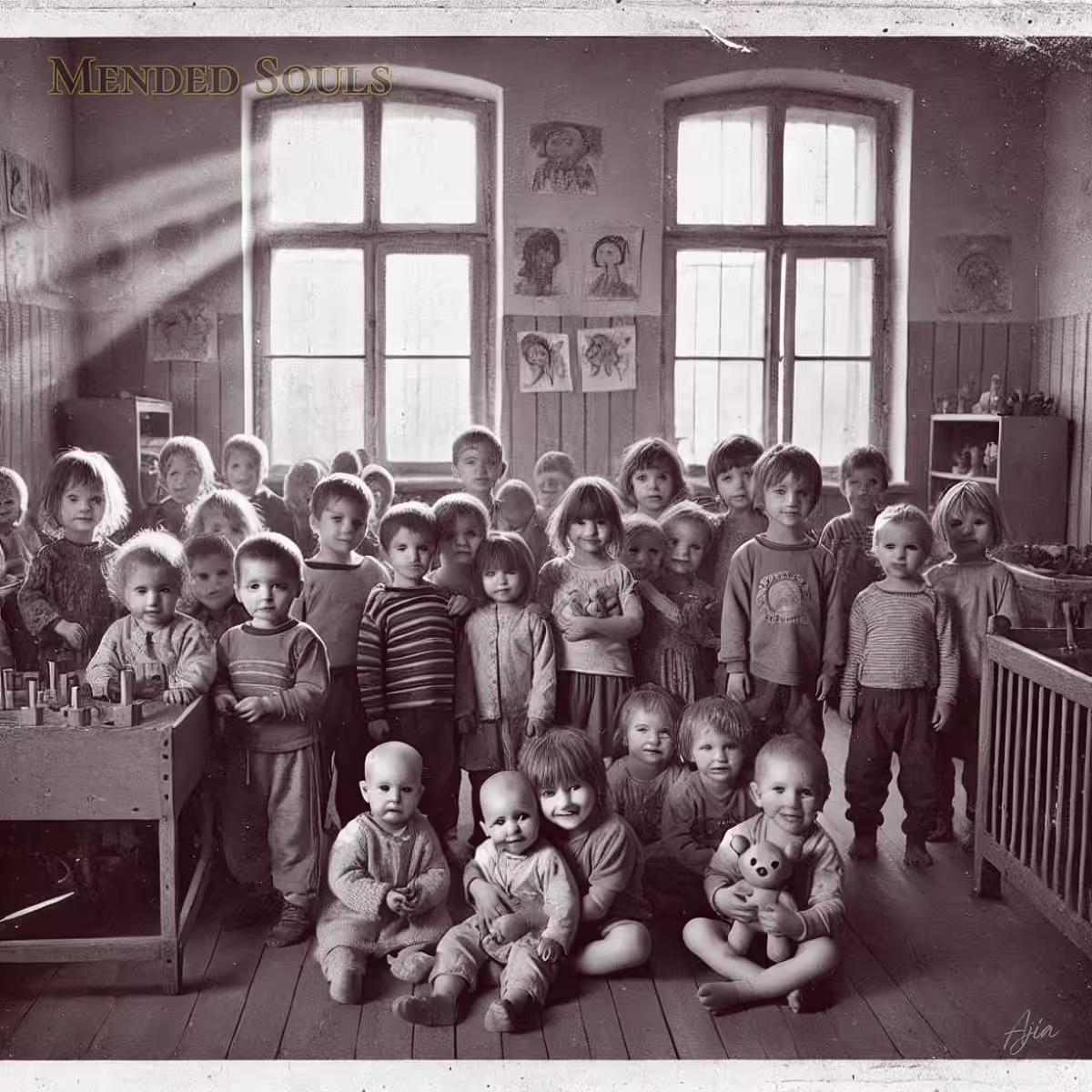
Mended Souls: The Orphanage Children: Bearers of Silent Stories - Giveaway
The orphanage children carried fragile hearts, each marked by their unique stories of loss and hope. Some had lived there for years, their lives shaped by the rhythms of the house and the quiet ache of longing. Others were recent arrivals, their eyes reflecting the weight of past hardships. Though their days were often filled with laughter and play, a more profound sadness occasionally flickered in their expressions, especially during quiet moments. For these children, toys were more than objects; they were companions, silent keepers of their dreams and fears.
Before being consigned to the toy chest, Mura had been a steadfast friend to many of the children. On stormy nights, the wooden doll was often hugged tightly, offering a sense of safety. Its faded smile had once soothed countless tears, and its sturdy body had borne the wear of small hands gripping it during games or whispered confessions. Even in its silence, Mura had been a source of comfort, a witness to the secret struggles of childhood.
When Aiko found and restored Mura, the children were initially curious about the golden lines now tracing its surface. They gathered around the doll, their eyes wide with wonder as Aiko explained the process of kintsugi and its philosophy. She told them that the scars, far from flaws, were marks of resilience, proof of a life lived and loved.
For the children, Mura’s transformation was significant. Each of them, in their way, saw themselves in the doll. They began to understand that their visible or hidden scars were not signs of weakness but of strength. Aiko used Mura as a gentle reminder that they could shine even when they felt broken. The children found new comfort in the doll, now a symbol of hope, and began to weave stories about its golden scars. “Mura is like us,” one child whispered, “because even when we’ve been hurt, we can still be strong.”
In the evenings, Aiko would gather the children and tell them stories about Mura, blending its past adventures with the lessons it now represented. They listened intently, their imaginations turning the golden lines into rivers of light or paths through enchanted forests. Mura became more than a toy; it was a shared symbol of their resilience, a reminder that they were not alone in their struggles. Over time, the children began to see their own experiences differently. Inspired by Mura’s golden scars, they started to view their hardships as part of their unique stories.
They became braver in sharing their feelings, finding strength in their shared vulnerabilities. In this way, Mura continued its role as a guardian, no longer just a toy but a beacon of hope for the children it had watched for many years.
Through Mura, the orphanage became a place of care and healing. The doll’s golden scars taught the children to embrace their imperfections and find pride in their journeys. Mura had once been a silent witness to their pain, but now it stood as a radiant symbol of their ability to overcome and shine.
Message and Meaning "The Orphanage Children" tells the story of resilience and the importance of finding hope and strength during difficult times. Each child in the artwork represents a journey of loss and healing, united by the symbol of Mura in a vision of growth and acceptance.
Emotions Compassion for the fragility of childhood, reflection on themes of loss and empathy, and hope for healing and renewal.
Inspiration Inspired by the philosophy of kintsugi and the shared experience of overcoming adversity, this piece blends visual and emotional storytelling, paying tribute to the beauty that arises from both physical and emotional scars.
Artwork Description This duotone giveaway edition celebrates the essence of the Mended Souls collection, offering a monochromatic perspective of its profound themes.