Mended Souls: Akira: The Artisan of Renewal
Golden Threads of Resilience: The Tales Behind Ember's Journey
Once a quiet craftsman in a small town, Akira had always been drawn to forgotten objects. His passion for restoration stemmed from childhood days spent repairing his sister's broken toys when he discovered that even shattered things held stories worth telling. He remembered the delight in her eyes when she saw her favorite doll, once discarded, come back to life in his careful hands. Then, Akira began to see broken objects not as things to discard but as treasures waiting to be reborn.
Over time, this childhood curiosity turned into a lifelong pursuit. Akira immersed himself in the philosophy of kintsugi, the Japanese art of mending broken ceramics with gold. For him, it was more than a technique—a way of life. He found beauty in imperfection and believed every scar told a story and every crack held a memory. His workshop became a haven for objects others deemed beyond repair: teacups, vases, and heirlooms, each patiently mended with golden seams. His reputation grew, and people from nearby towns brought him their cherished possessions, trusting Akira to restore their objects and their memories.
One rainy afternoon, Akira ventured into the cluttered basement of an old house he was clearing. Among the dust and shadows, he stumbled upon Ember, a worn teddy bear that seemed to carry the weight of countless memories. Its frayed seams and faded colors spoke of neglect but also of a history rich with love and companionship. Akira gently picked up the bear, his practiced eyes seeing a damaged toy and a canvas for renewal.
The moment Akira held Ember, he felt a surge of empathy. This wasn't just any forgotten object; this was a companion that had once been loved, a confidant that had carried secrets, comforted tears, and shared laughter. He imagined the child who once clung to Ember during stormy nights and whispered dreams into his soft ear. The bear's worn-out body and faded fur seemed to echo the passage of time, and Akira knew he had to honor this journey.
In his workshop, Akira worked meticulously. Every golden seam he applied was a tribute to Ember's life, a testament to resilience. With each careful brushstroke, Akira imbued Ember with a sense of dignity, transforming scars into art. As he worked, he imagined the bear's journey, the laughter it had shared, and the solace it had offered. Ember wasn't just a toy to Akira; it symbolized the beauty of persistence and healing. When the restoration was complete, Akira felt an unexpected pang of attachment.
Yet, he knew Ember's story wasn't meant to end on his workbench. He presented the bear to his daughter, Yumi, hoping she would continue its journey. As he handed her the golden-scarred bear, he shared the philosophy of Kintsugi. "These scars," he said softly, "aren't flaws. They are proof of survival and growth. They remind us that brokenness isn't the end but a chance for transformation."
Through Akira, Ember found its second life, symbolizing repair and renewal. For Akira, restoring the bear reaffirmed his belief in the enduring value of things once thought lost.
Message and Meaning Akira's story is one of renewal and reverence for life's imperfections. Through his craft, he shows that scars are not just evidence of survival but markers of a journey filled with love and meaning.
Emotions Respect for craftsmanship, admiration for the beauty of renewal, and hope for transformation.
Inspiration Inspired by the philosophy of kintsugi, Akira's character highlights the profound connection between restoration and resilience, blending art and life into a single narrative.
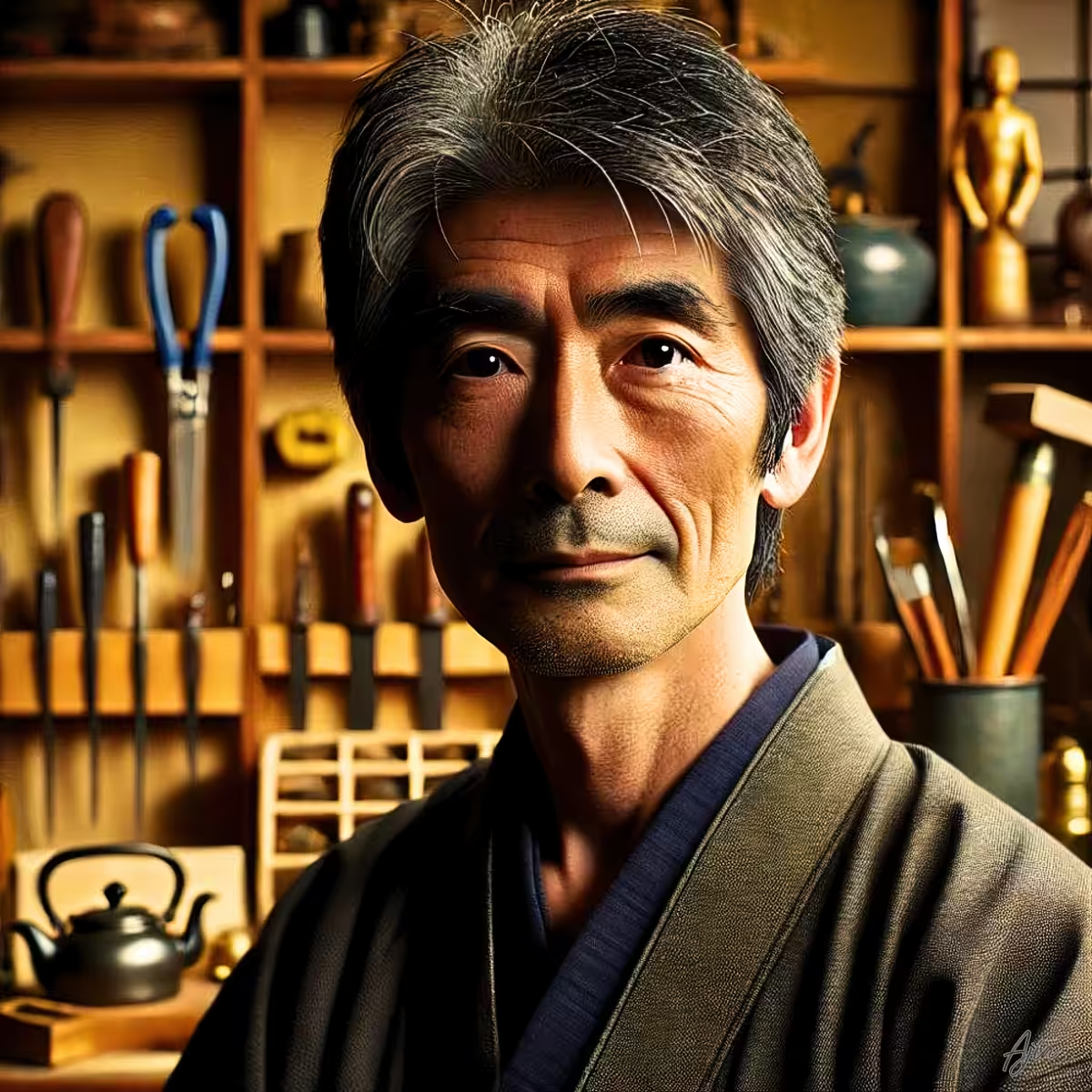
Artwork Description Akira is portrayed in his tranquil workshop, surrounded by neatly arranged tools that reflect his meticulous nature and devotion to his craft. The warm tones of the environment, paired with the soft light illuminating the shelves and wooden surfaces, create an intimate and serene atmosphere. His composed expression and the subtle details of his traditional attire evoke wisdom and a deep connection to the philosophy of Kintsugi. Every element in the scene emphasizes his role as a master artisan, preserving memories and transforming imperfection into timeless beauty.