Observation: Disposable Eden
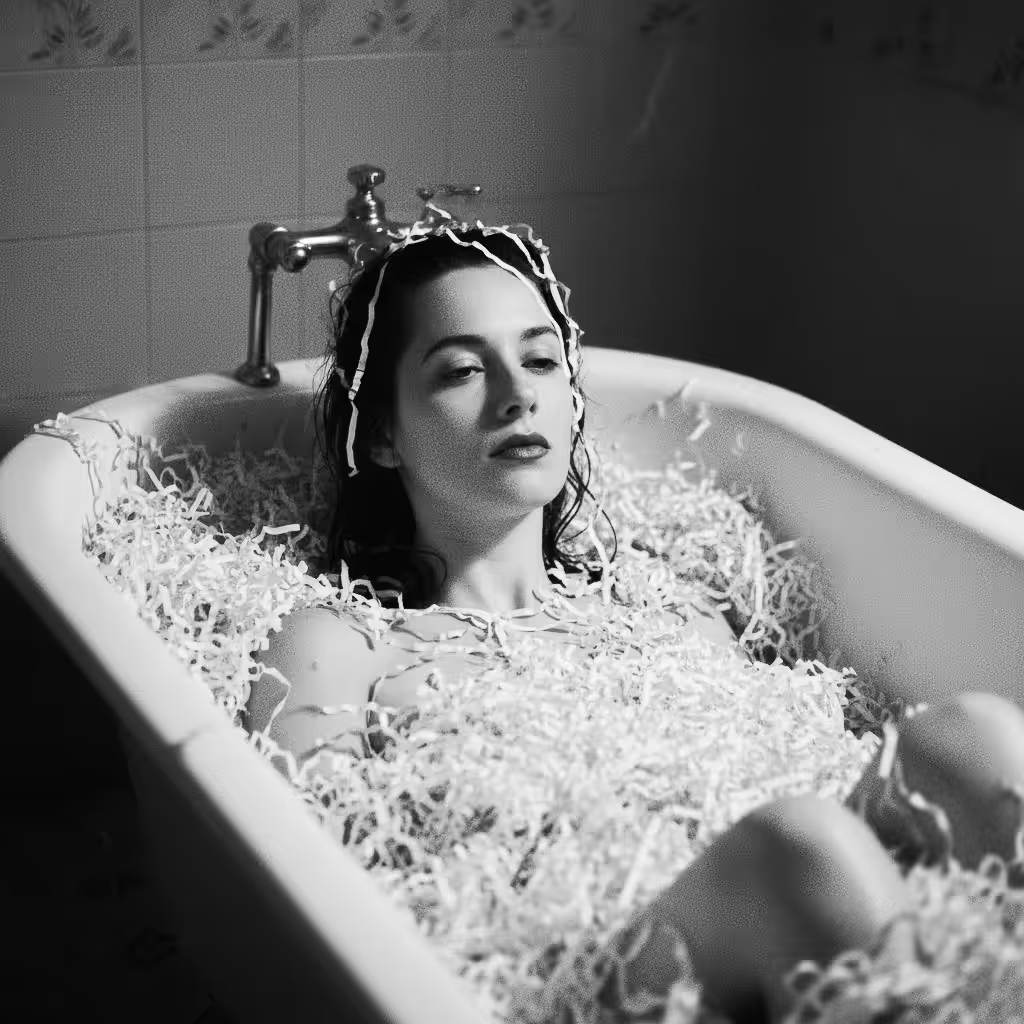
In Disposable Eden, the body rests in a manufactured paradise — not surrounded by nature, but by its imitation. The shredded white paper becomes both cradle and grave, a soft landscape built from what has already been used, discarded, forgotten.
This is not the Garden of innocence, but a reconstruction of it — sterile, domestic, and temporary. The bathtub replaces the river, the paper replaces the leaves, and purity becomes something staged rather than lived. The figure appears calm, almost devotional, yet the environment suggests suffocation masked as comfort.
The work questions what remains sacred in a culture that consumes even its symbols of rebirth. Is this a baptism, a burial, or simply another aesthetic ritual? In a world that packages everything — even Eden becomes disposable.