Observation: Signal Loss
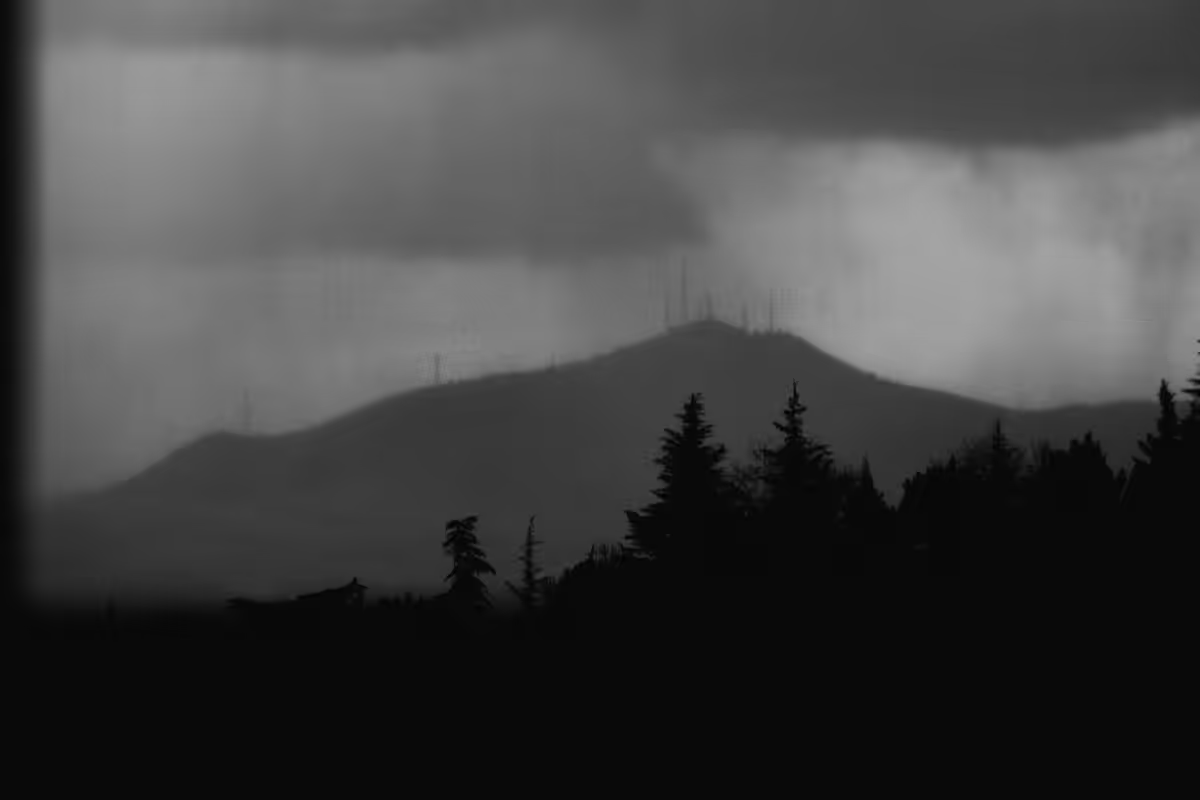
This image does not depict a landscape; it records an interruption.
The mountain stands not as nature, but as a receiver—crowded with antennas, pierced by attempts to listen, measure, translate. And yet, nothing arrives intact. The signal is present, then broken. Meaning is delayed. Communication dissolves into atmosphere.
What remains is not silence, but noise disguised as calm: fog, low contrast, uncertainty stretched across the frame. The sky refuses clarity, not out of mystery, but exhaustion. It has been asked too many questions.
In Signal Loss, visibility becomes a fragile agreement rather than a given. The image resists the promise of revelation. It withholds resolution, forcing the viewer to confront the discomfort of not knowing whether something is about to happen—or has already failed to arrive.
This is a place where technology reaches its limit and nature does not offer consolation. Antennas stand upright like unanswered questions. The mountain absorbs them without response.
The photograph exists in the moment after expectation collapses: when connection is assumed, but never confirmed; when distance is no longer spatial, but conceptual. What is lost here is not only transmission, but certainty itself.
Signal Loss is about standing inside that gap—between presence and absence, between seeing and understanding—and realizing that meaning does not disappear when the signal fails. It simply stops trying to explain itself.