Observation: Veil as Gesture
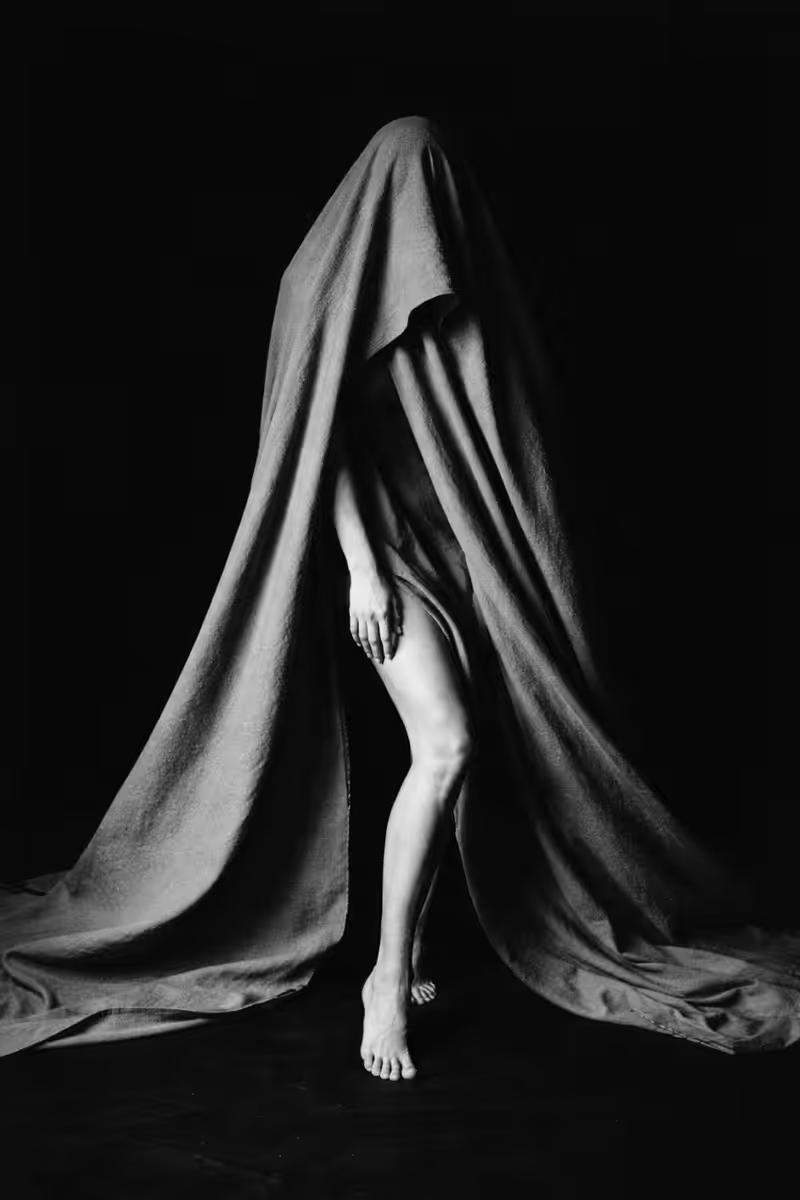
This image is not about hiding a body, but about reclaiming the act of concealment as a conscious gesture. The veil here does not function as modesty, shame, or erasure; it operates as intention. To cover is not always to submit. Sometimes, it is to decide.
The figure stands present yet unavailable, visible yet unresolved. What is withheld is not the body itself, but access to it. In a visual culture obsessed with exposure, legibility, and constant disclosure, refusal becomes a form of authorship. The covered form interrupts the viewer’s expectation of possession, asking not “what is shown?” but “who decides what may be seen?”
The gesture of veiling transforms the body into a boundary rather than an object. It resists being fully read, categorized, or consumed. The fabric does not erase the body; it redraws the terms of encounter. Visibility here is not denied, but negotiated. The body appears on its own conditions, asserting presence without surrender.
This work positions concealment as an active, political, and poetic act. It suggests that autonomy can exist not in exposure, but in selective opacity. The veil becomes a language of agency — a quiet declaration that not all visibility is liberation, and not all obscurity is silence.
To remain partially unseen is not a loss of power. It is, in itself, a gesture of control.