Observation: This Is Not a Person
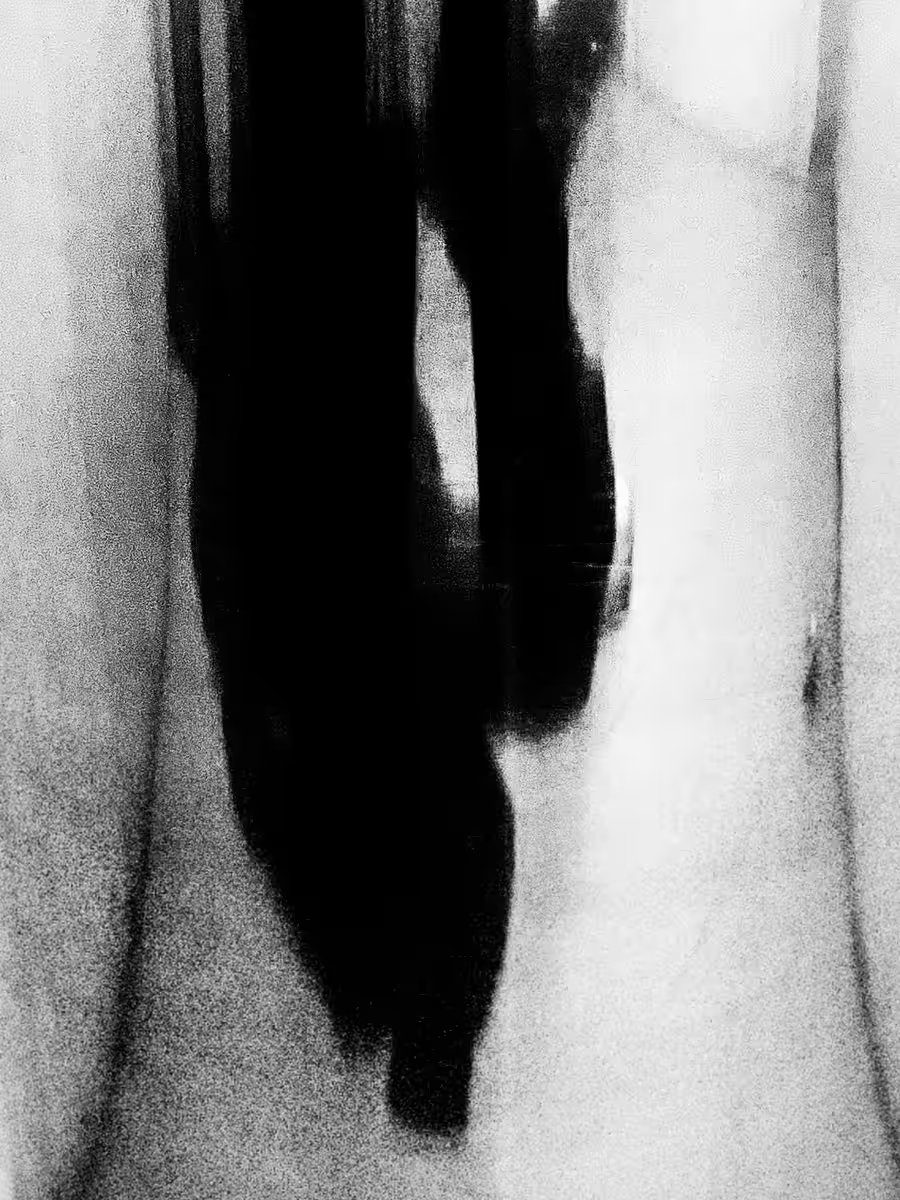
What appears here is not a body, but the consequence of one. Not a figure, but the hesitation left behind by movement. Something crossed the frame, and whatever it was refused to remain whole.
The image does not offer identity. It withholds it. There is no face to recognize, no gesture to interpret, no intention to trust. Only a vertical disturbance — a weight passing through light as if light were temporary, and presence even more so.
This form is neither arrival nor departure. It exists in the in-between: where motion erases certainty faster than memory can record it. What we see is not a subject, but an aftermath — the residue of having occupied space for a fraction of time too brief to be owned.
The darkness here is not symbolic; it is practical. It behaves like gravity, pulling meaning inward, collapsing definition. The surrounding light does not illuminate — it merely outlines the absence more clearly.
There is something unsettling in how easily a body can dissolve into blur, how quickly intention becomes accident, how effortlessly a presence can turn into evidence rather than being.
This image resists empathy. It does not ask to be understood, named, or mourned. It stands as a refusal — against recognition, against narrative, against the comfort of personhood.
What remains is not someone, but a trace that insists: existence does not require clarity, and disappearance does not require permission.