Observation: Spectrum Spill
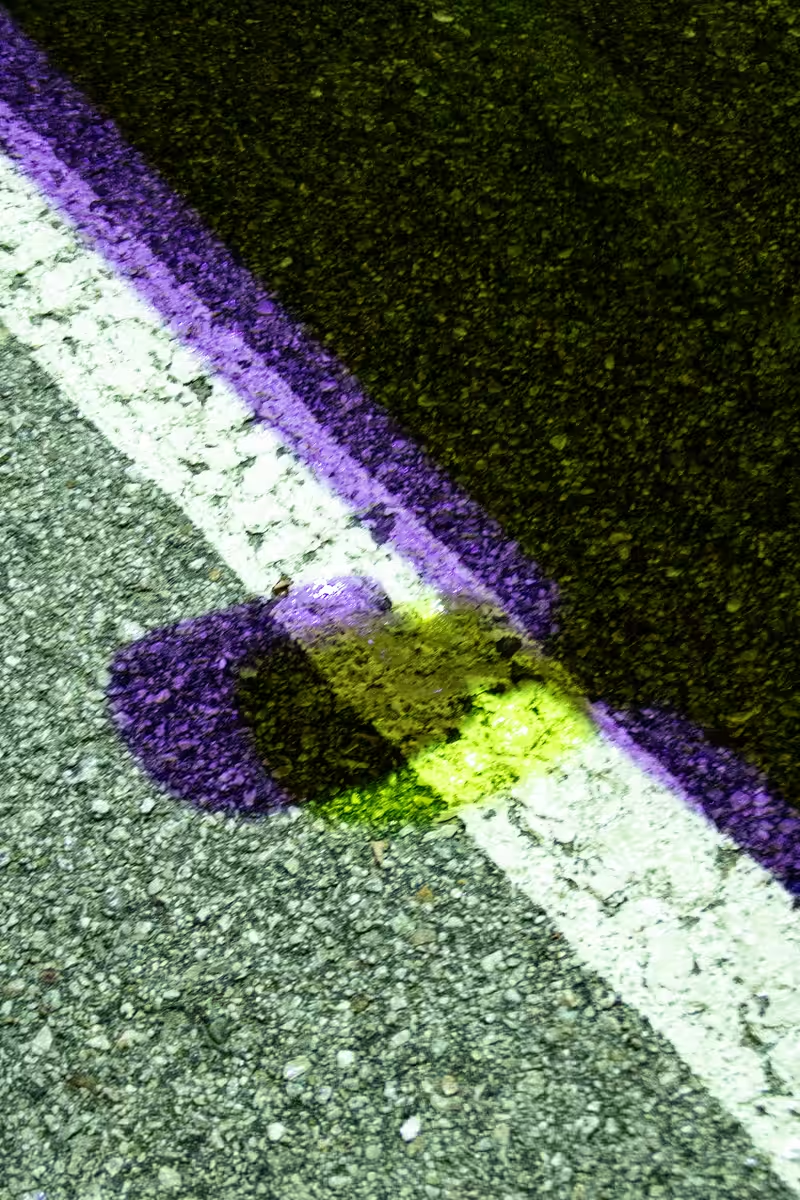
In this image, the ordinary surface of a road becomes an unexpected stage for a quiet philosophical encounter between light, color, and matter. The white boundary line—normally a symbol of restriction, division, and direction—meets a soft spill of violet and yellow light that disrupts its rigidity. What is typically a fixed marker of separation transforms into a canvas for ambiguity. The colors do not erase the boundary, nor do they obey it; instead, they pass through it, revealing how even the most solid structures in our world can be reinterpreted when illuminated differently.
The textured asphalt beneath the colors reminds us of the weight of physical reality, yet the luminous stains of purple and green seem to float above it, suggesting that perception is never fully anchored in the material. Light here becomes a metaphor for consciousness itself: intangible, transient, and always capable of reshaping what we believe to be stable.
The moment captured invites the viewer to reconsider the concept of boundaries—not only the painted ones on roads but the invisible lines drawn in thought, identity, and experience. It suggests that meaning emerges not from the line itself but from the interplay between what is fixed and what is fluid, between what divides and what transcends. In the coexistence of shadow, color, and concrete, the image reminds us that the world is perpetually in negotiation with itself, and that beauty often resides in these subtle collisions of form and perception.