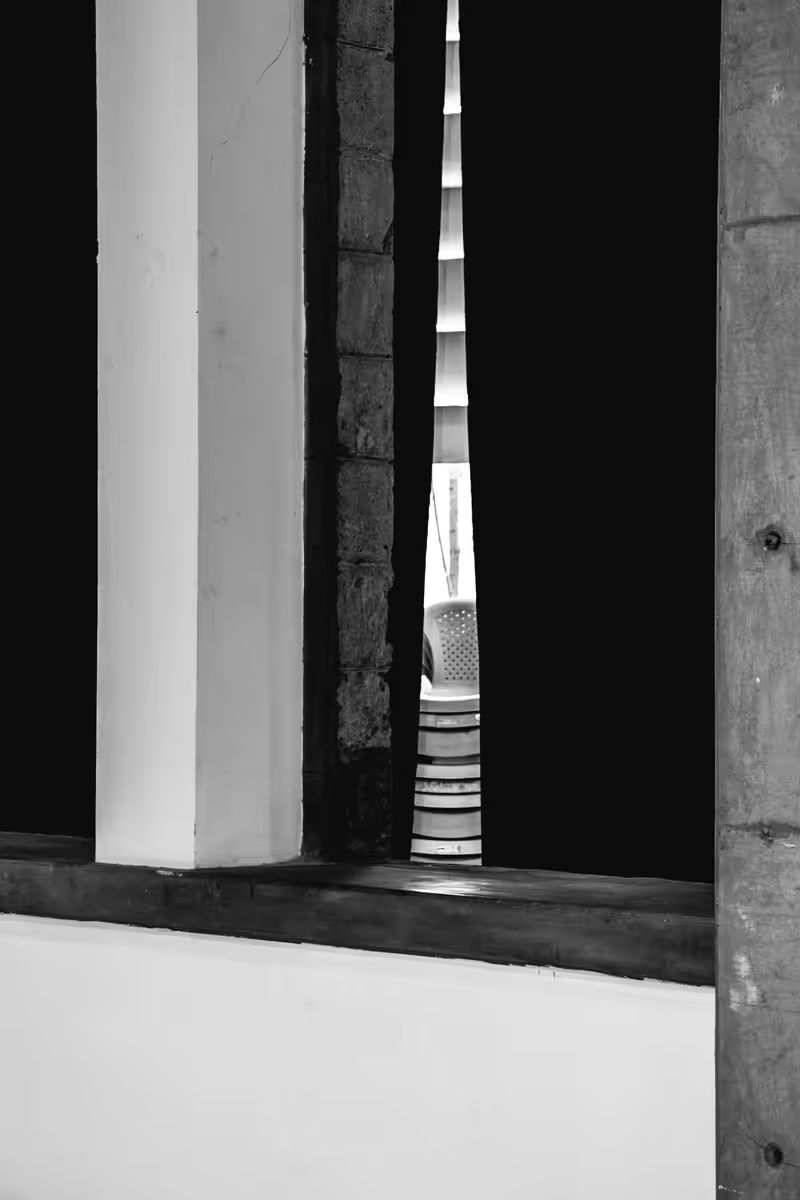
Observation: The Eye Of The Chair
The title, "The Eye of the Chair," functions as an epistemological trigger, forcing a reversal of the typical subject-object relationship. We are accustomed to the chair as a passive receptacle of human form and function—a piece of "equipment" defined solely by its utility. This framing shatters that expectation, demanding we recognize an immanent subjectivity where we assumed only inert material lay.
The chair, by being granted an "Eye," transcends its domestic purpose and enters the realm of the Witness. It embodies a silent, Latent Being—the awareness that persists when human consciousness is absent. This suggests a form of pantheism, where sentience is not exclusive to biological life but is dispersed throughout the material world, awaiting only the correct alignment of light and shadow (or the correct framing of the mind) to be revealed.
The photograph is not about what we see, but about the overwhelming expanse of what sees us when we believe we are alone.
It is a commentary on Presence as a precarious, conditional state. The gaze of the chair is fixed and eternal, offering a profound challenge to anthropocentric thought. It proposes that the Void is not empty, but merely silent, filled with fixed, enduring forms whose sole purpose may be the quiet, unending act of observation.