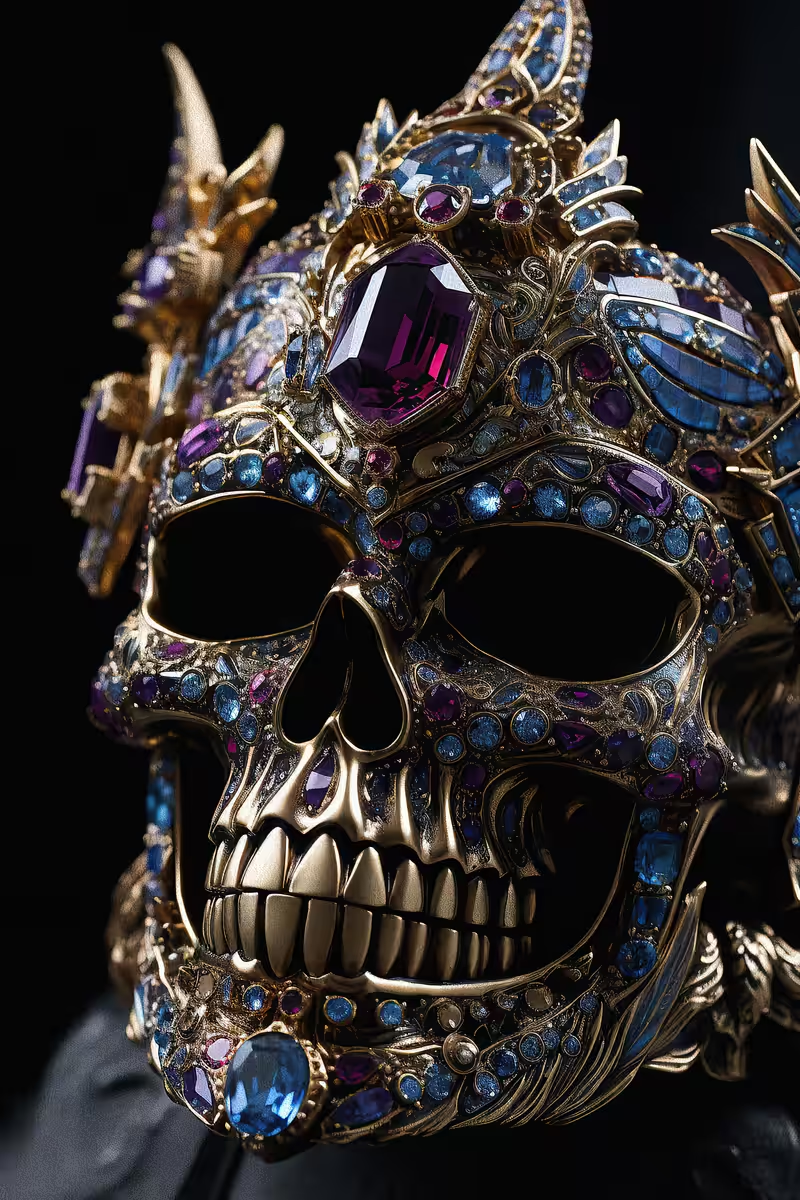
MetaMuseum: Nerubian King Mask
In the heart of the Nordic seas, when early XI century breezes whispered tales of valor and conquest, an artifact of unparalleled beauty and might surfaced from the depths: The Mask of the Nerubian King. Crafted with an artisan's touch, the mask was a masterpiece in brass, its glistening surface reflecting tales of bygone eras and unsung heroes.
Each delicate curve of the mask seemed to have been forged by the very gods themselves. Adorned with shimmering gemstones, amethysts sparkled with a deep purple lustre, recounting tales of majestic seas, while aquamarines mirrored the clear blue skies of the north, under which many a sea battle was fought. Every stone, carefully chosen, held a mystery and a memory, forever etched into the brass.
The Nerubian King, a legend in his own right, was said to have worn this mask in fierce sea battles to defend the region of Iceland from marauders and conquerors. It wasn't merely a piece of protection, but a symbol of authority and divine right. When worn, it was believed that the mask granted the King the strength of the oceans and the wisdom of the stars. The very sight of the masked king at the helm of his ship sent shivers down the spine of the bravest of enemies.
In the early spring of 2022, a team of archaeologists, while exploring an ancient submerged shipwreck off the coast of Iceland, stumbled upon the mask. Intact, despite the ravages of time and ocean currents, the Mask of the Nerubian King gleamed with an ethereal light. Its discovery sent ripples through the academic and historical communities, and the mask soon found its way to the MetaMuseum. Now, displayed in a chamber evoking the mysteries of the sea, the mask mesmerizes visitors from around the world, its gemstones casting an entrancing glow, reminding all of the legends, battles, and the rich tapestry of our shared history.
Note: all of the details provided in the previous response are purely fictional and for artistic use only. While we respect the any culture, beliefs and traditions, the artworks and its contents described do not exist in reality. We apologize for any confusion or misunderstanding that may have arisen as a result of this fictional description. It is important to approach religious and cultural traditions with sensitivity and respect.
To know more, visit our page: kukuti.xyz/metamuseum/
Kukuti | AI Art | Gen Art