Random: Ephemeral
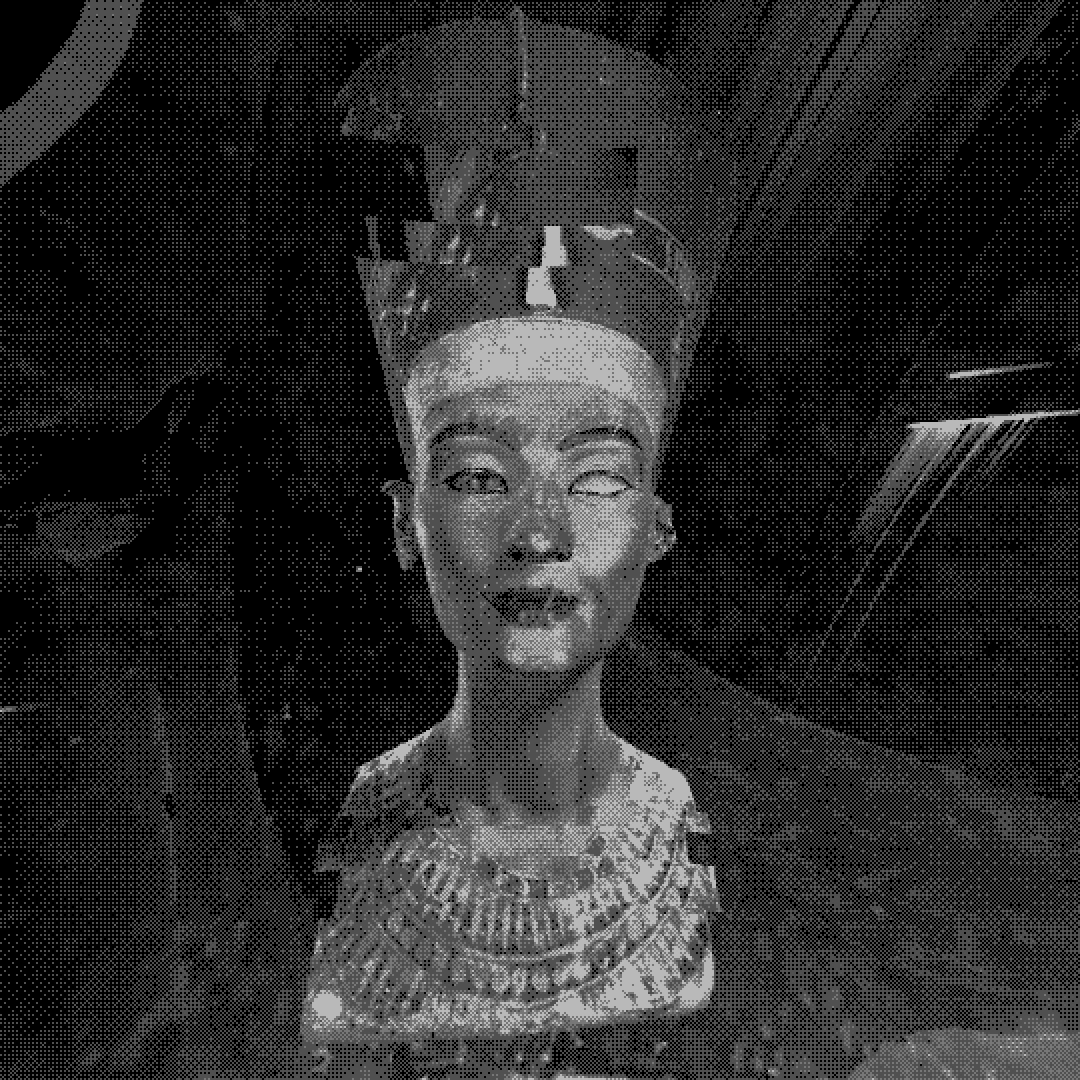
Beauty is so ephemeral: we last only a few milliseconds in the endless scroll of social media. We prepare the stage to entertain someone we may never meet, trying to capture our best moment—that instant that will be lost in the infinity of bits floating through space. A single second of our life captured in data, so fleeting and so real at the same time. Perhaps we’ll soon be forgotten, but that trace of our performance might remain forever: always smiling, projecting the void as we tell the world, “Here I am, I’m someone, I need love.”
Nefertiti was a prominent queen of Ancient Egypt, the wife of Pharaoh Akhenaten (also known as Amenhotep IV), who ruled during the 18th Dynasty (around 1353–1336 BCE). She is renowned for the pivotal role she played in the religious revolution promoted by her husband, which introduced the monotheistic worship of the sun disk god Aten. Alongside Akhenaten, Nefertiti supported political, artistic, and religious reforms that broke with earlier Egyptian traditions. Her beauty and elegance are immortalized by the famous bust discovered in 1912, considered one of the most iconic masterpieces of ancient Egyptian art.
3D Model "What is the genuine Nefertiti?" (https://skfb.ly/6QUFB) by AD&D 4D is licensed under Creative Commons Attribution (http://creativecommons.org/licenses/by/4.0/).