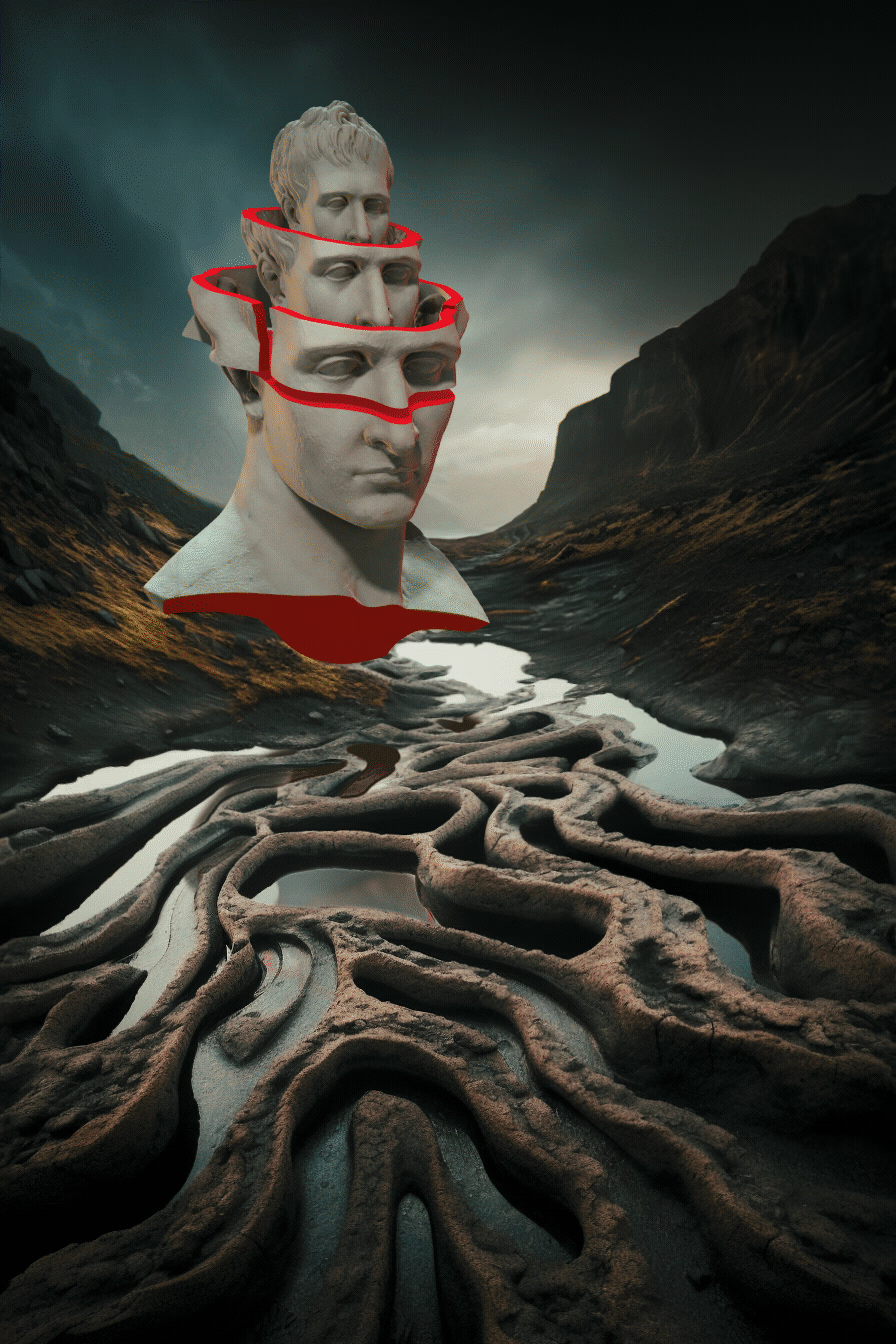
Random: The Garden of Echoes
In a world where we are surrounded by constant influences, it is difficult to discern what is truly original. Every day, we absorb information from various sources: books, movies, conversations, personal experiences, and more. These voices, these ideas, intertwine within us, forming an internal chorus composed of the voices of others.
When we reflect on originality, it is inevitable to recognize that our internal voices are not solely our own. They are fragments of conversations we have heard, books we have read, and teachings we have received. Our ideas, though they may seem novel, are a fusion of past influences that we have integrated into our being.
The multiplicity of worldviews is an invaluable treasure. Each person brings a unique perspective, shaped by their history, culture, and experiences. By acknowledging and valuing these different viewpoints, we enrich our own understanding of the world and open ourselves up to new possibilities. There is no singular absolute truth, but rather a myriad of relative truths, all worthy of exploration.
The importance of valuing the past lies in the fact that we are historical beings. Our present is inexorably linked to what has come before. Every scientific discovery, every technological advancement, every philosophical idea is the result of a long path paved by those who came before us. To deny or ignore the past would be to deny our own identity and the foundations upon which we build our present.
Now, does originality truly exist? We could say that originality is rather a unique reconfiguration of received influences. Each individual has the capacity to combine and reinterpret ideas in a personal way, giving them new form and meaning. In this sense, originality is not so much an absolute invention but a creative transformation of what already exists.
It is important not to fall into the trap of seeking originality for the sake of originality itself. The desire to stand out and be unique can lead us to force ideas or behaviors that are not genuine. Authenticity, on the other hand, lies in embracing our influences and giving them sincere and personal voice. In doing so, we contribute to the richness of the human experience and connect with others through our shared internal voices.
Ultimately, originality resides in our ability to merge our influences and experiences into a unique expression of ourselves. Instead of desperately seeking something entirely new, we can find originality in the authenticity of our internal voice, in how we relate to the world, and in how we share our perspectives with others.
"The bust of Napoleon Bonaparte" (https://skfb.ly/o6DKH) by Virtual Museums of Małopolska is licensed under Creative Commons Attribution (http://creativecommons.org/licenses/by/4.0/).