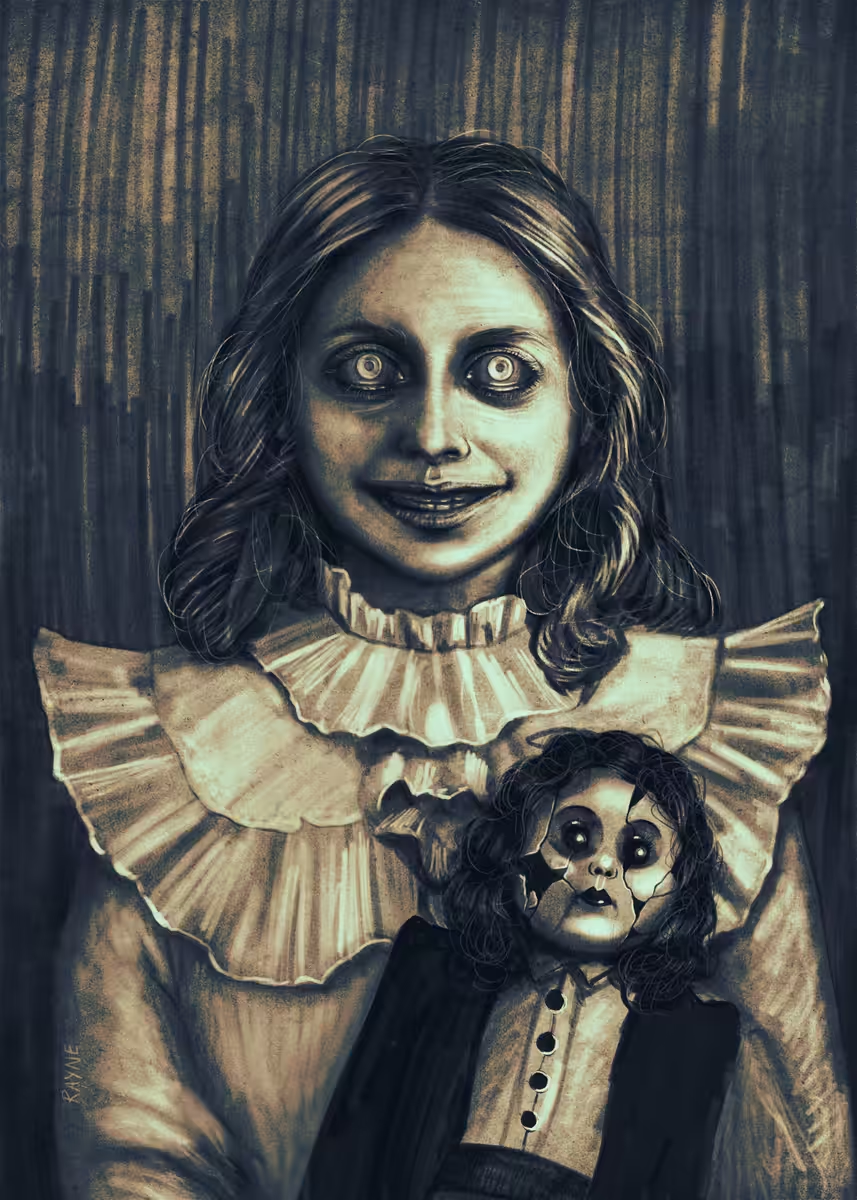
Spooktober: The Girl and the Doll
She had a doll that never left her arms. Its hair was falling out in clumps, its painted smile chipped and fading, but she held it close like it was breathing. When she spoke, she turned her head slightly, as if listening for a reply.
At first, her mother thought it was pretend. Children talk to dolls, after all. But the girl’s laughter began to change. It came in pairs. One voice soft and bright, the other faint, like it was struggling through a mouth too small.
Soon, the girl stopped speaking to anyone else. Her smile grew wider, tighter, as if pulled by invisible strings. The corners of her lips split, yet she didn’t seem to feel the pain. Her parents tried to pry the doll from her hands, but her grip would not release.
By the time the door was broken open, the doll was gone. The girl sat in the corner, her head tilted, her smile frozen in place.
When they called her name, her mouth opened.
The voice that answered wasn’t hers.
Hand drawn on iPad