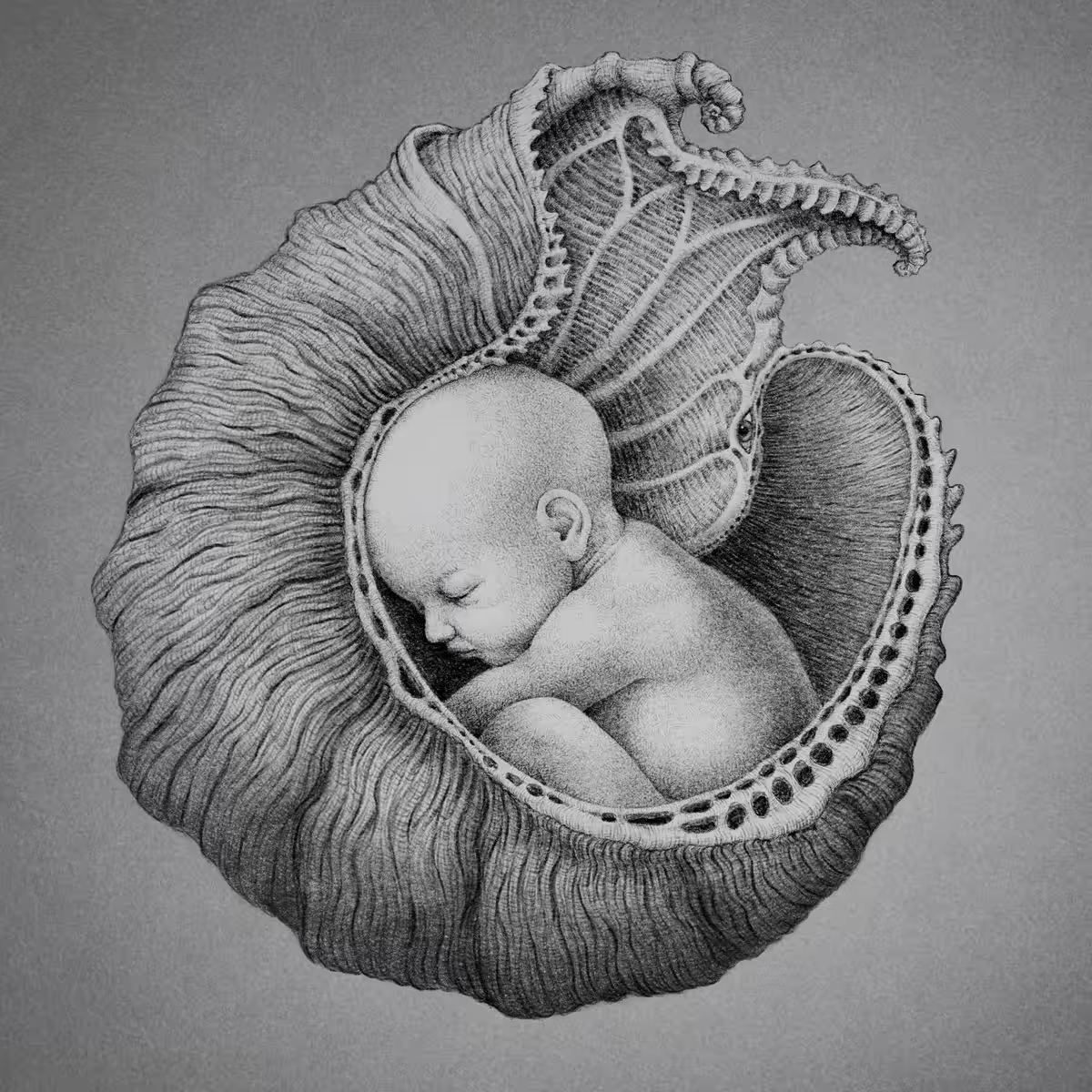
Ones: Venus Conception
The mythology of the birth of Venus originates from Greek and Roman mythology. Venus, known as the goddess of love, beauty, and fertility in Roman mythology (equivalent to Aphrodite in Greek mythology), has various versions and traditions surrounding her birth.
One of the most renowned versions of Venus's birth comes from the works of the Roman poet Publius Ovidius Naso, commonly known as Ovid, in his epic poem "Metamorphoses." According to Ovid, Venus was born from the foam of the sea after Uranus, the god of the sky, was castrated by his son Cronus (Saturn in Roman mythology), and his genitals were cast into the sea. The foam formed around the fallen genitals gave rise to Venus, who emerged from the sea on a giant scallop shell, being carried to shore by the wind Zephyrus and the nymph Chloris.
Another version of the myth suggests that Venus was born when Cronus cut off Uranus's genitals and threw them into the sea, where the goddess emerged from the foam. In this version, the specific roles of the wind Zephyrus and the nymph Chloris are not mentioned.
In both versions, Venus's birth is depicted as a celestial and wondrous event symbolizing beauty and fertility. This myth has inspired numerous artistic representations throughout history, with Sandro Botticelli's painting "The Birth of Venus" being one of the most famous and iconic depictions.