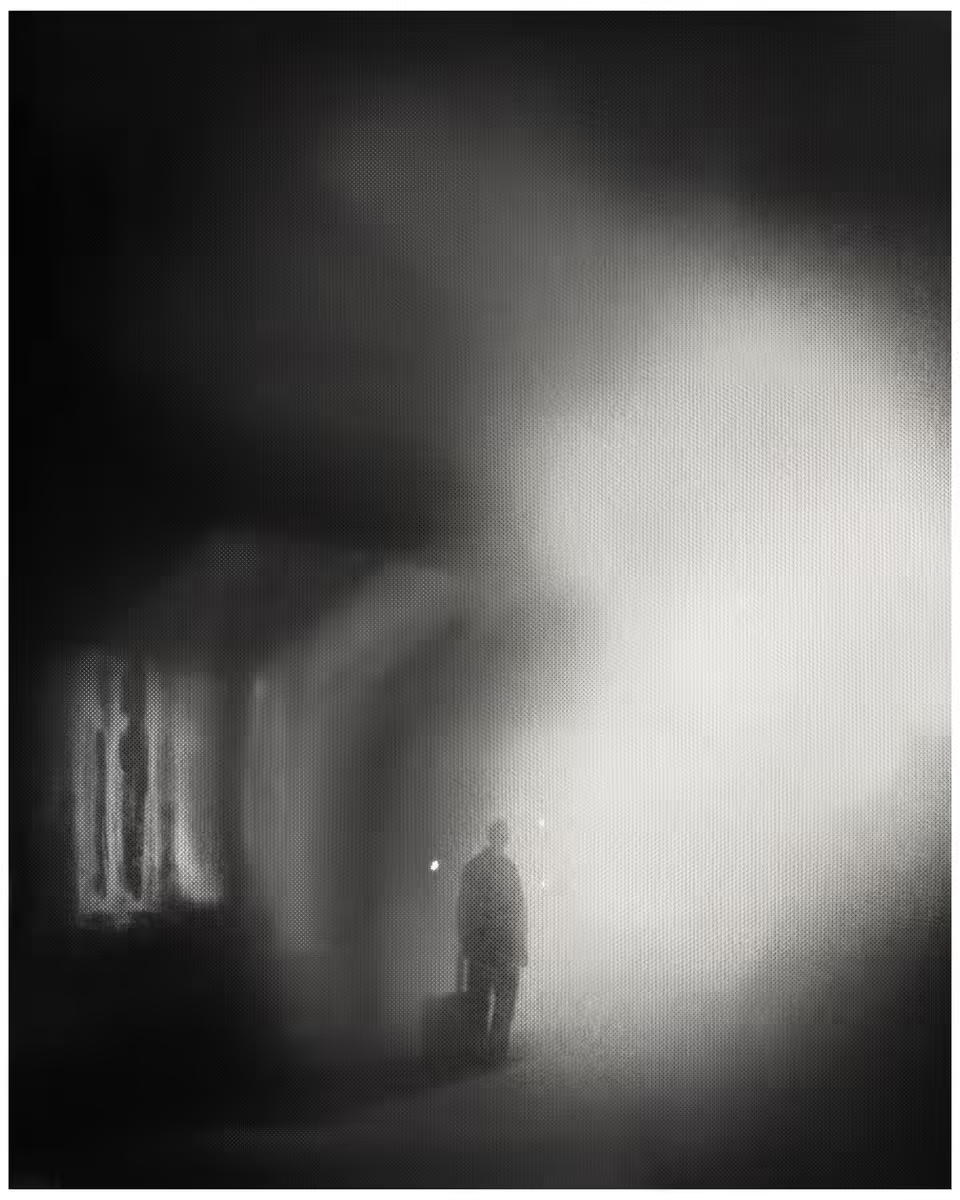
Monochrome: Al-I‘tiraf (Between Shadow and Mercy)
A solitary figure stands at the threshold of light neither fully consumed by darkness nor completely embraced by illumination. He occupies a liminal space, a quiet interval where confession is not spoken aloud but felt in the weight of stillness. Here, shadow is not merely absence of light; it is memory, consequence, and the trace of a long inward journey.
The radiance ahead does not arrive as triumph. It expands softly, almost tenderly, suggesting mercy rather than spectacle. The figure does not run toward it. He stands. That pause suspended between guilt and grace becomes the true subject of the work.
The piece draws inspiration from a poem traditionally attributed to Abu Nawas, Al-I‘tiraf (“The Confession”) “My Lord, I am not worthy of Your Paradise, nor am I strong enough to endure the fire of Hell.”
These words do not dramatize despair; they reveal humility. In that admission lies the fragile beginning of hope.
Between Shadow and Mercy is not a depiction of redemption achieved, but of a moment before it when a human being chooses to remain present, facing the light, aware of the darkness behind him, and trusting that mercy may still be greater than both.
A Suliana 2026