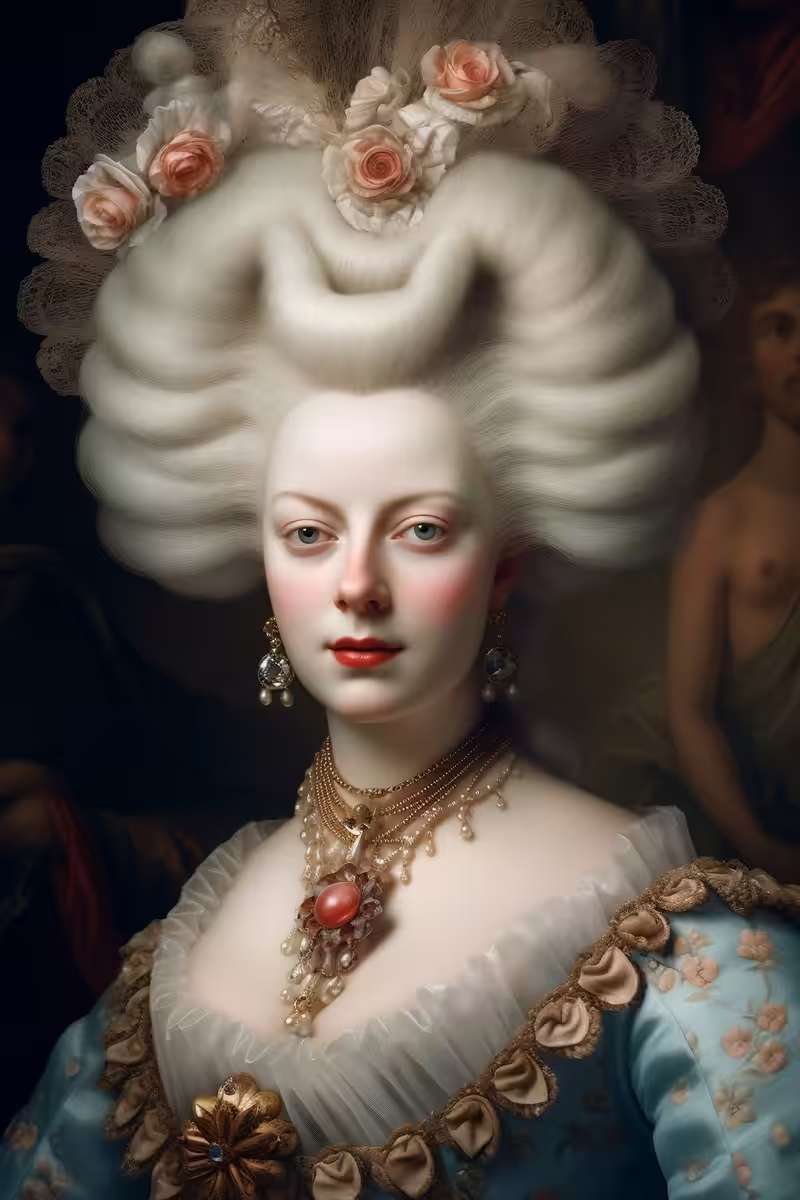
Empresses & Queens: Marie Antoinette of France
Marie Antoinette of France, born on November 2, 1755, lived a life of opulence and controversy that has come to symbolize the extravagance and downfall of the French monarchy. As the archduchess of Austria and later the queen consort of France, Marie Antoinette's life was marked by both privilege and adversity, ultimately culminating in her tragic fate.
Marie Antoinette was married off to Louis XVI of France at the tender age of 14 as part of a political alliance between the Habsburg and Bourbon dynasties. Her arrival in France was met with great anticipation and curiosity, as the young dauphine struggled to adapt to the rigid courtly protocols and navigate the intricate web of French politics.
Initially, Marie Antoinette's life at the French court was characterized by lavish parties, fashion, and indulgence. She became a fashion icon and trendsetter, setting the style for the French aristocracy. However, her extravagant lifestyle and perceived disregard for the plight of the French people would eventually contribute to her downfall.
As Queen of France, Marie Antoinette faced immense challenges. The country was plagued by economic hardships, a growing divide between the privileged elite and the suffering lower classes, and political instability. Marie Antoinette's reputation suffered from the spread of malicious rumors and propaganda that portrayed her as a frivolous and callous queen, disconnected from the struggles of the people.
The queen's association with the decline of the French monarchy reached its peak during the French Revolution. The revolutionaries held her responsible for the economic and social woes of the nation and blamed her for the excesses and corruption of the royal court. She became a symbol of aristocratic decadence and an object of hatred for those seeking radical change.
Marie Antoinette's life took a tragic turn during the revolution. As the revolutionaries gained power, the royal family was imprisoned, and the monarchy was abolished. Marie Antoinette and Louis XVI were tried and found guilty of treason. In October 1793, Marie Antoinette faced the guillotine and met her untimely death at the age of 37.
While Marie Antoinette's life was marked by controversy and tragedy, her legacy continues to captivate and inspire. She represents the downfall of an era and serves as a cautionary tale of the consequences of unchecked power and privilege. In popular culture, she is often depicted as a symbol of excess and the embodiment of the doomed French monarchy.
However, there is also a more nuanced understanding of Marie Antoinette's life emerging in recent years. Some argue that she was unfairly vilified and that her actions were a product of her upbringing, the pressures of court life, and the constraints of her position. Regardless of one's perspective, Marie Antoinette's life remains a fascinating chapter in history, provoking debates and sparking interest in the complex dynamics between monarchy, revolution, and the fate of an iconic queen.
Created with AI 2023 by NftAngel