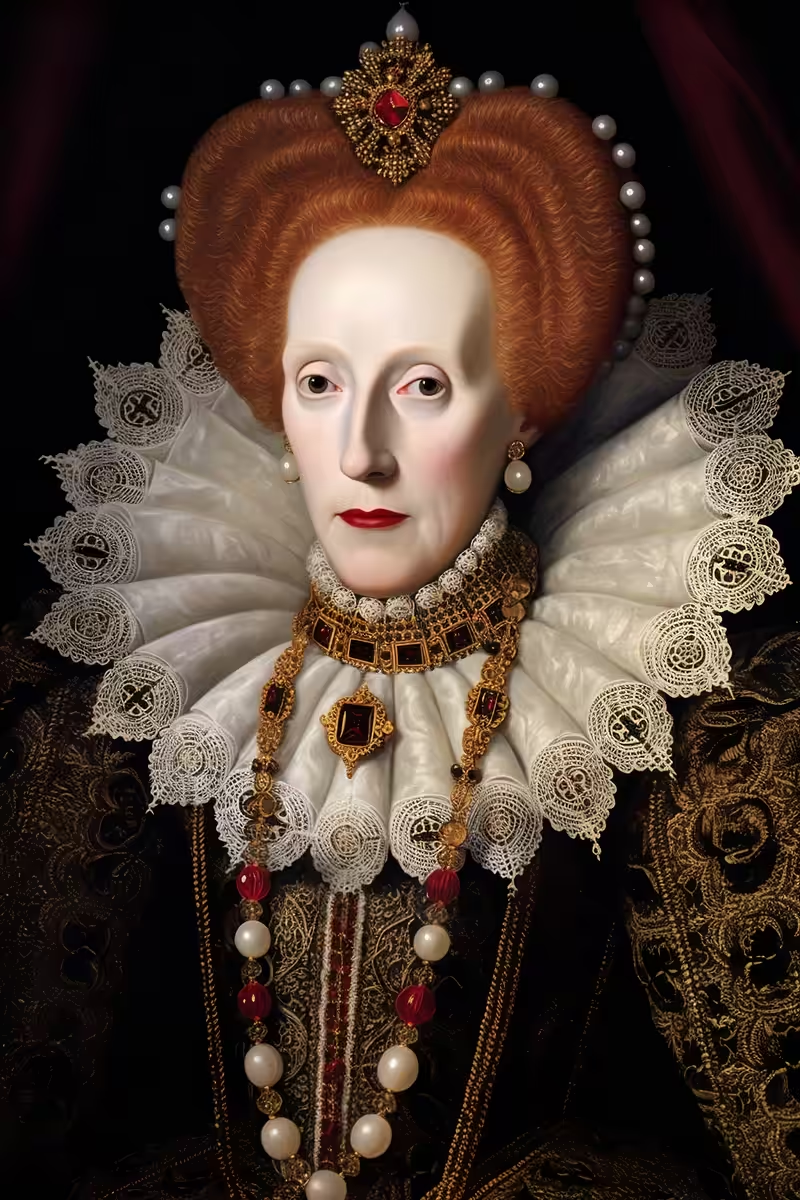
Empresses & Queens: Elizabeth I of England
Elizabeth I of England, who reigned from 1558 until her death in 1603, lived a remarkable life that left an indelible mark on history. Born on September 7, 1533, Elizabeth was the daughter of King Henry VIII and Anne Boleyn. Her journey from princess to queen was fraught with challenges, but she emerged as one of England's most influential and iconic monarchs.
Elizabeth's early years were marked by uncertainty and political turmoil. The religious and political landscape of England was in constant flux, and Elizabeth's legitimacy was questioned due to her mother's execution. Despite these hardships, Elizabeth displayed remarkable intelligence, resilience, and determination from an early age.
Upon ascending to the throne in 1558, Elizabeth faced the daunting task of stabilizing England and restoring religious unity. Her reign is often referred to as the Elizabethan era, a period characterized by political stability, economic growth, and a flourishing of the arts and literature. Elizabeth's strategic diplomacy and astute leadership brought about a golden age for England.
Known as the "Virgin Queen," Elizabeth remained unmarried throughout her life, using her status as a political tool to maintain power and forge alliances. She adeptly navigated the treacherous waters of international relations, skillfully playing suitors against one another to maintain England's independence and ensure her own authority. Her steadfast dedication to her country became a symbol of her unwavering commitment to her people.
Elizabeth's reign was not without challenges. She faced numerous threats, both external and internal, including the Spanish Armada's failed invasion and religious conflicts. However, her strong leadership, sharp wit, and skilled diplomacy enabled her to overcome these obstacles and secure England's place as a formidable power on the world stage.
Beyond her political accomplishments, Elizabeth left a lasting legacy in the realms of culture and the arts. Her patronage of writers, playwrights, and poets, including William Shakespeare, propelled England's literary renaissance and gave rise to some of the greatest works in the English language. The Elizabethan theater flourished under her patronage, leaving an indelible impact on the cultural landscape.
Elizabeth's personal life was a subject of much speculation, as she navigated the challenges of being a female ruler in a patriarchal society. She became an iconic figure, known for her striking appearance, including her signature red hair and elaborate gowns. Her image continues to captivate and inspire, representing strength, intelligence, and the ability to overcome adversity.
Elizabeth's reign came to an end on March 24, 1603, with her death at the age of 69. Her passing marked the end of an era and the transition of power to the Stuart dynasty. Elizabeth left behind a kingdom that had prospered under her rule and a legacy that endures to this day.
Elizabeth I of England, with her remarkable leadership, political savvy, and enduring cultural impact, remains one of history's most influential and revered queens. Her reign serves as a testament to the power of a strong and capable ruler and continues to inspire generations with its legacy of resilience, achievement, and the triumph of a remarkable woman in a world dominated by men.
Created with AI 2023 by NftAngel