DODEM - AchaemeniA - Historical illustrations: Arta Vardiya: The Brave Commander of Darius the Great
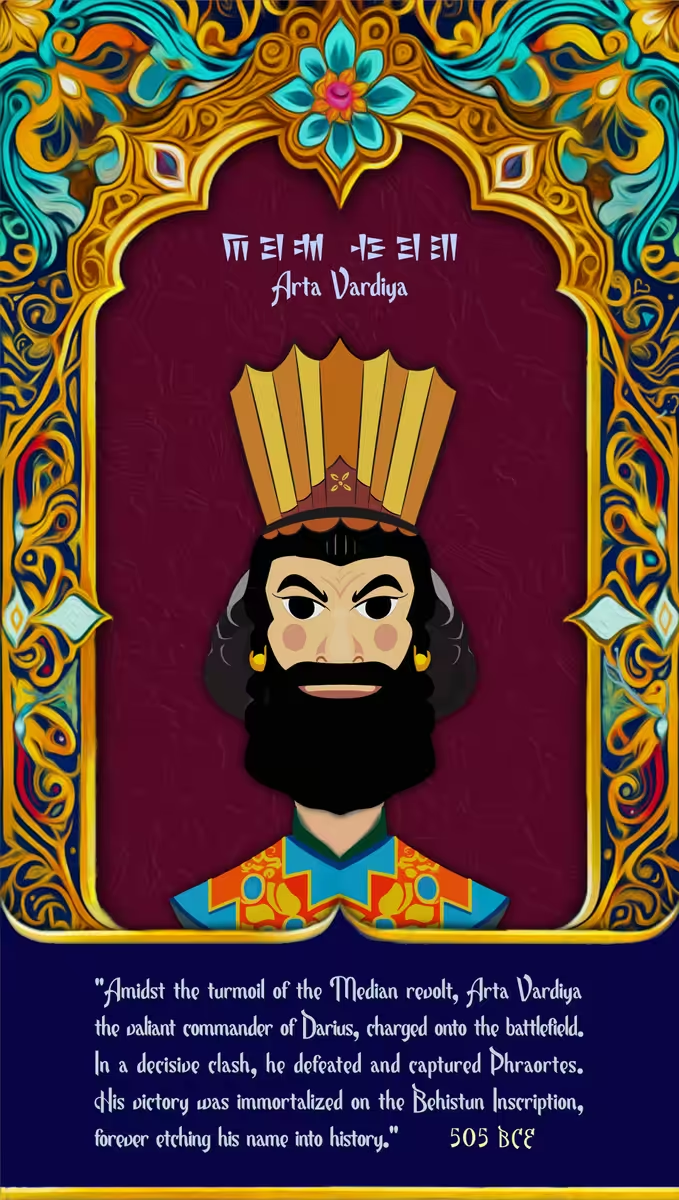
ARTA VARDIYA is a striking fusion of history, mythology, and digital artistry. Inspired by a painting of an Achaemenid commander, this piece reimagines him as Arta Vardiya, a heroic figure from the Median Revolt of 505 BCE. Known as a key commander of Darius the Great, he played a decisive role in the defeat of Phraortes, an event immortalized on the Behistun Inscription.
The creation process began with a scanned historical painting, from which the commander’s face was extracted and symmetrically mirrored to form a totem-like figure. This technique reinforces the mystical and symbolic presence of the character, enhancing his legendary aura.
To enrich the artwork, AI-generated textures were integrated subtly, adding depth without compromising the historical reference. The final phase involved precise digital hand-drawing, refining every detail and incorporating Persian ornamental motifs to frame the piece. These intricate designs are more than decoration—they hide mythical creatures, inviting deeper exploration.
Arta Vardiya bridges past and present, blending historical storytelling with contemporary artistic vision. It is part of a broader effort to reinterpret Persian heritage in a modern yet authentic way, ensuring that the essence of these ancient figures remains alive.
This is more than a tribute to Persian warriors—it is a symbolic resurrection of history, where every element immerses the viewer in the spirit of ancient Iran.
"Amidst the turmoil of the Median revolt, Arta Vardiya, the valiant commander of Darius, charged onto the battlefield. In a decisive clash, he defeated and captured Phraortes. His victory was immortalized on the Behistun Inscription, forever etching his name into history." 505BCE.
اَرتَ وَردیا اثری هنری است که تاریخ، اسطوره و هنر دیجیتال را درهمآمیخته است. این اثر با الهام از نقاشی یک فرمانده هخامنشی خلق شده و او را در قالب ارتا وردیا، یکی از چهرههای کلیدی شورش مادها در سال ۵۰۵ پیش از میلاد بازآفرینی میکند. او از فرماندهان برجستهی داریوش بزرگ بود که با شکست فَرْوَرتیش، نام خود را بر کتیبه بیستون جاودانه ساخت.
فرآیند خلق اثر با اسکن یک نقاشی تاریخی آغاز شد، سپس چهرهی فرمانده از آن استخراج و بهصورت قرینهای توتموار بازطراحی گردید. این تکنیک به حضور اسطورهای و نمادین شخصیت افزوده و شکوه افسانهای او را برجستهتر میسازد.
برای افزایش غنای بصری، از بافتهای تولیدشده با هوش مصنوعی استفاده شد که عمق بیشتری به اثر بخشید، بدون آنکه اصالت تاریخی آن را تحتتأثیر قرار دهد. در مرحلهی پایانی، طراحی دیجیتال دستی با دقت اجرا شد تا جزئیات ارتقا یابند و نقوش تزئینی ایرانی در قاب اثر جای گیرند. این نقشونگارها تنها تزئینی نیستند؛ بلکه در دل خود موجودات اسطورهای پنهان دارند که با دقت بیشتر قابل کشفاند.
ارتا وردیا پلی میان گذشته و حال است، جایی که روایتهای تاریخی با هنر معاصر پیوند میخورند. این اثر بخشی از تلاشی گستردهتر برای بازآفرینی میراث ایران در قالبی مدرن اما وفادار به اصالت تاریخی است.
این اثر نهتنها ادای احترامی به جنگاوران ایرانزمین است، بلکه بازآفرینی نمادین تاریخ محسوب میشود؛ جایی که هر جزئیات، تجربهای عمیق را رقم زده و بیننده را به روح ایران باستان پیوند میدهد.
"در کوران نبرد مادها، اَرتَ وَردیا، سردار دلیر داریوش، به میدان نبرد شتافت. در پیکاری سرنوشتساز، او فَرْوَرتیش را شکست داد و به بند کشید. پیروزیاش بر سنگنبشته بیستون جاودانه گشت و نامش را در تاریخ ماندگار ساخت." 505 قبل از میلاد