The Grand Domesticity: The Phone Room
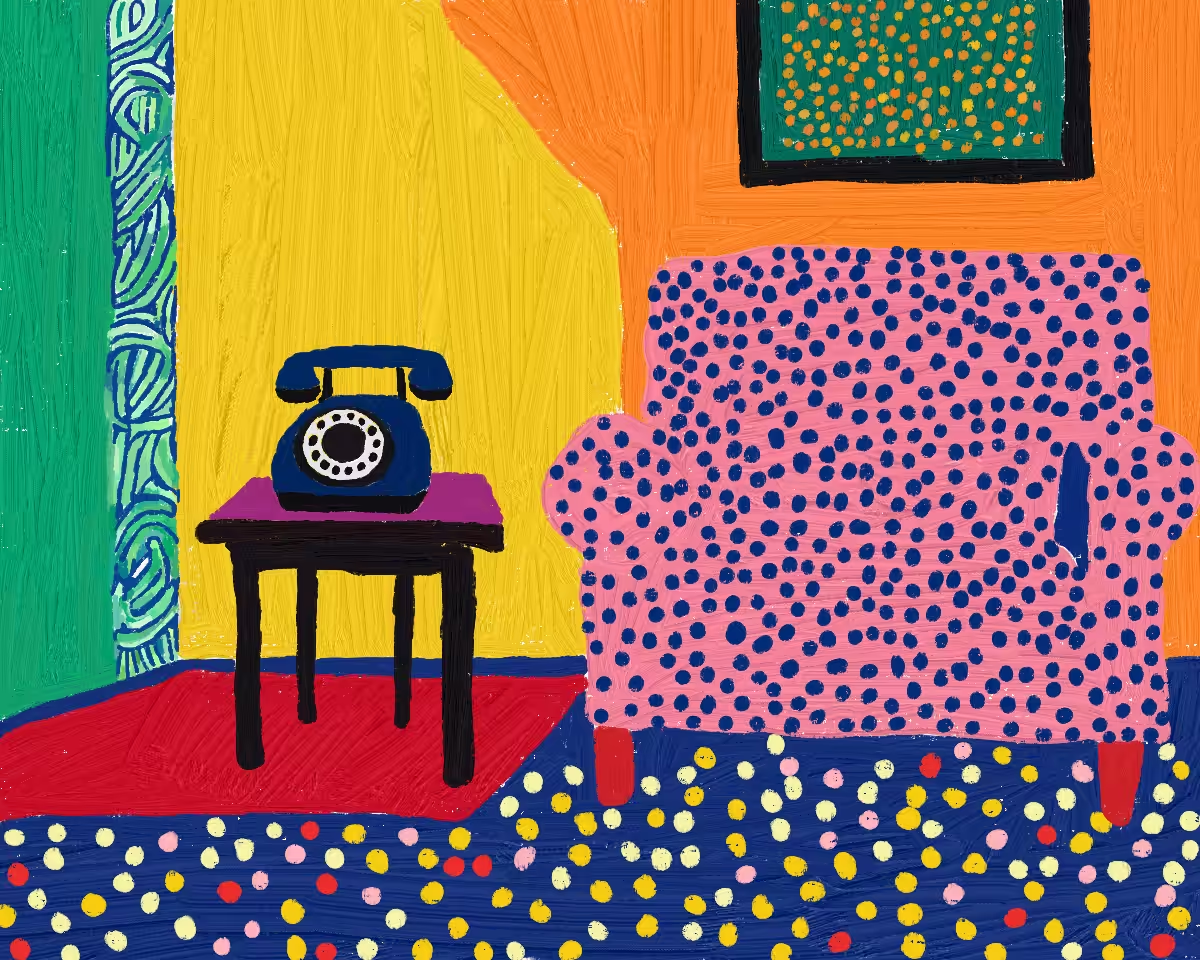
The Phone Room depicts a small domestic space organized around a single object of expectation. A rotary phone rests on a narrow table. The room is orderly, contained, and charged with purpose, despite the absence of any visible action.
Rather than portraying a specific conversation, the work focuses on the conditions that surround communication. The chair’s placement suggests recent use, but not comfort. It records posture, not rest. The phone sits centered and ready, neither ringing nor silent by accident. Its presence defines the room’s function and its tension.
Color plays a structural role. Saturated walls close in around the furniture, compressing the space and heightening its focus. Repetitive mark-making across surfaces slows the scene, reinforcing the sensation of waiting. The patterned floor and upholstery distract the eye slightly, echoing the way attention drifts during moments of anticipation.
The absence of figures allows the room itself to carry memory. The artist treats domestic space as an active participant, one that absorbs voices, pauses, rehearsed words, and unfinished conversations. The phone becomes less a tool than a witness, holding the residue of calls made, calls avoided, and calls never received.
As part of The Grand Domesticity, The Phone Room reflects the artist’s ongoing investigation into interiors as quiet record keepers. These are not dramatic spaces, but precise ones. They preserve the emotional weight of ordinary moments through arrangement, color, and restraint.
The work invites viewers to consider how familiar rooms shape behavior, and how objects designed for connection can also become sites of prolonged waiting.