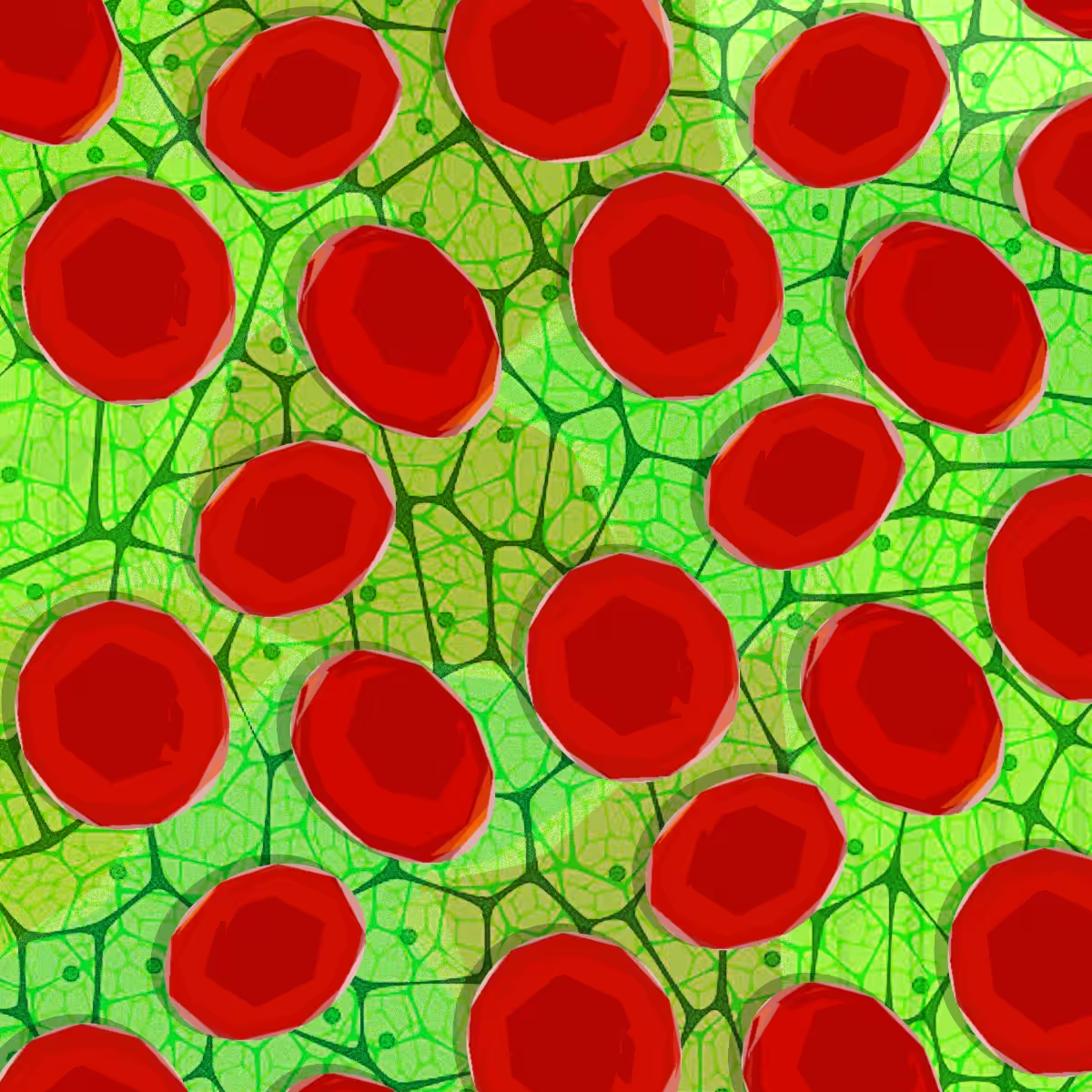
Weird Flex: Linnaeus and the Blood Cells
A piece inspired by cellular plant wall mitochondria and red blood cells floating in a suspended mass.
Carl Linnaeus (1707-1778) was a Swedish botanist, physician, and zoologist who is known as the father of modern taxonomy. His contributions to the field of science are significant and enduring, as he developed a system for naming, describing, and classifying organisms that is still used today. He created a hierarchical classification system that uses a binomial nomenclature, whereby each species is given a unique scientific name consisting of two parts. This standardized approach allowed for more accurate communication and organization within the scientific community. Linnaeus also made significant contributions to the study of botany, zoology, and medicine, and his work laid the foundation for many of the scientific advancements that followed.