THE ONE collection: Ascension Through the Ordinary
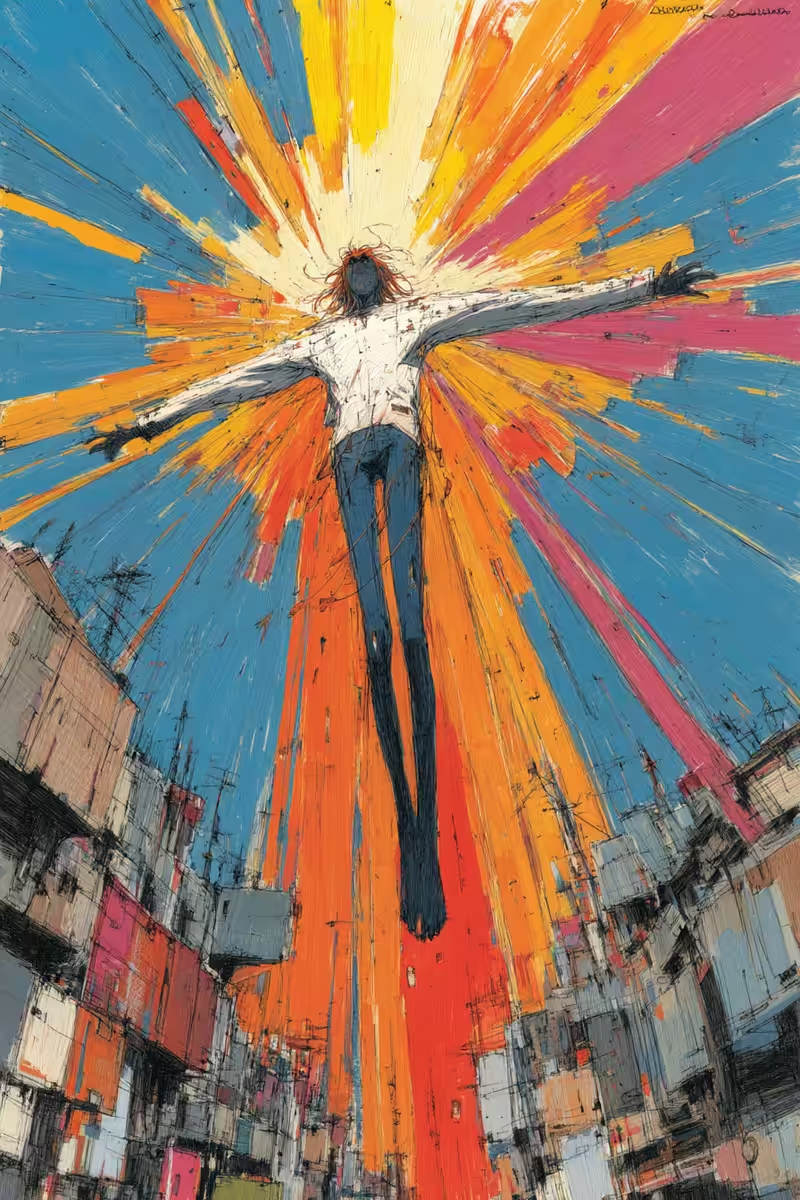
A solitary figure rises above the city as color erupts behind her, transforming an everyday world into a moment of transcendence.
Long description / meaning This artwork captures the precise instant when inner awakening overwhelms external gravity. The figure’s outstretched arms form a cruciform silhouette, not as a symbol of sacrifice, but of surrender—to emotion, to freedom, to becoming something larger than circumstance. Below her, the city is fractured and sketch-like, built from rigid geometry and muted tones, representing routine, structure, and societal weight. Above and through her, color explodes in radiant streaks, signifying a force that cannot be contained by architecture or expectation.
The upward motion is not physical flight alone; it is psychological release. The absence of facial detail universalizes the figure, allowing her to represent anyone who has reached a breaking point where endurance transforms into elevation. The painting suggests that transcendence does not require escape from the world, but a reorientation within it—where the same environment that once confined now becomes the foundation for ascent. This is not divine intervention; it is self-ignition.