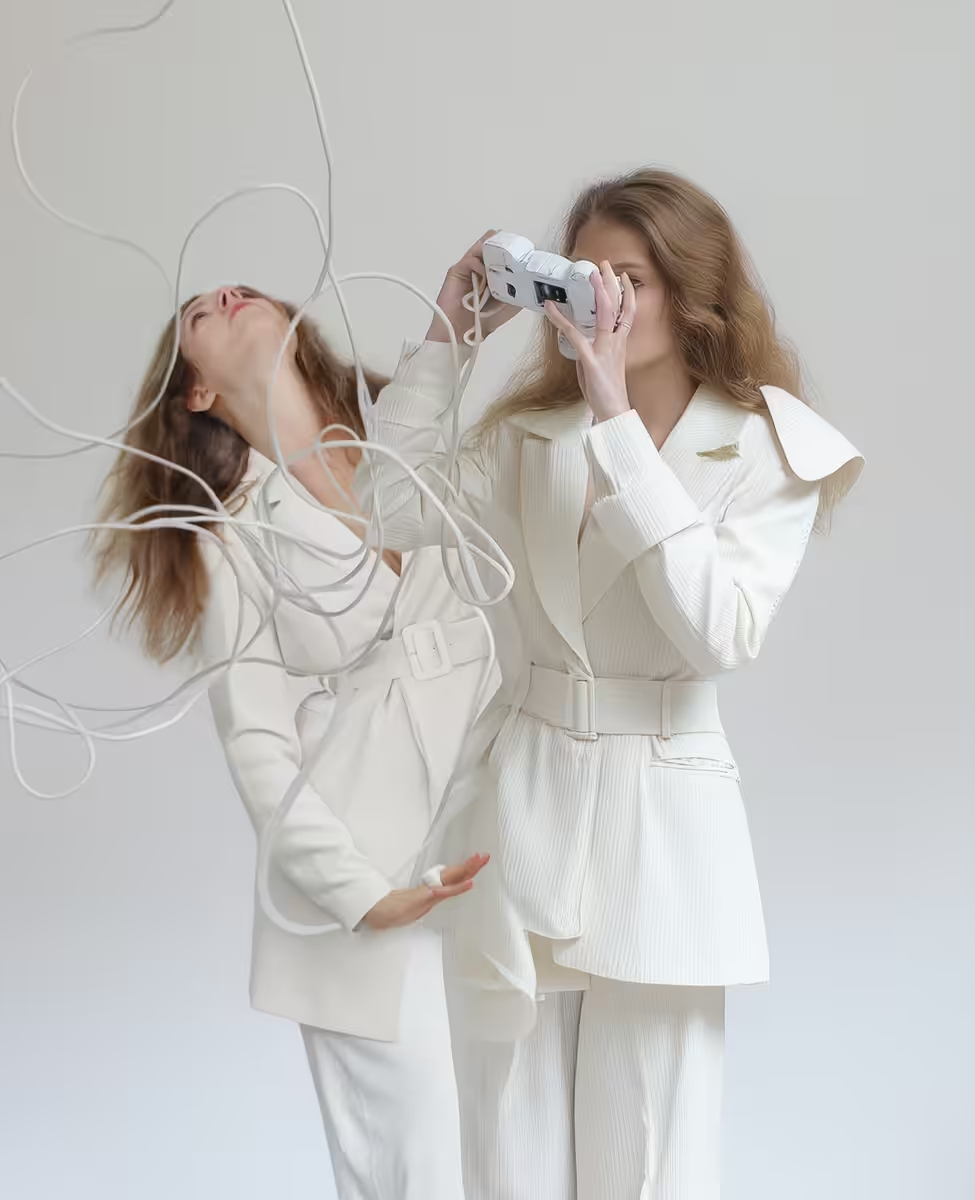
In The Camera Was Once, Franziska Ostermann combines AI and photography. Her self-portraits blur who creates and who appears, tracing the camera’s history while exploring how humans and machines share control over images.
Franziska Ostermann turns AI’s gaze onto itself, exploring who creates images and who controls them. She uses the camera and the act of photographing as symbols—remnants of older image-making—while showing how photography still underpins today’s digital image systems.
In AI-driven image culture, the line between subject and representation blurs. The photographic gesture detaches from both camera and subject, and authorship extends beyond pressing the shutter. Ostermann explores this by expanding, fracturing, and reflecting the photographic gesture through text-to-image systems. AI-generated figures meet each other without truly connecting, and the camera becomes a symbol referencing the origins of photography while freed from technical limits.
Who makes the image? The self-portrait highlights this question: who presses the shutter, and who stands in front of the camera? These roles often overlap. In Ostermann’s work, self-portraits act as a metaphor for how human and machine collaboration reshapes authorship, identity, and control over one’s image in the AI era.