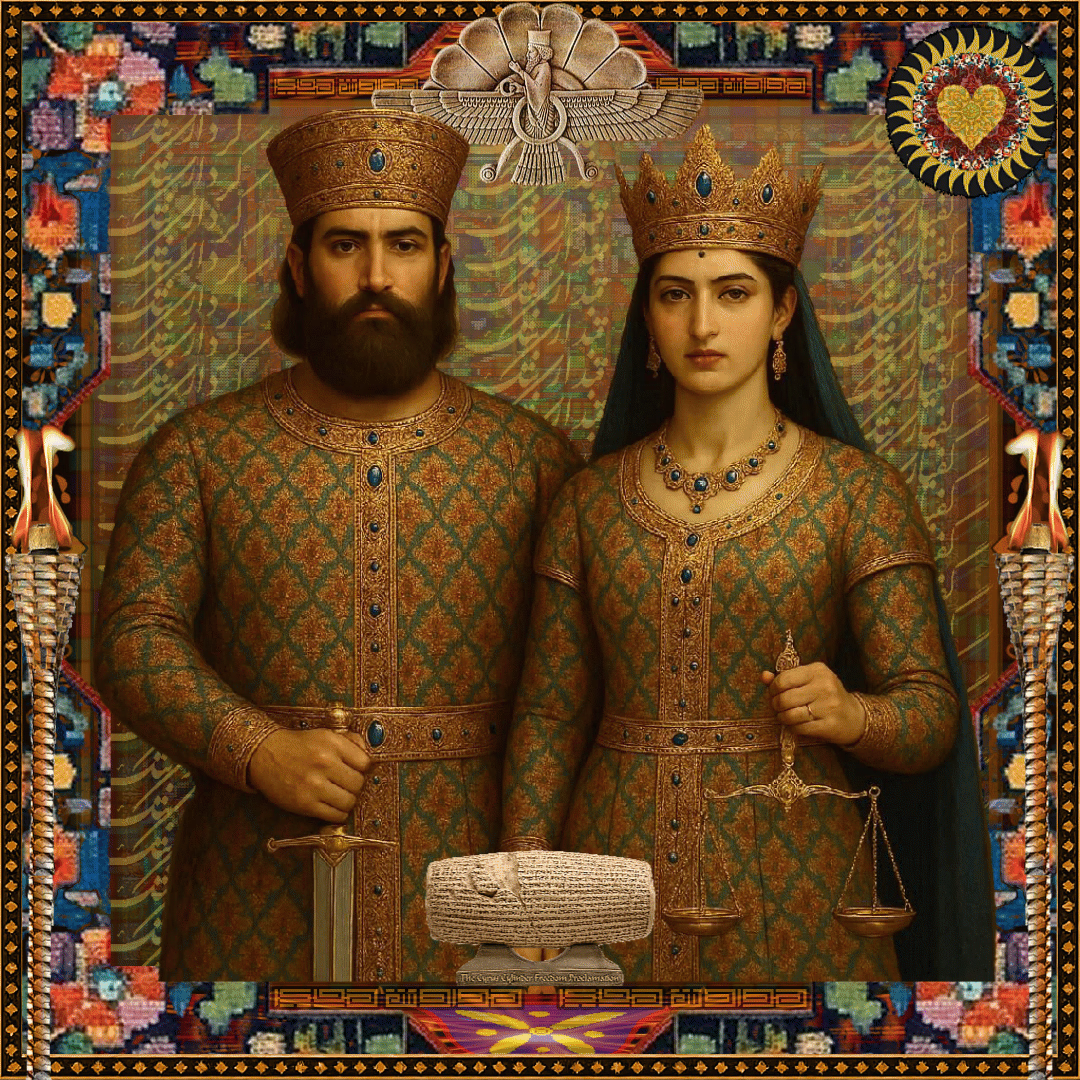
Carpet Model Art: My Iran , Cyrus the Great , NZ 02
Cyrus the Great, the founder of the Achaemenid Empire, is one of the most prominent figures in the history of Iran and the world. He ruled from approximately 559 to 530 BC and is known for his conquests, just policies, and respect for diverse cultures. His most notable achievements include establishing a vast empire, liberating the Jewish people from Babylonian captivity, and creating the Cyrus Cylinder, considered one of the earliest human rights documents.
The Cyrus Cylinder, also known as the Cyrus Edict, is a clay cylinder inscribed in 539 BC after the conquest of Babylon by Cyrus the Great, the Achaemenid king. Discovered in 1879 during excavations in Babylon (modern-day Iraq), it is written in Akkadian cuneiform and contains a declaration by Cyrus outlining his policies following the conquest.
Contents of the Cylinder:
- Freedom of Religions and Peoples: Cyrus declares respect for the religions and customs of the conquered lands. He allowed people to worship their gods and restored destroyed temples.
- Liberation of Captives: One of the most significant parts mentions the liberation of the Jewish people from Babylonian captivity and their permission to return to Jerusalem to rebuild their temple.
- Just Governance: Cyrus emphasizes fair and peaceful policies, including the abolition of forced labor and the restoration of local rights.
- Peace and Coexistence: The cylinder reflects Cyrus’s approach to fostering peace and harmony among the diverse peoples of his empire, which was unprecedented at the time.
Historical Significance:
The Cyrus Cylinder is regarded as one of the earliest documents related to human rights due to its emphasis on tolerance, justice, and human dignity. While some historians argue it was primarily a political statement to consolidate Cyrus’s power, it remains celebrated as a symbol of just rule and respect for cultural diversity in the ancient world.
Current Status:
The cylinder is housed in the British Museum in London, with a replica displayed at the United Nations. It is globally recognized for its historical and cultural value.
If you have specific questions about the cylinder’s details, text, or impacts, please let me know for further explanation!
Cyrus the Great, the Persian king, was not only a brave and just conqueror but also a man with a heart full of kindness and faith in God. With his wife, Cassandane, a wise and loyal lady, he shared a life of mutual respect and love. Through his justice, Cyrus united nations; with his courage, he founded the Persian Empire; and with his kindness, he won the hearts of people. His faith in one God guided his decisions, and his Charter of Human Rights stands as a testament to his noble spirit, forever etched in history.