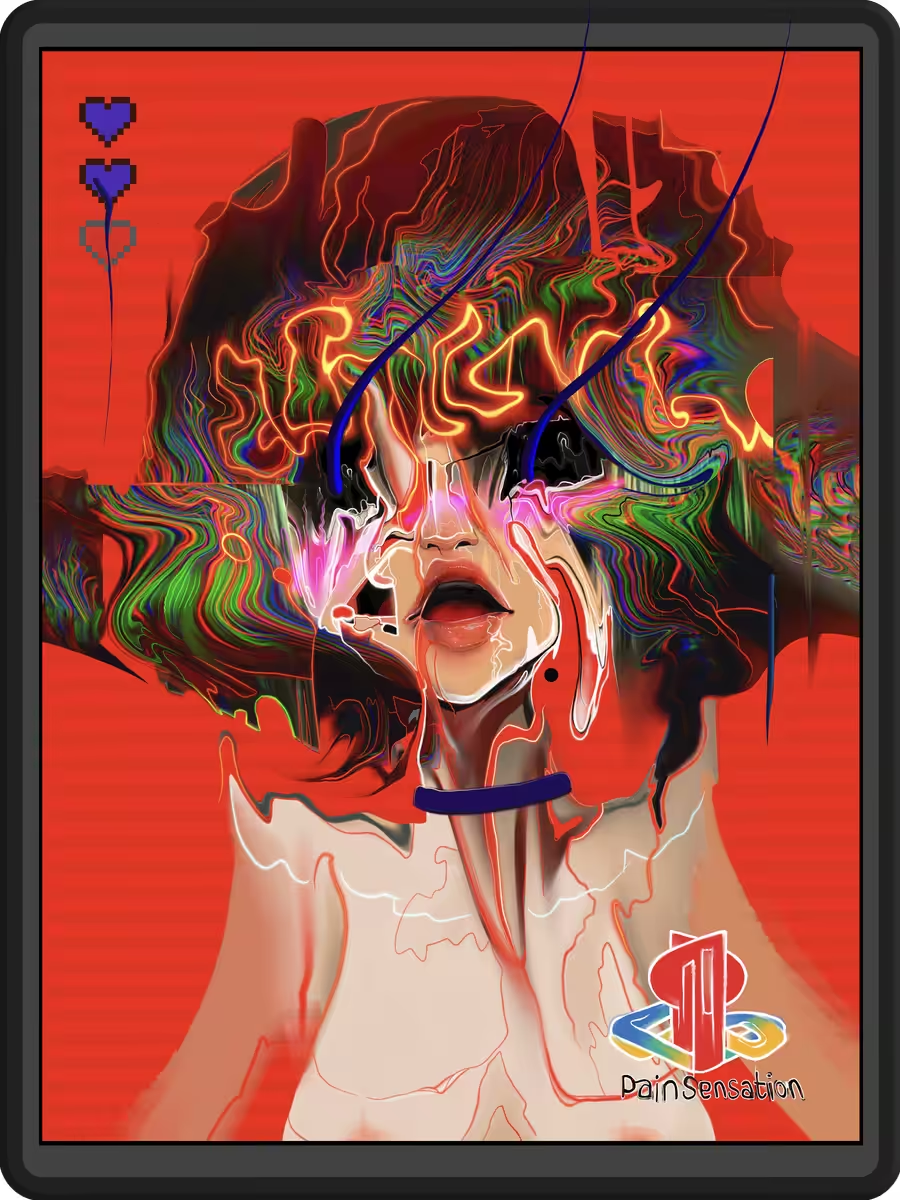
CLUSTER F*CK: Error Red
Dissociation can happen to anyone, it is a concept built over time that has wide array of experiences, ranging from a mild emotional detachment from the immediate surroundings, to a more severe disconnection from physical and emotional experiences. The major characteristic of all dissociative phenomena involves a detachment from reality rather than a loss of reality (don't know what's real and what isn't) - as in psychosis. Chronic dissociation is more related to individuals who have experienced a severe trauma or prolonged stress/anxiety.
Depersonalisation is where you have the feeling of being outside yourself and observing your actions, feelings or thoughts from a distance. (Personally from either very small and often inside myself or very big and floating above earth). Derealisation is where you feel like the world around is unreal. People and things around you may seem "lifeless" or "foggy" (personally it's "behind a veil of some kind"). You can have depersonalisation or derealisation, or both together. Dissociation is a way the mind copes with too much stress (or physical pain). Periods of dissociation can last for a relatively short time (minutes or days) or for much longer (weeks or months). It can sometimes last for years, but usually if a person has other dissociative disorders.
Dissociative disorders are a range of conditions that can cause physical and psychological problems. Some dissociative disorders are very short-lived, perhaps following a traumatic life event, and resolve on their own over a matter of weeks or months. Others can last much longer.
Many people with a dissociative disorder have had a traumatic event during childhood. There are several different types of dissociative disorder.
Someone with dissociative amnesia will have periods where they cannot remember information about themselves or events in their past. They may also forget a learned talent or skill.
Dissociative identity disorder (DID) used to be called multiple personality disorder. Someone diagnosed with DID may feel uncertain about their identity and who they are. They may feel the presence of other identities, each with their own names, voices, personal histories and mannerisms. The main symptoms of DID are but not limited to: memory gaps about everyday events and personal information having several distinct identities.
Such a large and interesting topic, so little space time. Maybe I got carried away when last time I wrote "it gets worse" as nothing is worse than cluster headache... or? Stick around to find out more next time!