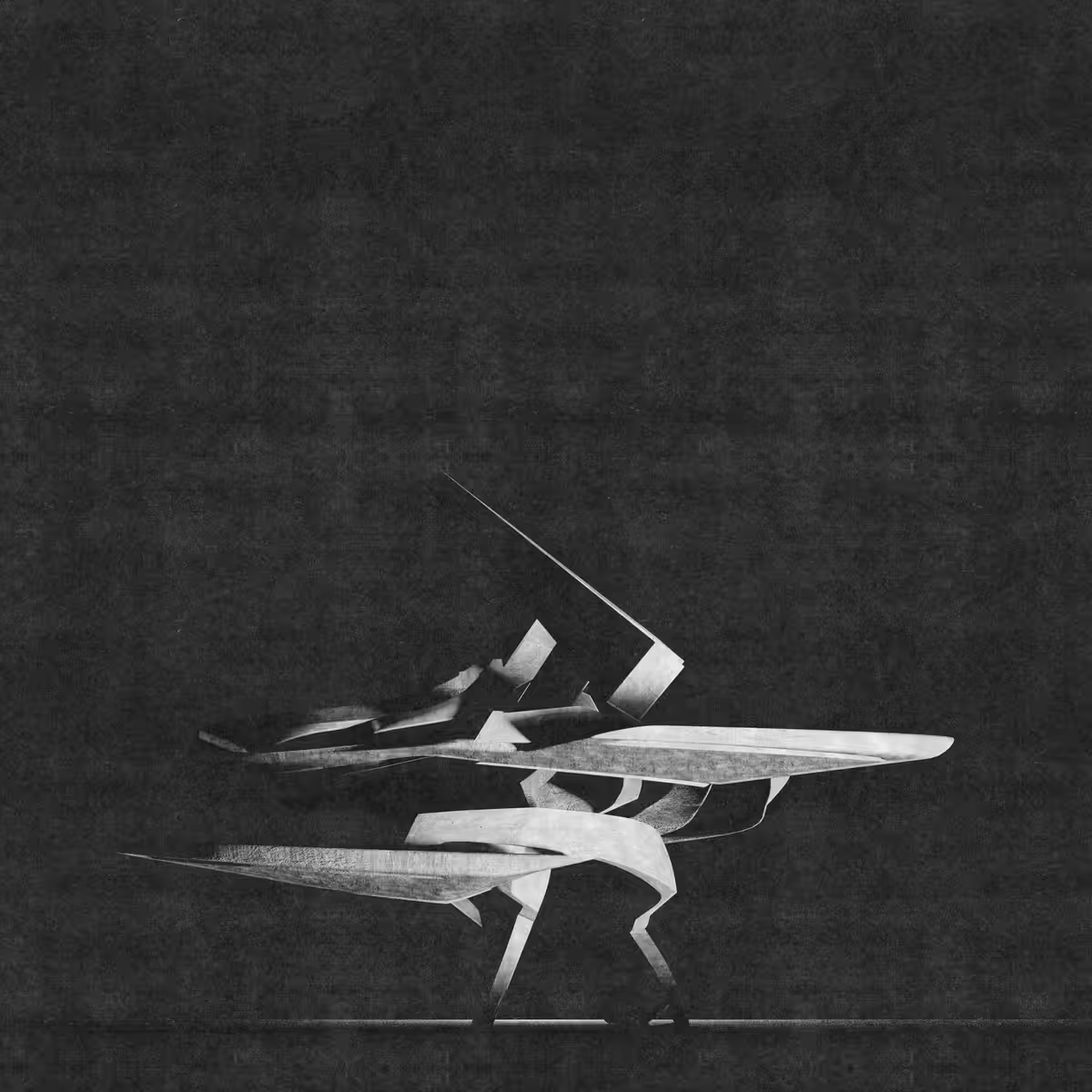
Protective architecture: Vouloir
The war reveals the problems associated with the effectiveness of buildings and cities in securing themselves against aerial and artillery shelling. This is my attempt to design structures and articulate ideas for high-risk buildings during wartime.
Taking its cue from three concepts forming the philosophical foundation of Balzac's novel "La Peau de chagrin", this particular artwork refers to "Vouloir" (the will). At the start of the book, the antique shopkeeper discusses with Valentin "the great secret of human life". They consist of three words, which Balzac renders in capital letters: VOULOIR ("to will"), POUVOIR ("to be able"), and SAVOIR ("to know"). Will, he explains, consumes us. As he wanders through the store representing the planet itself, he tours the world through the relics of its various epochs: "Every land of the Earth seemed to have contributed some stray fragment of its learning, some example of its art." The elderly shopkeeper leads him to a piece of magic skin hanging on the wall. It promises to fulfil any wish of its owner, depleting through every expression of will, especially when it is employed for the acquisition of power. It does not deter him from his goal, however; only when he finds the skin does Valentin decide to abort his suicidal mission. In doing so, he demonstrates humanity favouring ego over divine salvation. The will, Balzac cautions, is a destructive force that seeks only to acquire power unless tempered by knowledge.
This work is my contribution to #ArtForUkraine, 100% of proceeds from sales go towards a donation wallet helping wartime survivors and those standing up for freedom.
5000x5000 px, 300dpi, PNG