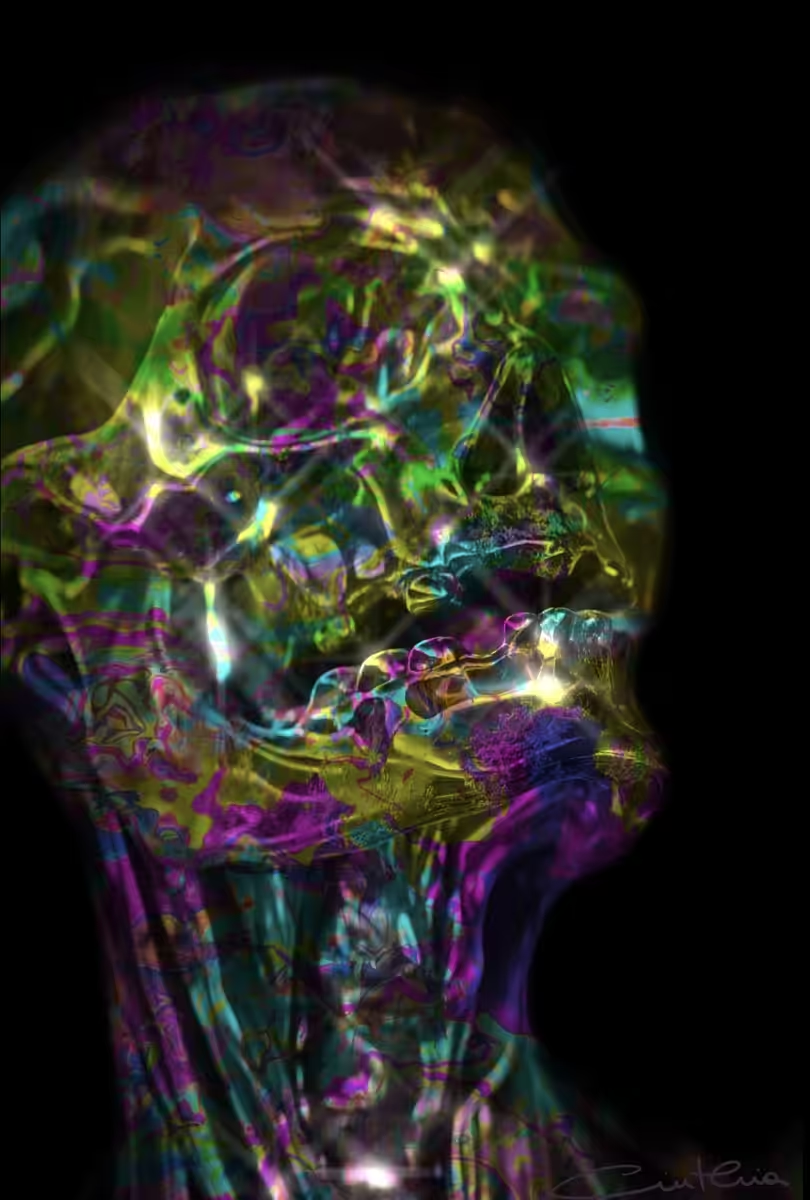
Transformation: ART N°2
"The Eternal Dance of Destiny: The Skull and the Myth of the Greek Universe."
In this enigmatic work of art, the skull emerges as a powerful symbol evoking the representation of the myth of the universe as envisioned by the ancient Greeks. The skull, as an emblem of death, becomes the center of attention, connecting directly to the Greek understanding of the eternal cycle of existence and the intervention of the gods in human destiny.
On the canvas, the skull is adorned with intricate patterns representing the invisible threads of fate, which the gods relentlessly wove into the fabric of human life. From its ocular void, sparks of light emerge, symbolizing the celestial forces that govern the universe and guide individual destinies.
The figure of the skull is framed by elements of the cosmos: stellar constellations, planets and spiraling galaxies that suggest the immensity of the universe and the magnitude of divine power in Greek mythology. Around the skull, a ballet of mythological figures unfolds: gods and goddesses, titans and heroes, each representing aspects of destiny and divine intervention.
The myth of the Greek universe, deeply rooted in the tragic conception of life, is reflected in the color palette used in the work. Dark, somber hues evoke the inevitability of death and the mystery of the afterlife, while touches of gold and purple symbolize the majesty of the gods and the spirituality that pervades their influence on the mortal world.
"The Eternal Dance of Destiny" invites the viewer to reflect on the cyclical nature of existence and how the ancient Greeks saw the universe as a stage where divine forces determined the course of human life. The skull, as a tangible reminder of mortality, becomes a universal symbol that transcends cultures and eras, uniting life, death and myth in a powerful artistic expression.
Technique: acrylic paint on royalty free image.